Definition and Meaning of a Special Events Emergency Action Plan
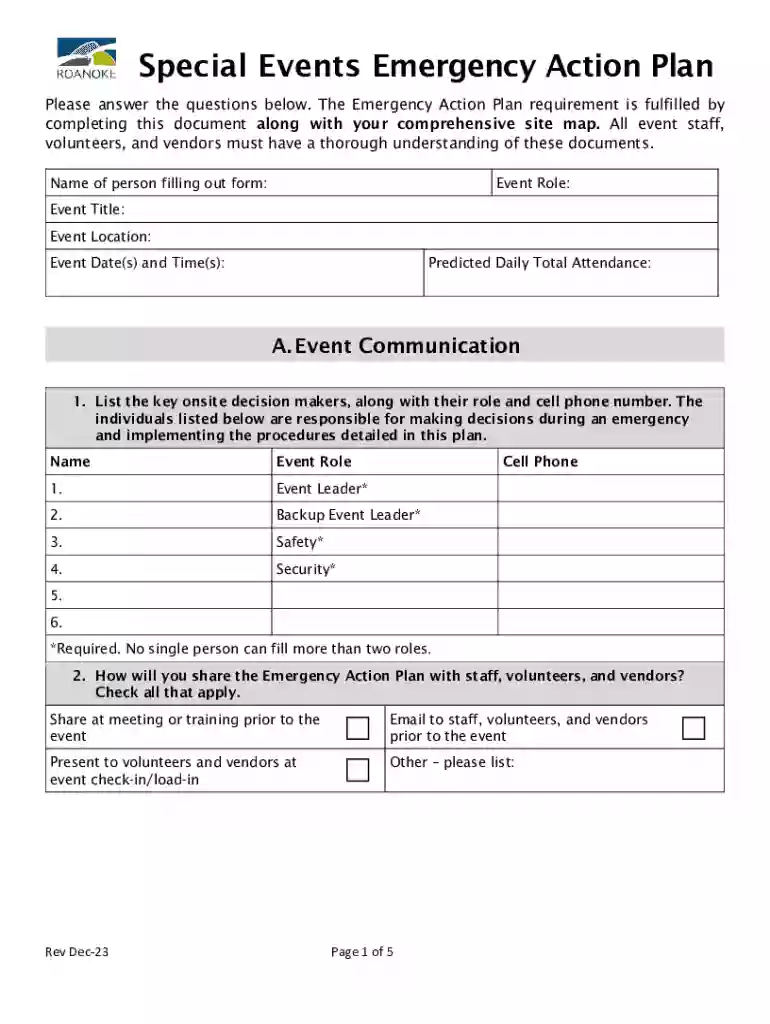
A Special Events Emergency Action Plan (EAP) is a comprehensive safety strategy crafted to safeguard attendees, staff, and vendors during large-scale events. This plan outlines procedures and protocols to be followed in case of emergencies such as severe weather, medical incidents, or security threats. It serves both as a preventative measure and a reactive tool, ensuring all involved parties are prepared to handle various types of emergencies efficiently. By defining roles and responsibilities, the EAP enables coordination and communication among event organizers and emergency response teams.
Key Components
- Emergency Procedures: Step-by-step instructions to follow for various emergency situations.
- Communication Strategies: Methods for alerting attendees and staff during an emergency.
- Role Assignments: Assignment of responsibilities to specific personnel for decision-making and action.
- Resource Allocation: Designation of available tools and resources for emergency management.
- Training Requirements: Mandatory preparedness training for staff and volunteers to ensure readiness.
How to Use the Special Events Emergency Action Plan
Utilizing the Special Events EAP involves familiarizing oneself with the document and ensuring its implementation during the event. Key steps include:
- Review the Plan: Understand each section, focusing on procedures relevant to the specific event type and location.
- Conduct Training: Organize training sessions for staff and volunteers to ensure everyone is aware of their roles and responsibilities.
- Communication Preparation: Set up communication channels and test their functionality before the event begins.
- Resource Setup: Ensure that emergency resources and equipment are in place and accessible.
- Conduct Drills: Hold practice drills to simulate potential emergencies and improve response times.
Practical Scenarios
- Severe Weather Protocol: If the forecast predicts storms, follow weather monitoring guidelines and have a shelter-in-place plan.
- Security Threats: Implement crowd control measures and coordinate with local law enforcement for enhanced security.
- Medical Emergencies: Ensure medical personnel are onsite, and have a clear process for contacting emergency services.
Steps to Complete the Special Events Emergency Action Plan
Completing the EAP requires attention to detail and a thorough understanding of event logistics:
- Gather Information: Collect details about the event scale, venue, and potential risks.
- Identify Key Roles: Designate roles for staff members, including emergency coordinators and communication officers.
- Develop Procedures: Draft detailed emergency response procedures for specific scenarios.
- Create Communication Plan: Outline communication processes for notifying attendees and emergency responders.
- Finalize and Distribute: Review the completed plan with stakeholders and distribute it to all parties involved.
Edge Cases to Consider
- Unexpected Incidents: Prepare for non-standard emergencies, such as power outages or equipment failures.
- Venue-Specific Challenges: Address unique challenges posed by different venue layouts or accessibility issues.
Key Elements of the Special Events Emergency Action Plan
Core components of an effective EAP include:
- Event Communication: Methods of communicating with attendees and staff before, during, and after emergencies.
- Safety Measures: Detailed rules and procedures to maintain safety across the event location.
- Medical Response Protocols: Access to medical assistance and guidelines for treating injuries.
- Evacuation Routes: Clearly marked and communicated pathways for efficient evacuations.
- Security Measures: Coordination with security personnel to manage entry points and overall safety.
Comprehensive Coverage
To ensure no aspect is overlooked, consider additional factors such as:
- Vendor Coordination: Include protocols for communicating and coordinating with vendors during emergencies.
- Volunteer Management: Ensure volunteers are trained and aware of emergency procedures.
- Local Authority Liaison: Maintain open communication with local law enforcement and emergency services.
Why Should You Implement a Special Events Emergency Action Plan
Implementing an EAP is crucial for event safety and exhibitor confidence:
- Risk Mitigation: Identify and address potential risks before they escalate into incidents.
- Regulatory Compliance: Meet legal obligations and industry standards for event safety.
- Reputation Management: Enhance the image of the organizing body by showcasing commitment to attendee safety.
- Operational Efficiency: Streamline operations and minimize confusion during crises.
Real-World Benefits
- Increased Trust: Attendees feel safer and more secure, leading to higher satisfaction rates.
- Avoidance of Liability: Proper planning reduces the likelihood of legal repercussions following an emergency.
Diverse Use Cases
- Corporate Events: Large companies hosting conferences and product launches.
- Community Festivals: Local municipalities organizing public celebrations or parades.
- Sports Tournaments: Multi-venue sporting events requiring complex logistical planning.
Legal Use of the Special Events Emergency Action Plan
EAPs are a legal staple, often necessitated by local regulations:
- Compliance with Local Laws: Abiding by state and municipal guidelines for event safety and public gatherings.
- Insurance Requirements: Many insurers require a detailed EAP as part of their coverage conditions.
- Documentation for Permits: Inclusion of the EAP in permit applications to demonstrate thorough planning.
U.S.-Specific Considerations
- State-by-State Variation: Different states may have specific requirements and stipulations for EAPs.
- Federal Guidelines: National safety standards, such as those from FEMA, may affect plan content and enforcement.