




01. Edit your form online
Type text, add images, blackout confidential details, add comments, highlights and more.

Type text, add images, blackout confidential details, add comments, highlights and more.

Draw your signature, type it, upload its image, or use your mobile device as a signature pad.

Send it via email, link, or fax. You can also download it, export it or print it out.
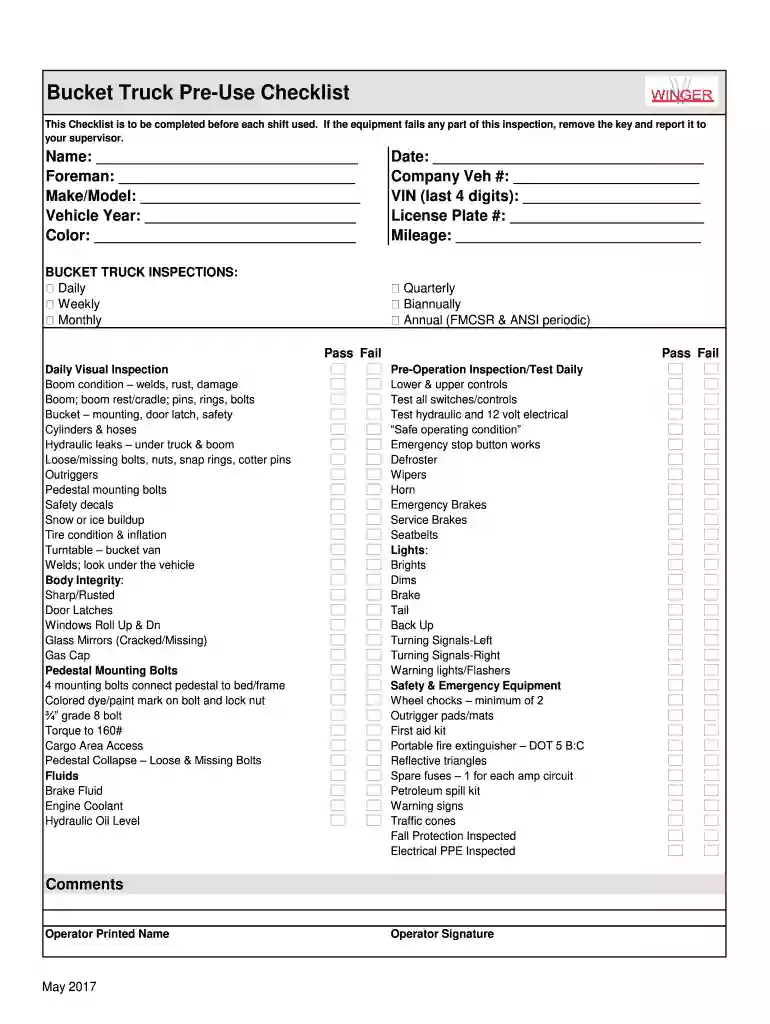
The Bucket Truck Pre-Use Checklist is a detailed document used by operators to ensure the safe and effective operation of bucket trucks. Before each shift, operators must review this comprehensive checklist to verify the functionality and safety of the vehicle and its components. This checklist covers daily, weekly, monthly, quarterly, biannual, and annual inspection items. It focuses on critical parts such as the boom, bucket, hydraulic systems, and safety equipment. By following this checklist, operators adhere to safety protocols designed to prevent accidents and equipment failures on job sites.
The checklist serves as a step-by-step guide for inspecting a bucket truck before it is put into operation. Operators should:
Review Daily Checks: Start by assessing the general condition of the truck, including checking the brakes, lights, and fluid levels.
Examine Safety Equipment: Ensure that all safety harnesses, helmets, and other protective gear are available and in good condition.
Inspect the Hydraulic System: Verify that there are no leaks, and check the function of all hydraulic controls.
Check the Boom and Bucket: Inspect for signs of wear or damage, and ensure that all safety latches are operational.
Complete the Checklist: Note any deficiencies or maintenance issues and report them to the maintenance team for immediate repair.
The checklist includes several critical elements that operators must focus on:
Structural Components: This involves checking the boom for cracks, the stability of the bucket, and the wear on moving parts.
Safety Systems: Examine the emergency stop function, backup alarms, and other safety mechanisms to ensure they are fully operational.
Operational Checks: Test the movement and control system of the boom to ensure smooth and precise operation.
Environmental Controls: Verify that all environmental protections, like spill kits and pollution prevention measures, are in place and accessible.
Completing the Bucket Truck Pre-Use Checklist involves methodical inspection and verification:
Visual Inspection: Perform a walk-around inspection to identify any visible issues with the truck or its components.
Functional Testing: Engage the hydraulic systems and control mechanisms to ensure they operate as intended.
Documentation: Record each step's findings, noting any discrepancies or potential issues.
Submit Findings: Provide the completed checklist to the designated safety officer or maintenance team for further evaluation and record-keeping.
The checklist is primarily used by:
Operators: Those directly responsible for the safe operation of the bucket truck before any work begins.
Maintenance Personnel: Individuals tasked with repairing and maintaining the truck based on issues reported in the checklist.
Safety Inspectors: They ensure that operators and maintenance teams follow the correct procedures and adhere to safety standards.


The checklist helps organizations comply with safety regulations and industry standards:
OSHA Guidelines: Adhering to Occupational Safety and Health Administration standards helps avoid penalties and ensures worker safety.
Insurance Requirements: Completing and maintaining checklists can be essential for fulfilling insurance policy terms and potentially reducing premiums.
Litigation Protection: Documented compliance with the checklist can provide legal protection in the event of an incident or audit.
Regular use of the Bucket Truck Pre-Use Checklist is vital for:
Ensuring Safety: By identifying potential hazards before operation, the checklist helps prevent accidents.
Enhancing Efficiency: Regular checks lead to proactive maintenance, reducing downtime due to unexpected repairs.
Maintaining Compliance: Staying current with safety protocols and regulations mitigates legal risks and enhances workplace safety culture.
Several scenarios illustrate the checklist's utility:
Construction Sites: Before starting work on a new project, operators perform thorough checks to ensure all systems are in peak condition.
Utility Maintenance: During scheduled line repairs, the checklist ensures that equipment functions properly, minimizing service disruptions to the public.
Emergency Response: In storm recovery, rapid deployment demands that vehicles are always ready and safe to use, underscoring the checklist's importance.
At DocHub, your data security is our priority. We follow HIPAA, SOC2, GDPR, and other standards, so you can work on your documents with confidence.


1. Hydraulic fluid level inspected (should be about 2 inches from top) 2. Tires properly inflated 3. Emergency brake works 4. Wheel chocks w/ truck 5. Hoses
Use of Models for Assessing PVI. Petroleum Vapor Intrusion. CHECKLIST 135 APPENDIX. TECHNICAL INFORMATION TO SUPPORT SITE SCREENING161. INVESTIGATION METHODS


