
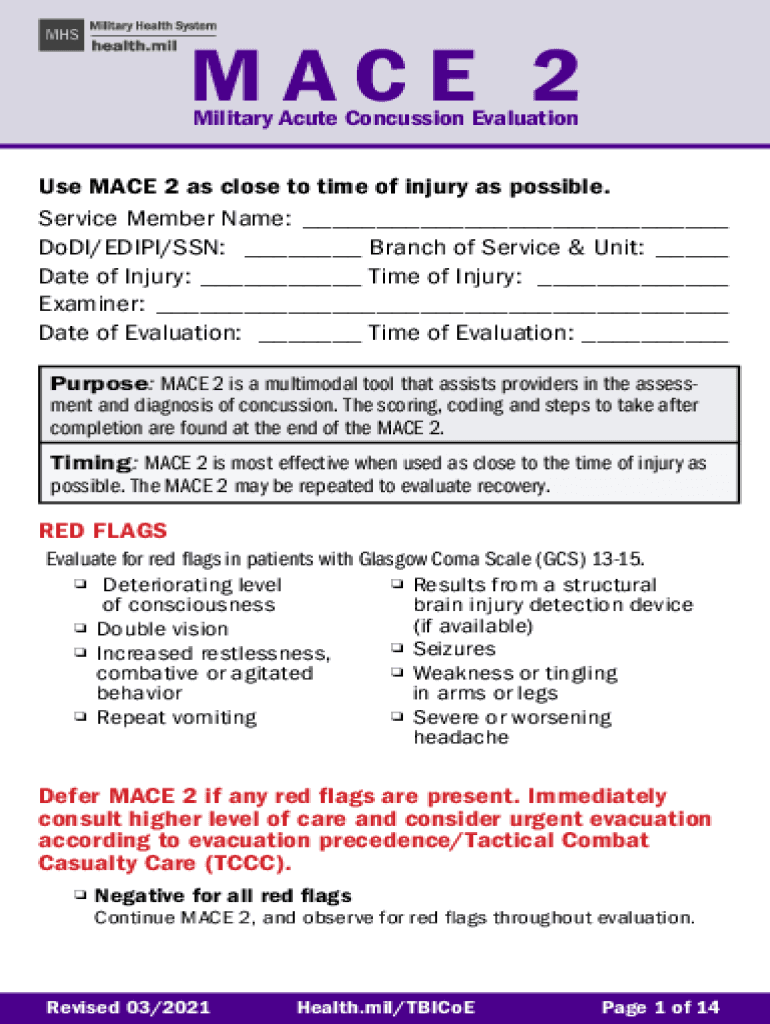







Definition and Meaning of MACE 2
The MACE 2, or Military Acute Concussion Evaluation, is an essential tool used to assess concussions in military personnel. It is crafted to facilitate the immediate examination and documentation required to evaluate mild traumatic brain injuries (TBIs). As a comprehensive evaluation instrument, the MACE 2 allows medical personnel to record incident details, observe symptoms, and conduct cognitive assessments and neurological exams. By providing a detailed protocol for concussion evaluation, MACE 2 ensures that healthcare professionals can identify red flags and recommend further medical intervention when necessary. Understanding the MACE 2's function is crucial for efficient use in military health settings.
Key Elements of MACE 2
- Incident Documentation: The form contains sections for noting the time, location, and circumstances of the injury, which is fundamental for a complete assessment.
- Signs and Symptoms: Detailed checklists help the examiner identify immediate and delayed symptoms that are common indicators of concussions.
- Cognitive Assessments: Tools for evaluating memory, orientation, and concentration are included to gauge the cognitive impact of the concussion.
- Neurological Exams: These sections help in examining reflexes, coordination, and balance to further assess the severity of the concussion and possible neurological implications.
Understanding these elements ensures that the form is used effectively to safeguard the health of military personnel.
How to Use the MACE 2 Effectively
Using MACE 2 effectively involves following systematic procedures to ensure accurate evaluation. The steps include:
- Initial Assessment: Begin by verifying the incident details, including the timeline and setting. This forms the context for the entire evaluation.
- Recording Visible Signs: Observe and document any immediate symptoms such as loss of consciousness, confusion, or disorientation.
- Conducting Cognitive Tests: Use the form's in-built tests to perform initial cognitive assessments, which include orientation questions and memory recall tasks.
- Detailed Neurological Examination: Assess motor and sensory functions to identify any neurological deficits.
- Follow-Up Action: Based on the results, determine whether immediate medical attention is warranted.
Training practitioners to follow these steps ensures comprehensive utilization of MACE 2.
Steps to Complete the MACE 2
The completion of MACE 2 involves a structured approach:
- Gather Initial Information: Document the time and nature of the injury, focusing on both observable signs and reported symptoms.
- Perform Cognitive Evaluations: Administer memory and orientation tests as outlined in the form. Record responses accurately for future reference.
- Neurological Testing: Conduct balance and coordination checks, using the results to guide further actions.
- Identify Red Flags: Look for severe symptoms that necessitate immediate medical care.
- Finalize Documentation: Complete all required sections, ensuring that the information is accurate and comprehensive.
Each step should be carried out methodically to ensure accuracy and reliability in the evaluation process.
Who Typically Uses the MACE 2
The primary users of MACE 2 are healthcare providers within the military, such as:
- Military Physicians: Responsible for diagnosing and managing concussions in the field and at medical facilities.
- Combat Medics: Often the first responders who use MACE 2 to provide initial assessments on-site, ensuring timely intervention.
- Nurses and Medical Staff: Assist in conducting detailed evaluations and follow-up processes to monitor recovery.
By using MACE 2, these professionals can deliver timely and appropriate care, reducing the risk of long-term complications from TBIs.


Legal Use and Compliance
Using MACE 2 in accordance with legal and medical regulations is critical:
- Confidentiality: Ensure all documentation complies with patient privacy laws, safeguarding sensitive health information.
- Documentation Standards: Follow established protocols for completing and storing health records to meet military and federal guidelines.
By fulfilling these legal requirements, healthcare providers ensure the integrity and confidentiality of concussion assessments.
State-Specific Rules
While MACE 2 is standardized across the military, knowledge of state-specific rules can enhance comprehension:
- State Health Regulations: Familiarize with any state-specific guidelines that may affect concussion assessment and treatment.
- Integration with Local Systems: Be aware of how MACE 2 assessments are integrated into state-based health record systems, ensuring alignment with local practices.
Awareness of these variations allows for smoother implementation and compliance across different locations.
Examples of Using MACE 2 in Real Situations
Real-world scenarios highlight the practical utility of MACE 2:
- Field Operations: During combat missions, MACE 2 is pivotal in assessing concussions resulting from blast exposures.
- Training Exercises: Used to evaluate head injuries during rigorous physical training, helping to prevent serious TBI outcomes.
- Post-Deployment Evaluations: Assess returning personnel for potential concussion symptoms, supporting long-term health monitoring.
Through these applications, MACE 2 provides critical insights into military personnel's neurological health, ensuring they receive the care needed for recovery.




