




01. Edit your packing slip template fill online
Type text, add images, blackout confidential details, add comments, highlights and more.

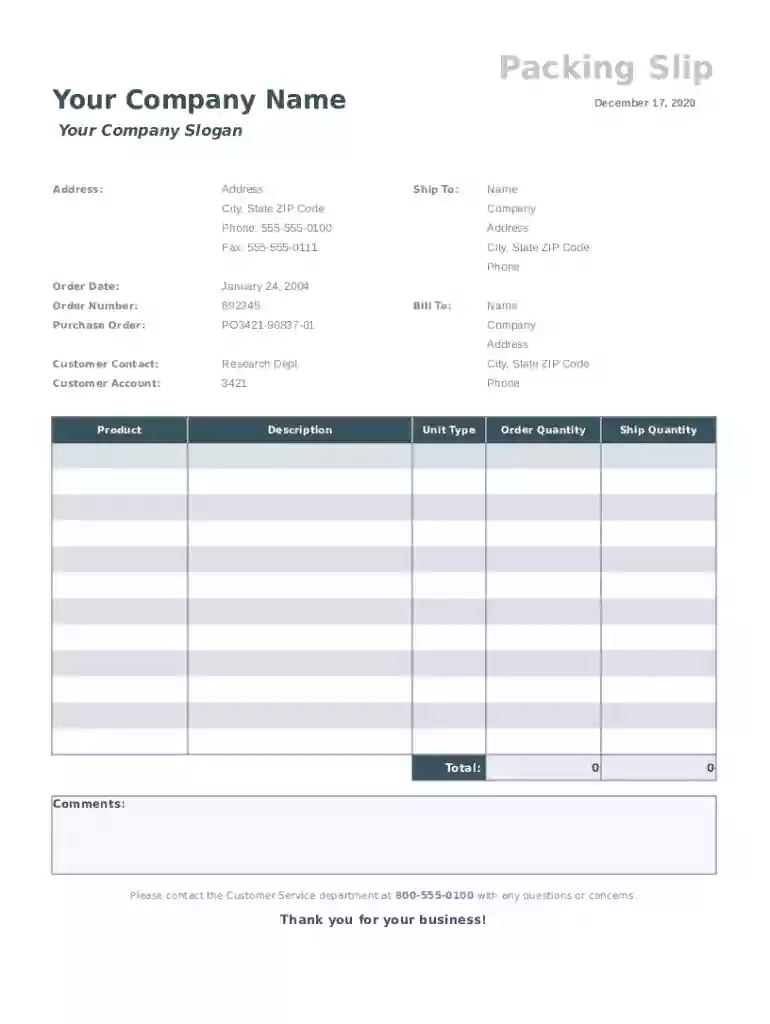
Type text, add images, blackout confidential details, add comments, highlights and more.

Draw your signature, type it, upload its image, or use your mobile device as a signature pad.

Send slip printable form via email, link, or fax. You can also download it, export it or print it out.
A packing slip sheet is a vital document used in the shipping and logistics industry. It accompanies the shipment of goods and provides a detailed list of the items included in the package. The primary purpose of a packing slip is to ensure that all ordered items are shipped correctly and that the recipient can verify the contents upon delivery. In essence, it acts as a checklist for both the sender and the receiver, confirming that the contents match the order specifications. This document is essential for maintaining accurate inventory records and reducing discrepancies in shipped goods.
Utilizing a packing slip sheet effectively involves several steps. Firstly, as a sender, you must accurately fill out the packing slip with all relevant information, such as the product descriptions, quantities, and any special instructions for handling the items. Once completed, the slip should be securely placed in or attached to the package. Upon receiving the shipment, the recipient should cross-check the items received against the packing slip. This verification process helps identify any missing or damaged items, enabling timely resolution with the sender.
Completing a packing slip sheet requires attention to detail to ensure accuracy. Here is a step-by-step process to guide you:
Several key elements are typically included in a packing slip sheet to ensure completeness and accuracy:
Using a packing slip sheet is critical for several reasons. It ensures transparency and accountability in the shipping process, as both the sender and recipient have documentation of the items shipped. This document aids in preventing miscommunications and facilitates swift resolution of any disputes regarding the order. Additionally, it supports inventory management by providing a record of outgoing and incoming products. Businesses benefit from increased operational efficiency and customer satisfaction by incorporating packing slips into their logistics workflows.
Packing slip sheets are commonly used by several parties involved in the supply chain:


Consider a clothing retailer shipping an online order to a customer. The packing slip will include details such as the size, color, and quantity of each item. When the package arrives, the customer can check off each received item against the slip to confirm that their order is complete.
Another example involves a business receiving a large shipment of raw materials. The receiving team uses the packing slip to ensure that all ordered materials have arrived safely and notes any discrepancies for follow-up with the supplier.
Modern businesses have the option of using digital or paper versions of packing slip sheets. Digital versions can be generated and stored within an inventory management system or emailed directly to the recipient. This method is environmentally friendly and facilitates easy access and sharing. Despite this, paper versions remain widely used, as they can be printed and included physically in the shipment, ensuring visibility for any recipient, even those without digital access. Each method has its own advantages, and the choice often depends on specific business needs and customer preferences.
At DocHub, your data security is our priority. We follow HIPAA, SOC2, GDPR, and other standards, so you can work on your documents with confidence.
Once you have located the Purchase Order, go to the Available Actions drop-down in the upper-right portion of the. PO, select Add Packing Slip Information,Read more
Jan 12, 2026 The cover sheet introduces your tech pack. Include the garment name, style number, season, company logo, key contact information (designer,
A packing list itemizes the contents of each package (box, pallets, etc). It includes weights, measurements and detailed lists of the goods in each package.Read more


