






Definition & Meaning
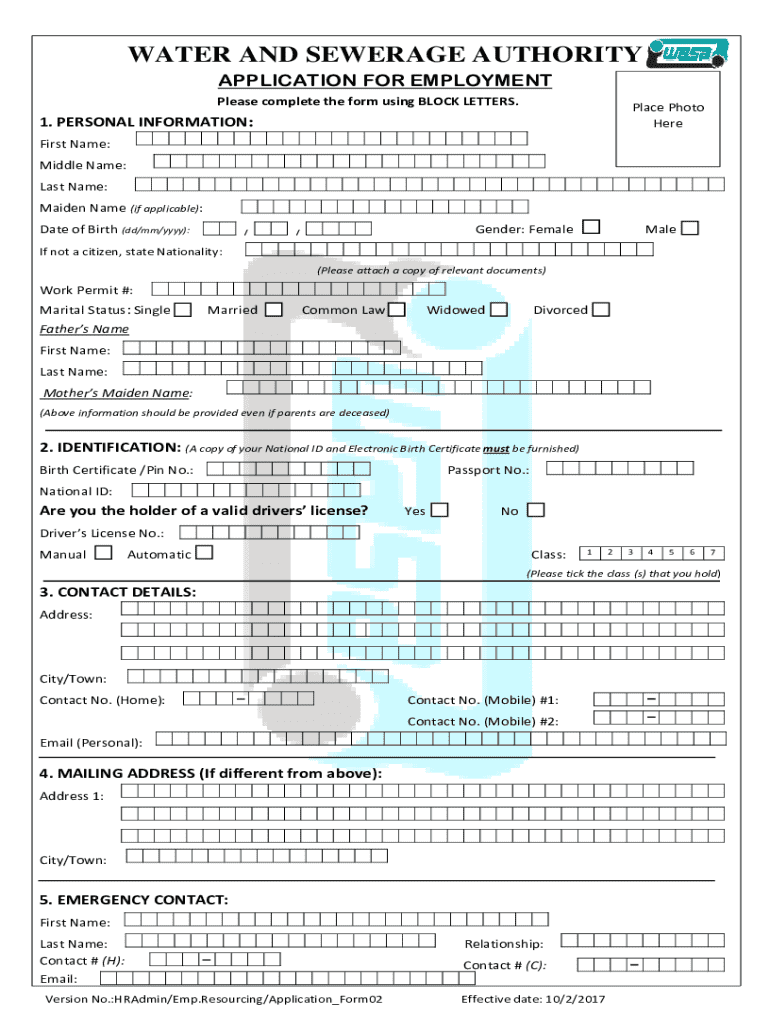
The "Water and Sewerage Authority Application for Employment - WASA" form is a crucial document used by individuals seeking employment with a water and sewerage authority. This application collects comprehensive information about the applicant, including personal details, educational qualifications, and work history. The objective of this form is to ensure that the authority can effectively assess the qualifications and suitability of potential candidates for various roles within the organization.
Purpose and Scope
- Job Applicant Evaluation: The form serves as an initial step in the employment process, allowing authorities to screen applicants efficiently based on the information provided.
- Data Collection: It collects essential data points, such as contact and identification information, which are used to verify the identity and background of the candidate.
- Consent for Verification: By completing the form, applicants consent to the verification of their provided information, ensuring authenticity and reliability in the hiring process.
How to Use the Water and Sewerage Authority Application for Employment - WASA
Understanding how to properly use the WASA employment application is pivotal for candidates aiming to maximize their chances of securing a job.
Filling the Application
- Personal Information: Start by entering your full legal name, address, and contact information. Ensure that these details are accurate to facilitate seamless communication.
- Identification and Security: Provide social security numbers or any other identification numbers required by the authority to validate your identity.
- Professional Background: Detail previous employment history, including roles, responsibilities, and tenure, to provide a comprehensive view of your work experience.
Submission Process
- Verification: Double-check all filled information for accuracy before submission. Cross-verifying data helps avoid potential delays due to errors.
- Formats: Submit the application in the specified format, which could be digital or print, based on the authority’s requirements.
Steps to Complete the Water and Sewerage Authority Application for Employment - WASA
Properly completing the WASA employment application involves a series of careful steps to ensure all necessary information is accurately recorded.
- Gather Required Information: Collect all necessary documents, such as educational certificates, identification documents, and references, before you begin filling out the form.
- Complete Each Section:
- Focus on filling each section completely, ensuring no mandatory fields are left blank.
- Attach copies of relevant documents if required.
- Consent and Declaration: End by signing the declaration section that confirms the accuracy of provided information and consents to verification.
Common Mistakes to Avoid
- Incomplete Information: Omitting details that can result in the application being delayed or rejected.
- Unverified Data: Providing unverified or incorrect data, which can harm credibility and delay the hiring process.
Key Elements of the Water and Sewerage Authority Application for Employment - WASA
Various sections form the backbone of the WASA employment application, each playing an essential role in the evaluation process.
Personal and Contact Information
- Name and Address: Ensures correct personal identification.
- Emergency Contact: Provides a reliable contact person in urgent situations.
Employment History
- Previous Employers: Includes detailed information about previous work engagements, responsibilities, and achievements.
- Skillset and Qualifications: Highlights specific skills relevant to roles within the water and sewerage sector.
Legal Use of the Water and Sewerage Authority Application for Employment - WASA
The legality surrounding the WASA employment application pertains to the rightful collection and use of personal data.
Compliance with Employment Laws
- Data Protection: Ensures personal information is handled in compliance with data protection regulations to safeguard applicant privacy.
- Non-Discrimination: The application process should align with non-discriminatory practices, offering equal opportunities irrespective of race, gender, or other protected characteristics.
State-Specific Rules for the Water and Sewerage Authority Application for Employment - WASA
Specific regulations and procedures may vary from state to state, affecting how applicants complete and submit their forms.
Variation in Requirements
- Identification Norms: Some states might require additional identification documentation.
- Processing Timelines: Different states may have varied timelines for processing applications, influencing expected response times.
Required Documents
Documents play a crucial role in validating the information provided within the application, ensuring all claims are substantiated.
Essential Documentation
- Education Proof: Copies of diplomas or certificates to substantiate educational background.
- Reference Letters: Letters from previous employers or academic mentors, providing third-party verification of credentials and character.
Eligibility Criteria
Understanding who qualifies to apply is vital for aligning personal qualifications with the role's requirements.


Basic Eligibility Requirements
- Age Limitations: Applicants must meet the minimum age requirement, typically set at 18 years in most U.S. states.
- Qualification Expectations: Certain roles may necessitate specific educational qualifications or certifications relevant to water and sewerage operations.
Form Submission Methods (Online / Mail / In-Person)
Various submission methods are available, allowing flexibility in how the WASA employment application is filed.
Submission Options
- Online Portals: Many authorities offer an online application system for convenient and efficient submission.
- Mail Submissions: Forms can also be mailed to the respective offices, adhering to postal guidelines and deadlines.
- In-Person Deliveries: For those preferring direct submission, visiting the authority’s office is also a viable option, ensuring personal delivery and receipt confirmation.