
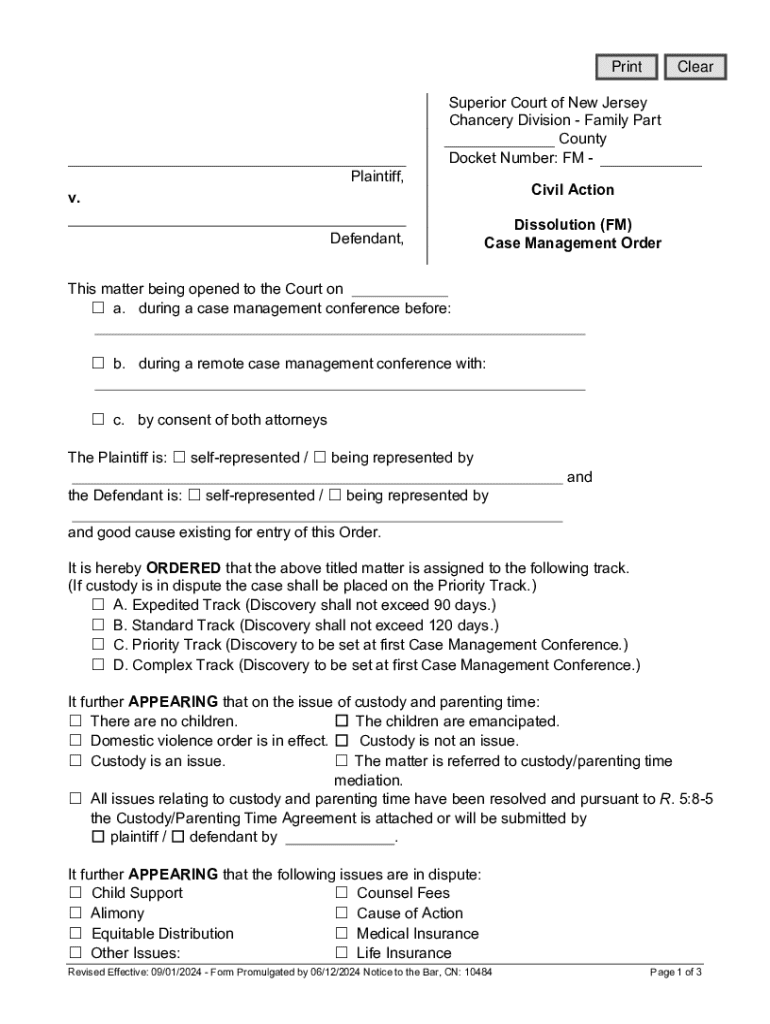







Definition & Meaning
The "Dissolution (FM) Case Management Order" is a legal document utilized within the Superior Court of New Jersey, Chancery Division - Family Part, as part of managing a civil action for dissolution. It serves as a framework to streamline the progression of a dissolution case, primarily focusing on establishing procedures, timelines, and expectations for involved parties. The key functions of this order include assigning discovery tracks, addressing custody and parenting time issues, and setting deadlines for filing necessary documents. The order's goal is to ensure that all parties are adequately prepared for each stage of the legal proceedings.
How to Use the Dissolution (FM) Case Management Order
Using the Dissolution (FM) Case Management Order involves several steps that require attention to detail and adherence to specific guidelines set forth by the court. It begins with receiving the order from the court, which outlines the specific requirements and timelines applicable to your case. It is essential to review the document thoroughly to understand each component outlined, such as scheduled hearings and document submission deadlines. Complying with the order involves gathering and submitting all required documents on time, participating in court hearings as scheduled, and adhering to any modifications or directives issued by the court during the case progression.
Document Submission Procedures
- Review each section of the order to understand required documents and filing timelines.
- Prepare and organize documents, ensuring they meet court standards.
- Submit documents through the indicated method (e.g., online, mail, or in-person).
Steps to Complete the Dissolution (FM) Case Management Order
- Familiarize Yourself with the Order: Read through the order to understand all requirements and schedules.
- Collect Necessary Documents: Gather all documents specified in the order, ensuring they are complete and accurate.
- Follow Assigned Timelines: Adhere to deadlines for submissions and court appearances, as detailed in the order.
- Attend Scheduled Hearings: Prepare for and participate in hearings or conferences as directed by the court.
- Consult Legal Counsel: Engage with a lawyer if needed to ensure compliance and address any complexities.
Document Preparation
- Verify that all personal and case-related information is correct and up-to-date.
- Ensure compliance with any additional court instructions or modifications to the order.
Why Use the Dissolution (FM) Case Management Order
The Dissolution (FM) Case Management Order is utilized to organize and expedite the legal process of dissolution. By providing a structured approach, it helps in avoiding potential delays and miscommunications within the legal proceedings. The order ensures that all parties know their responsibilities and deadlines, contributing to a more streamlined and efficient resolution of the case.
Benefits
- Provides a clear roadmap for managing the case through the legal system.
- Facilitates organized communication between parties and the court.
- Helps anticipate potential issues and address them proactively.
Who Typically Uses the Dissolution (FM) Case Management Order
This form is primarily used by individuals involved in a family dissolution case within New Jersey's legal framework. Typically, this includes spouses undergoing a divorce or separation, along with their legal representatives. Family law attorneys play a crucial role in interpreting and implementing the order for their clients, ensuring that all legal procedures are followed while safeguarding the rights and interests of the parties involved.


Key Parties
- Petitioners and respondents in a family dissolution case.
- Family law attorneys representing involved parties.
- Court officials responsible for case management and oversight.
Key Elements of the Dissolution (FM) Case Management Order
The order includes several elements critical to managing a dissolution case effectively. These elements establish a framework for discovery, manage custody and parenting issues, and outline timelines. Assigning a case to a specific track for discovery helps structure the information-gathering process, while deadlines ensure that filings occur in a timely fashion. Custody and parenting time provisions are particularly crucial for ensuring the orderly handling of family dynamics during the dissolution process.
Critical Components
- Discovery Tracks: Defines the type and scope of information to be exchanged.
- Custody and Parenting Time: Details arrangements concerning children involved.
- Filing Deadlines: Specifies when various documents must be submitted.
State-Specific Rules for the Dissolution (FM) Case Management Order
As the Dissolution (FM) Case Management Order applies to New Jersey, it is structured in accordance with the state's legal framework. Understanding state-specific rules is vital for ensuring compliance. These rules include New Jersey's guidelines for family law procedures, court expectations, and the nuances of managing dissolution cases within this jurisdiction. Lawyers typically use their expertise to navigate these rules on behalf of their clients.
New Jersey-Specific Guidelines
- Follows state regulations concerning family law proceedings.
- Observes local court protocols for case management and filing.
- Addresses any state-specific requirements for custody and parenting arrangements.
Required Documents
Completing the Dissolution (FM) Case Management Order necessitates assembling all relevant documents. These can include financial statements, custody agreements, and prior court orders. The preparation of these documents must align with the directives provided in the order, ensuring that submissions are comprehensive, accurate, and timely.
Necessary Documentation
- Financial Statements: Provide a detailed overview of financial status.
- Custody Agreements: Outline arrangements regarding minor children.
- Prior Court Orders: Include any relevant orders from previous proceedings.
Understanding and correctly completing the Dissolution (FM) Case Management Order is integral for efficiently navigating a family dissolution case in New Jersey. Leveraging the order's structure ensures that legal processes are followed and that the involved parties are kept informed and prepared at every stage.




