






Definition and Meaning of Film Location License Agreement
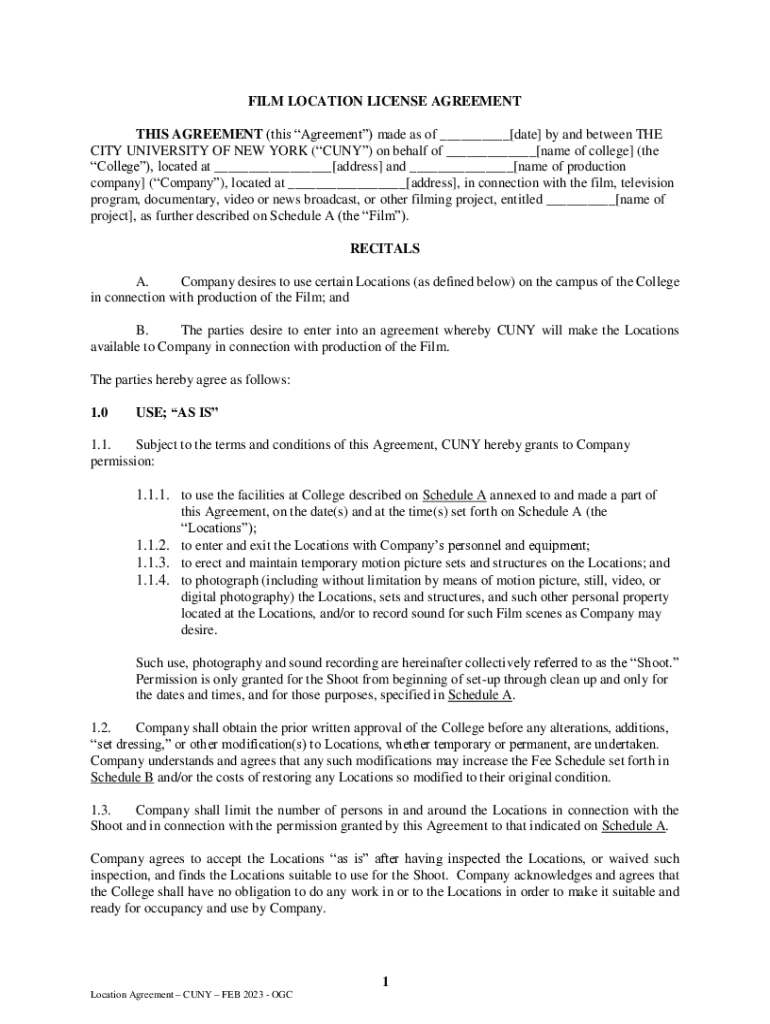
The Film Location License Agreement is a legal document granting a production company permission to utilize specific locations for filming. This agreement outlines the conditions under which the property can be used and includes details on permissions, responsibilities, and obligations of both the licensor, typically the property owner, and the licensee, which is the production entity. A well-structured agreement is crucial to ensure the smooth execution of filming activities while respecting the property and its regular operations.
How to Use the Film Location License Agreement
To effectively utilize the Film Location License Agreement, production companies must first carefully review the document to fully understand its terms and conditions. Users should focus on key sections such as permitted usage times, specific areas accessible for filming, and any restrictions that may affect production schedules. Having a dedicated team to liaise with the property's management and ensure compliance with all stated guidelines is also crucial. Before signing, it is advisable to negotiate any terms that are unclear or not aligned with the production needs.
Fulfilling Contractual Obligations
- Ensure all use of the property adheres strictly to the permissions granted.
- Respect the specified filming dates and times to avoid disruptions.
- Maintain open communication with the property management to handle unforeseen changes.
How to Obtain the Film Location License Agreement
Securing a Film Location License Agreement involves several steps to ensure both parties' needs and legal requirements are met. Interested production companies typically initiate the process by identifying a suitable filming location and contacting the property owner or management. After initial discussions, the draft agreement is prepared, focusing on essential elements like duration, fees, and insurance requirements. Legal counsel is recommended for both parties to review the agreement before finalizing.
Necessary Preparations
- Identify potential filming locations with appropriate facilities.
- Arrange site visits to assess logistics and practicality.
- Discuss the terms of use and negotiate to align with production goals.
Steps to Complete the Film Location License Agreement
Completing the Film Location License Agreement involves several methodical steps to ensure all parties are in agreement. Begin by collecting all necessary information, such as the property's legal description and contact details. Once the draft agreement is ready, both parties should review it thoroughly. Amendments are usually addressed within negotiation meetings. Finally, signatures from authorized representatives of both entities finalize the agreement. It's essential to store signed copies securely for reference throughout the filming period.
Detailed Checklist
- Verify legal descriptions of all locations.
- Ensure insurance documents meet agreement specifications.
- Each party reviews and agrees to all final terms before signing.
Who Typically Uses the Film Location License Agreement
This agreement is predominantly used by production companies and property owners looking to legally formalize the usage of a location for filming. It is important for entities ranging from small independent film companies to large Hollywood studios. Property owners include private individuals, corporations, or institutions such as universities that offer their premises for commercial filming. Understanding the type of film project (e.g., commercial, feature film, student project) can directly influence the agreement's terms.

Parties Involved
- Production companies seeking specific filming settings.
- Property owners renting out their premises.
- Legal advisors ensuring compliance with applicable laws and regulations.
Key Elements of the Film Location License Agreement
The agreement is comprised of several vital components to protect the interests of both licensor and licensee. Essential elements include:
- Permission and Scope of Use: Defines the exact nature of activities permitted and areas accessible.
- Fees and Payment Terms: Details the cost associated with renting the location, including any additional charges for services.
- Insurance Requirements: Specifies required coverage to cover possible liabilities during filming.
- Indemnification Clause: Protects property owners from damages or claims related to the production activities.
- Termination Conditions: Outlines the circumstances under which the agreement may be ended prematurely.
Legal Use of the Film Location License Agreement
Ensuring compliance with legal standards is a fundamental aspect of the Film Location License Agreement. Both parties must abide by local, state, and federal regulations regarding the use of property. Legal advisors play a crucial role in drafting and reviewing the agreement to ensure it complies with applicable laws. Additionally, the production must not interfere with public access and should prioritize safety and minimal disruption during the shoot.
Compliance Checklist
- Review local zoning laws and filming permits.
- Ensure adherence to environmental and safety regulations.
- Maintain a record of all correspondence and signed documentation.
Important Terms Related to Film Location License Agreement
Understanding specific terminology within the agreement is critical for all parties involved. Commonly used terms include:
- Licensee: The party granted permission to use the location for specific activities.
- Licensor: The owner or authorized representative granting permission for use.
- Permissive Use: A clause that defines the specific nature of the activities allowed.
- Hazard Clauses: Address potential risks like hazardous materials and outline safety measures.
- Mutual Indemnity: Agreement by both parties to hold each other harmless from specific liabilities.
By comprehensively understanding these sections, users can navigate the complexities of the Film Location License Agreement, ensuring all parties meet their legal and operational expectations.