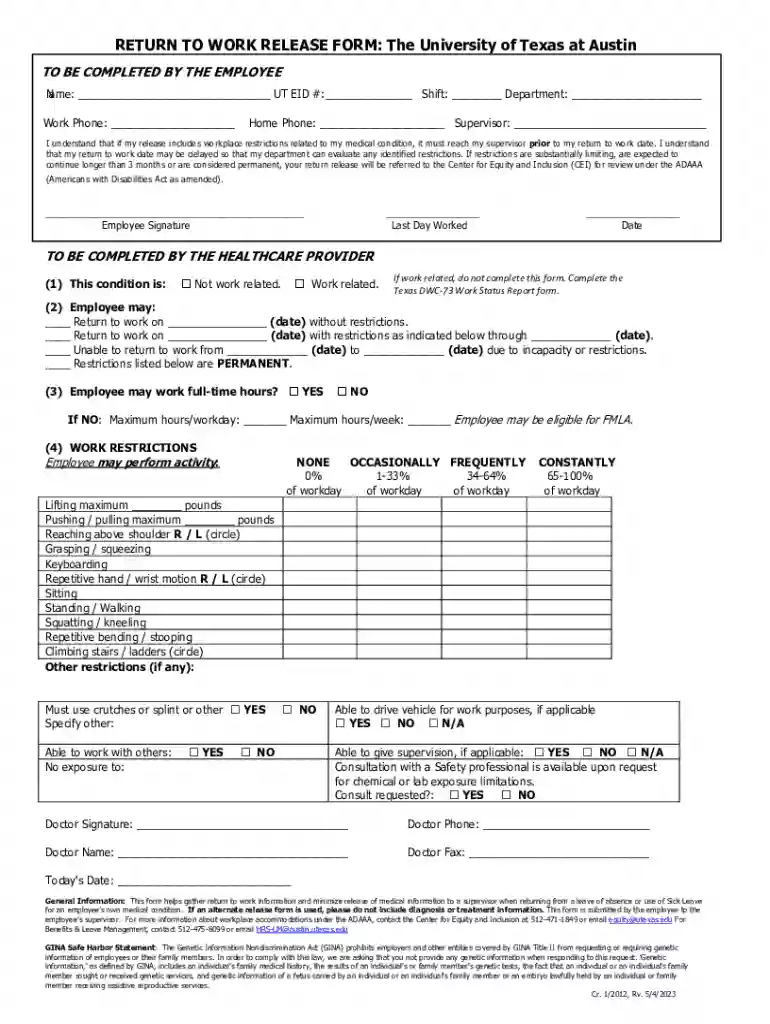
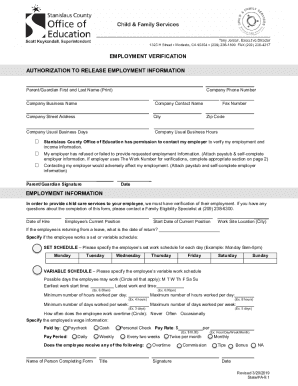
UT Austin RETURN TO WORK RELEASE FORM-final 01-15 (2) Preview on Page 1

UT Austin RETURN TO WORK RELEASE FORM-final 01-15 (2) 2026

Here's how it works

  • 01. Edit your form online

    Type text, add images, blackout confidential details, add comments, highlights and more.

  • 02. Sign it in a few clicks

    Draw your signature, type it, upload its image, or use your mobile device as a signature pad.

  • 03. Share your form with others

    Send it via email, link, or fax. You can also download it, export it or print it out.

Definition and Purpose of the Return to Work Release Form

The UT Austin Return to Work Release Form is a crucial document designed to facilitate the smooth transition of employees back to work after a medical leave. This form ensures that both the employee and the healthcare provider communicate essential information about the employee's health status and any potential work restrictions. The primary purpose is to certify that the employee is medically fit to resume their duties, thereby safeguarding both the employee’s health and the operational efficiency of the workplace.

Key Components of the Form

  • Employee Information: Includes the employee's full name, position, and department.
  • Healthcare Provider's Assessment: Details the provider’s evaluation of the employee’s readiness to return to work.
  • Work Restrictions: Any limitations or accommodations needed for the employee’s return are outlined.
  • Authorization and Signatures: Both the healthcare provider and employee sign to authenticate the information provided.

How to Use the UT Austin Return to Work Release Form

Utilizing this form involves a collaborative effort between the employee, their healthcare provider, and the University of Texas at Austin's HR department. By following these steps, users can ensure the document is completed accurately and effectively:

  1. Employee Completes Personal Information: The employee fills out their demographic and contact details.
  2. Healthcare Provider’s Evaluation: The provider conducts an assessment and notes any work restrictions.
  3. Submission to HR: Once completed and signed, the form is submitted to the HR department for review.

Practical Examples

  • Scenario One: An employee who has undergone surgery may be cleared to return to work with a restriction on heavy lifting for two weeks.
  • Scenario Two: An employee dealing with chronic illness may require a flexible schedule as part of their return plan.

Steps to Complete the Form Successfully

Completing the UT Austin Return to Work Release Form accurately ensures a smooth transition back to work:

  1. Review and Understand Requirements: Carefully read through the form’s instructions.
  2. Gather Necessary Information: Collect all required personal and medical information.
  3. Fill in Employee and Medical Details: Complete all sections relevant to the employee and medical provider.
  4. Ensure Provider Evaluation is Thorough: Encourage the healthcare provider to detail any necessary accommodations.
  5. Check for Completeness and Accuracy: Double-check each section for errors before submission.
  6. Submit the Form: Forward the completed document to the appropriate HR contact at UT Austin.

Detailed Breakdown of Sections

  • Personal Details: Focus on accuracy to match HR records.
  • Medical Assessment: Include dates of medical leave and expected return.
  • Work Restrictions: Clearly outline any limitations that may affect job performance.

Importance of the Return to Work Release Form

The form plays an integral role in maintaining workplace health standards and compliance with labor regulations. It ensures:

  • Health and Safety: Protects both the employee and co-workers from potential health risks.
  • Compliance with Privacy Laws: Respects the confidentiality of medical information under HIPAA regulations.

Benefits of Compliance

  • Smooth Organizational Operations: Minimizes disruption by preparing teams for an employee's return.
  • Employee Well-being: Supports a healthy return, reducing the likelihood of re-injury or further absence.

Who Typically Uses the Form

The primary users of the UT Austin Return to Work Release Form are employees returning from leave and the administrators at the University of Texas at Austin. Health care providers also play a significant role in providing necessary medical assessments.


decoration imageratings of Dochub

Examples of Common Users

  • University Staff: Employees from various departments returning from leave.
  • Medical Professionals: Health care providers responsible for evaluating and endorsing the employee's readiness to work.
decoration image

Legal Considerations and Compliance

Legal compliance is central to the use and processing of the UT Austin Return to Work Release Form. The form must adhere to federal and state laws regarding employee rights and medical privacy.

Legal Use Guidelines

  • Compliance with ESIGN Act: Allows for electronic submissions where applicable.
  • HIPAA Requirements: Ensures all medical data is kept confidential and secure.

By maintaining legal standards, the form aids in preventing legal disputes and ensuring ethical management of employee health information.

See more UT Austin RETURN TO WORK RELEASE FORM-final 01-15 (2) versions

We've got more versions of the UT Austin RETURN TO WORK RELEASE FORM-final 01-15 (2) form. Select the right UT Austin RETURN TO WORK RELEASE FORM-final 01-15 (2) version from the list and start editing it straight away!

VersionsForm popularityFillable & printable
20234.2 Satisfied (26 Votes)
20164.8 Satisfied (245 Votes)
20154.4 Satisfied (392 Votes)
20144 Satisfied (45 Votes)
20124.3 Satisfied (76 Votes)

be ready to get more

Complete this form in 5 minutes or less

Security and compliance

At DocHub, your data security is our priority. We follow HIPAA, SOC2, GDPR, and other standards, so you can work on your documents with confidence.

be ready to get more

Complete this form in 5 minutes or less

Related links

3.11.15 Return of Partnership Income

This IRM section gives instructions for Taxpayer Services (TS) Tax Examiners to process Form 1065, U.S. Return of Partnership Income and Form 1065-B, U.S.Read more

Learn more
20: Sir Roger Penrose - Plotting the Twist of Einsteins Legacy

Dec 6, 2025 Sir Roger Penrose is arguably the most important living descendant of Albert Einsteins school of geometric physics. called Twistor Theory.

Learn more
If you believe that this page should be taken down, please follow our DMCA take down process here