100 gram Fat Diet (for a 24 or 72 hour Stool Fecal 2026

Get Form
100 gram Fat Diet (for a 24 or 72 hour Stool Fecal Preview on Page 1

Here's how it works

01. Edit your form online
Type text, add images, blackout confidential details, add comments, highlights and more.

02. Sign it in a few clicks
Draw your signature, type it, upload its image, or use your mobile device as a signature pad.

03. Share your form with others
Send it via email, link, or fax. You can also download it, export it or print it out.

Definition & Meaning

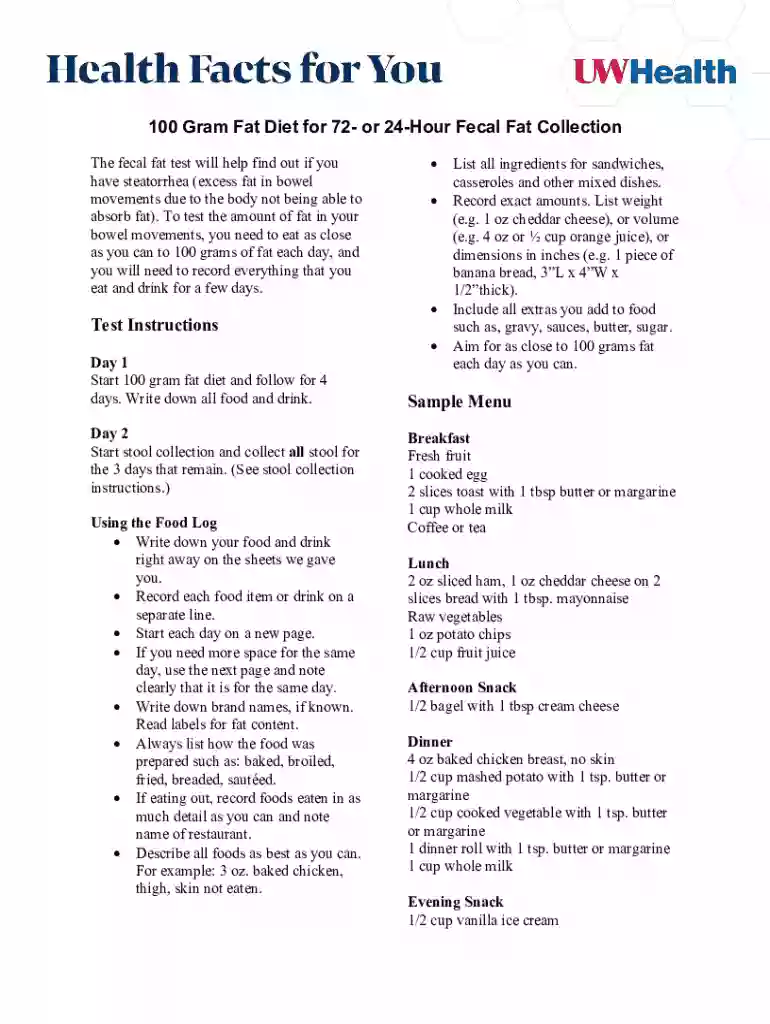
The 100-gram fat diet (for a 24 or 72-hour stool fecal test) is a specialized dietary protocol used primarily for the diagnosis of steatorrhea. Steatorrhea is a condition characterized by the excessive excretion of fat in the stool, indicating a possible issue with fat absorption in the digestive system. Adhering to this diet enables healthcare professionals to accurately assess the body's ability to process and absorb dietary fats by analyzing stool samples collected over the specified period.

How to Use the 100-gram Fat Diet

Following the 100-gram fat diet is crucial for obtaining valid and reliable results from the stool fecal test. To begin, individuals must plan their meals carefully to ensure that they consume exactly 100 grams of fat daily. This involves selecting foods with known fat content and using nutrition labels as guides. Meals should be balanced and may include foods high in healthy fats, such as avocados, nuts, and certain oils, while avoiding excessive sugars and carbohydrates.

Meal Planning Tips

  • Breakfast options: Include eggs, cheese, or full-fat yogurt.
  • Lunch ideas: Consider sandwiches with avocado and lean meats.
  • Dinner suggestions: Opt for grilled fish with olive oil and vegetables.
  • Snacks: Nuts, seeds, and dairy products like cheese can help meet the fat requirement.

Steps to Complete the 100-gram Fat Diet

Adhering to this diet requires meticulous planning and execution. The following steps outline the process:

  1. Consultation: Discuss with a healthcare provider for personalized guidance.
  2. Meal Preparation: Plan and prepare meals in advance to meet dietary requirements.
  3. Food Logging: Keep a detailed log of all food and drinks consumed, including portion sizes.
  4. Fat Calculation: Ensure the total daily intake of fat equals 100 grams.
  5. Stool Collection: Follow protocols for collection and storage during the test period.

Key Elements of the 100-gram Fat Diet

A successful adaptation to the 100-gram fat diet hinges on understanding its core components:

  • Caloric Intake: Maintain adequate caloric intake while focusing on fat content.
  • Nutrient Balance: Continue consuming necessary vitamins and minerals.
  • Consistency: Consume similar quantities of fat daily to ensure consistency.

Who Typically Uses the 100-gram Fat Diet

This diet is typically recommended for patients experiencing gastrointestinal symptoms like chronic diarrhea or those suspected of having malabsorption syndromes. Healthcare providers rely on this diet to gather data essential for diagnosing conditions affecting fat digestion and absorption.


decoration image ratings of Dochub

How to Obtain the 100-gram Fat Diet

The 100-gram fat diet is generally prescribed by healthcare providers. To obtain it:

  • Visit a Healthcare Professional: A doctor can provide detailed instructions and guidance.
  • Nutritionist Consultation: A dietitian can assist in crafting a diet plan tailored to individual dietary needs.
  • Literature Review: Review educational materials provided by healthcare institutions.

Required Documents

For participation in the 100-gram fat diet regimen, individuals may need to provide:

  • Medical History: Background information on any pre-existing conditions.
  • Dietary Logs: Accurate records of food intake during the diet.
  • Consent Forms: Authorization for testing and data collection methods.

Form Submission Methods

Once the dietary and stool logging period is complete, relevant documents and samples must be submitted to the healthcare provider using one of the following methods:

  • In-Person: Directly hand over the documents and samples to the clinic.
  • Mail: Send the documents and samples using a secure postal service.
  • Online: Some facilities may offer digital submissions or uploads for food logs.

Integrating and adhering to these guidelines ensures that users of the 100-gram fat diet for stool fecal testing adhere to a consistent, effective routine that facilitates accurate health assessments.

See more 100 gram Fat Diet (for a 24 or 72 hour Stool Fecal versions

We've got more versions of the 100 gram Fat Diet (for a 24 or 72 hour Stool Fecal form. Select the right 100 gram Fat Diet (for a 24 or 72 hour Stool Fecal version from the list and start editing it straight away!
Versions Form popularity Fillable & printable
2023 4.5 Satisfied (47 Votes)
2013 4 Satisfied (44 Votes)
be ready to get more

Complete this form in 5 minutes or less

Get form

Got questions?

We have answers to the most popular questions from our customers. If you can't find an answer to your question, please contact us.
Contact us
The 3 Day Faecal Fat Collection is a diagnostic test that involves collecting stool samples over three days to measure fat content, used to evaluate fat malabsorption and digestive disorders. All faeces may be collected into one container, or a separate container may be used for each 24 hour period.
This diet requires that you maintain a normal dietary intake of 100 g of fat per day for 3 days prior to the test and during the 3 days of specimen collection. You must include every stool passed and take care not to include paper or in the plastic container.
Eat a normal diet containing about 100 grams (g) of fat per day for 3 days before starting the test.
False positive test results may be caused by: Red meat. Peroxidase-rich vegetables and fruits (turnips, horseradish, artichokes, mushrooms, radishes, broccoli, bean sprouts, cauliflower, apples, oranges, bananas, cantaloupes, grapes) Alcohol and aspirin (especially if taken together)
Your doctor ordered a 24 hour (1 day) or 72 hour (3 days) fecal fat collection to measure the amount of fat in your stool if he or she suspects you may have fat malabsorption. A positive test for fat malabsorption is 7 grams of fat/day or 21 grams of fat in 72 hours.

Security and compliance

At DocHub, your data security is our priority. We follow HIPAA, SOC2, GDPR, and other standards, so you can work on your documents with confidence.

Learn more
ccpa2
pci-dss
gdpr-compliance
hipaa
soc-compliance

People also ask

A positive test for fat malabsorption is 7 grams of fat/day or 21 grams of fat in 72 hours. You must eat 100 grams of fat in your diet while doing the stool collection. If the test is ordered while you are in the hospital, the nurses can help you with your stool collection.
The fecal fat quantitative test (72 hour collection) will show if your childs intestines can absorb fat properly. To do the test, you will collect your childs poop (stool) at home for 3 days, then bring it to a Nationwide Childrens Hospital Laboratory Service Center.

Related links