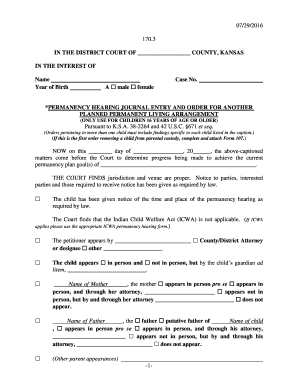
01. Edit your form online
Type text, add images, blackout confidential details, add comments, highlights and more.

Type text, add images, blackout confidential details, add comments, highlights and more.

Draw your signature, type it, upload its image, or use your mobile device as a signature pad.

Send it via email, link, or fax. You can also download it, export it or print it out.
The GML 239 Referral Notice - Onondaga County is a critical document that enables municipal boards to refer development projects to the Onondaga County Planning Board. This referral is conducted under General Municipal Law §239, ensuring that the Planning Board assesses the potential impacts of proposed projects. The notice includes essential information such as applicant details, site specifications, current zoning, land use, project description, and necessary permits. This comprehensive approach helps streamline the decision-making process for local developments, ensuring compliance with county regulations.
By providing an overview of zoning and land use, the document plays a vital role in maintaining organized growth within the county. It ensures that projects align with regional development goals and do not adversely affect the community's infrastructure or resources.
Using the GML 239 Referral Notice - Onondaga County effectively involves several steps:
Filling Out the Form: Start by completing sections related to applicant information, project details, and site location. It is essential to provide accurate and comprehensive data to avoid delays in processing.
Submission to the Planning Board: The filled form must be submitted to the Onondaga County Planning Board. Ensure all required attachments, such as maps or site plans, accompany the referral notice.
Awaiting Review: Once submitted, the Planning Board reviews the project and considers its impact on the county's development framework. This includes evaluating compatibility with existing zoning codes and potential community benefits.
Receiving Feedback: The Planning Board may offer recommendations or stipulate conditions that the project must meet. It’s important to address any feedback promptly to keep the project moving forward.
The GML 239 Referral Notice - Onondaga County is structured to capture various crucial components:
These elements form the backbone of the referral notice, ensuring thorough documentation and clear communication between involved parties.
Completing the GML 239 Referral Notice - Onondaga County involves the following streamlined process:
Understanding several key terms is essential for effective navigation of the GML 239 Referral Notice - Onondaga County:
These terms facilitate effective communication between stakeholders, ensuring a smooth referral process.
Submitting the GML 239 Referral Notice - Onondaga County can be done via various methods:
Each method offers distinct advantages, and the choice depends on the applicant's preference and urgency.
The GML 239 Referral Notice - Onondaga County is governed by strict legal parameters:
These legalities underscore the notice's role in upholding community standards and protecting public interests during development projects.
Utilizing the GML 239 Referral Notice is pivotal for:
The notice is indispensable for stakeholders committed to developing responsibly within Onondaga County.
We've got more versions of the GML 239 Referral Notice - Onondaga County form. Select the right GML 239 Referral Notice - Onondaga County version from the list and start editing it straight away!
| Versions | Form popularity | Fillable & printable |
|---|---|---|
| 2009 | 4 Satisfied (25 Votes) |
At DocHub, your data security is our priority. We follow HIPAA, SOC2, GDPR, and other standards, so you can work on your documents with confidence.