Zoning Administration Division - Fairfax County 2026

Get Form
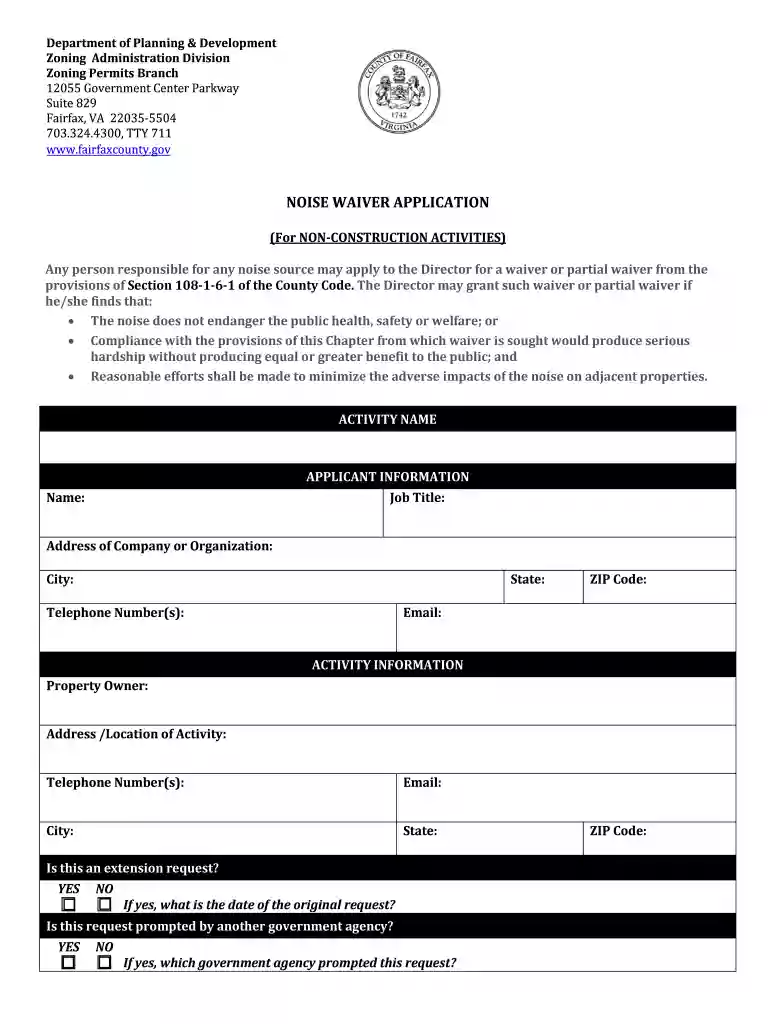
Zoning Administration Division - Fairfax County Preview on Page 1

Here's how it works

01. Edit your form online
Type text, add images, blackout confidential details, add comments, highlights and more.

02. Sign it in a few clicks
Draw your signature, type it, upload its image, or use your mobile device as a signature pad.

03. Share your form with others
Send it via email, link, or fax. You can also download it, export it or print it out.

Definition & Meaning

The Zoning Administration Division - Fairfax County plays a crucial role in maintaining the balance between land use and community growth. It is responsible for administering zoning regulations, which guide building development, land use, and property management. These regulations ensure that community growth aligns with Fairfax County's long-term planning objectives. Understanding the division's function helps property developers, homeowners, and businesses navigate legal requirements effectively.

Core Functions

  • Regulating Land Use: Ensures proper use of land by enforcing zoning codes.
  • Community Planning: Aids in aligning residential, commercial, and industrial growth with community objectives.
  • Property Management Guidance: Provides assistance and resources for property owners regarding zoning compliance.

Practical Examples

Consider a new commercial building project. The zoning administration ensures the development complies with local zoning laws, analyzing factors like building height, usage type, and environmental impact.

How to Use the Zoning Administration Division - Fairfax County

Engaging with the Zoning Administration Division involves several key steps, which facilitate adherence to local zoning regulations. Whether seeking a permit or addressing a zoning concern, understanding the process enables smoother transactions and project approvals.

Essential Procedures

  1. Research Zoning Regulations: Review local zoning laws applicable to your property or project.
  2. Consultation Services: Use the division's resources for advice on zoning queries and compliance issues.
  3. Public Hearings: Attend or participate in hearings if your project impacts community interests or requires special permissions.

Steps to Complete the Process

Completing tasks with the Zoning Administration Division requires familiarity with specific procedural steps. These steps ensure that applications and queries are handled efficiently and according to local regulations.

Step-by-Step Guide

  1. Form Submission:

    • Identify the required form(s) for your specific zoning request.
    • Complete all sections with accurate, detailed information.
  2. Supporting Documents:

    • Gather necessary documentation, such as site plans, building plans, and environmental impact assessments.
    • Ensure all documents comply with submission standards.
  3. Application Review:

    • Submit your application and await preliminary evaluation.
    • Be prepared for requests for additional information or clarifications.
  4. Approval Decision:

    • Depending on the complexity, approvals may involve a review board or committee.
    • Stay informed about the timeline for decisions and any follow-up required.

Why Should You Engage With the Zoning Administration Division?

Engaging with the Zoning Administration Division ensures compliance, fosters informed decision-making, and avoids potential legal conflicts. This engagement provides clarity and aids in seamless community development.

Benefits Highlighted

  • Compliance Assurance: Adhering to local zoning regulations mitigates the risk of legal disputes and fines.
  • Informed Development: Access to expert advice ensures that property development aligns with county goals and community needs.
  • Conflict Prevention: Early engagement can reduce misunderstandings and opposition from community stakeholders.

Key Elements of the Zoning Administration Division Processes

Understanding the critical components involved in the Zoning Administration Division's procedures facilitates better preparation and compliance.

Vital Components

  • Zoning Ordinances: The legal framework governing land use in Fairfax County.
  • Permitting Requirements: Criteria and processes for obtaining necessary development permissions.
  • Hearing Procedures: Steps involved in addressing public or administrative hearings for zoning issues.

Important Terms Related to Zoning Administration Division

Familiarity with specialized terminology aids in effectively navigating the zoning process. Clarity on these terms enhances communication with the division and understanding of regulatory documents.

Key Terminology

  • Variance: A waiver from specific zoning regulations granted under particular conditions.
  • Rezoning: The process of changing a property's designated land-use category.
  • Setback: The required distance between a structure and property boundaries, roads, or other features.

Legal Use and Implications

Legal compliance with zoning regulations is paramount for property owners and developers. Understanding these legal implications safeguards against violations and promotes harmonious community development.

Compliance Mandates

  • Land Use Restrictions: Outlines permissible use categories for properties.
  • Building Codes: Includes structural and safety standards applicable to constructions.
  • Environmental Regulations: Ensures developments consider and align with ecological preservation goals.

State-Specific Rules for Zoning Administration

Recognizing any particular state-imposed regulations specific to Fairfax County is vital for complete adherence to zoning laws and community guidelines.

Virginia-Specific Regulations

  • Commonwealth Environmental Guidelines: Legal requirements for environmental conservation specific to Virginia.
  • Local Infrastructure Coordination: Integration with state transportation and utility frameworks.

Understanding these aspects of the Zoning Administration Division ensures that individuals and organizations can engage with the division effectively, align with regulations, and contribute to beneficial community development.

be ready to get more

Complete this form in 5 minutes or less

Get form

Got questions?

We have answers to the most popular questions from our customers. If you can't find an answer to your question, please contact us.
Contact us
You can report problems online, learn about what happens during an investigation, docHub us via email, phone (703-324-1300, TTY 711), or visit us in person at 12055 Government Center Parkway, Suite 1016, Fairfax, VA 22035.
Fairfax County Police Department Alert: 703-691-2131 TTY 711 (Non-Emergency) FCPDChiefsOffice@fairfaxcounty.gov. 12099 Government Center Parkway. Fairfax, VA 22035. Kevin Davis. Chief of Police.
In 1859, Fairfax was renamed the Town of Fairfax. It was incorporated as a town in 1874. It was incorporated as a city in 1961 by court order. Under Virginia law the city was separated from Fairfax County yet remains the county seat.
Should you have any questions regarding the Zoning Ordinance, please contact the Ordinance Administration Branch of the Zoning Administration Division at 703-324-1314, TTY 711 and ask to speak with the Planner of the Day.
A zoning ordinance is a rule that defines how property in specific geographic zones can be used. Zoning ordinances may also regulate lot size, placement, density, and the height of structures.

Security and compliance

At DocHub, your data security is our priority. We follow HIPAA, SOC2, GDPR, and other standards, so you can work on your documents with confidence.
Learn more
ccpa2
pci-dss
gdpr-compliance
hipaa
soc-compliance

People also ask

Fairfax County was once considered a Republican bastion, but Democrats now control the board of supervisors, school board (officially nonpartisan), offices of the county sheriff, and the commonwealths attorney. Democrats also hold all the Fairfax seats in the Virginia House of Delegates and every seat in the Senate.
General questions? Contact us! 703-FAIRFAX (703-324-7329) (phone, email and social media) is a contact center for general questions from 8 a.m. to 4:30 p.m., Monday to Friday. More specific questions?

Related links