






Definition & Meaning
The Burden Report: Cardiovascular Disease and Stroke in Texas is a comprehensive document crafted by the Texas Department of State Health Services. It aims to provide detailed insights into the state of cardiovascular health in Texas, focusing on the prevalence, impact, and management strategies associated with cardiovascular diseases and stroke. The report is integral for health organizations, policymakers, and public health officials seeking to understand and combat these conditions.
Components of the Report
- Prevalence Data: Offers statistics on cardiovascular disease and stroke incidences in Texas.
- Economic Impact: Details the financial burden these diseases impose on the healthcare system.
- Risk Factors: Identifies key risk factors prevalent in the Texan population.
- Prevention Strategies: Suggests initiatives and programs aimed at reducing the incidence of these diseases.
Applications of the Report
The report serves as an informative guide for implementing public health initiatives and crafting policies. It is also valuable for educational purposes, enhancing awareness among healthcare providers and the general public.
Steps to Complete the Survey Evaluation Form
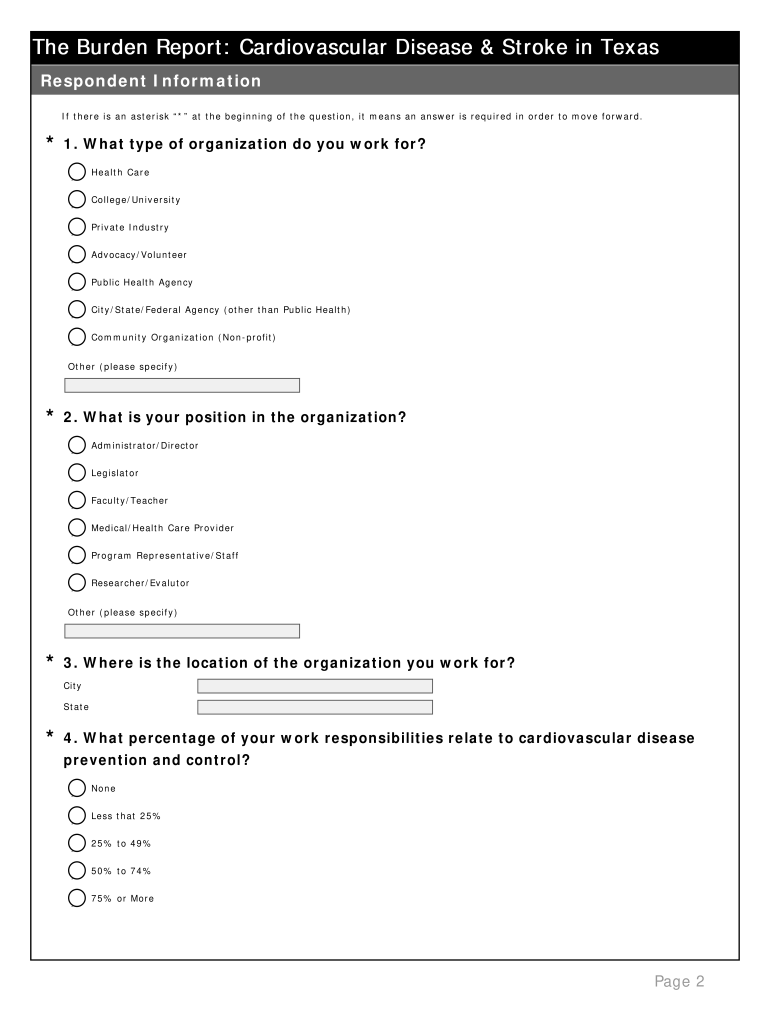
The survey evaluation form accompanying The Burden Report is designed to collect feedback from stakeholders. Here’s how you can effectively complete it:
- Review the Report: Thoroughly read the report to comprehend its findings and recommendations.
- Gather Needed Information: Ensure you have pertinent data ready, such as organizational use cases and any preliminary feedback.
- Answer Demographic Questions: Provide your organization’s details and the role you play in utilizing the report.
- Feedback Section: Offer clear insights on the report’s usefulness, clarity, and the applicability of its findings.
- Provide Suggestions: Share constructive criticism and recommendations for future editions of the report.
- Submit the Form: Ensure all responses are complete and submit the form within the stipulated deadline.
Best Practices for Submission
- Accuracy: Ensure all information is accurate and reflective of your real-world use of the report.
- Clarity: Provide concise, clear responses to each question.
- Timeliness: Submit your responses promptly to contribute effectively to the data collection process.
Why Should You Use the Report
Utilizing The Burden Report: Cardiovascular Disease and Stroke in Texas can have a profound impact:
- Policy Development: Supports policymakers in crafting informed health policies.
- Program Development: Assists health organizations in devising effective health interventions.
- Awareness Initiatives: Enhances public health educational campaigns aimed at reducing disease incidence.
Impact on Public Health
Adopting strategies suggested in the report can lead to a significant reduction in cardiovascular and stroke events in Texas, improving public health outcomes and reducing healthcare costs over time.
Important Terms Related to the Report
Understanding key terms within The Burden Report is crucial for its effective utilization:
- Epidemiology: The study of disease distribution and determinants in populations.
- Comorbidity: The presence of one or more additional conditions co-occurring with a primary condition.
- Morbidity: Refers to the state of being diseased or unhealthy within a population.
- Mortality Rate: The number of deaths caused by a particular disease within a population.
Contextual Definitions
- Risk Factors: Elements such as age, diet, or lifestyle that increase the likelihood of disease development.
- Intervention: Actions taken to improve health outcomes, such as lifestyle changes or medical treatments.
Who Typically Uses the Report
The primary users of The Burden Report include:
- Public Health Officials: To guide health policies and resource allocation.
- Healthcare Providers: For designing patient education and management programs.
- Researchers: To analyze health trends and develop innovative solutions.


User Scenarios
- Policy Makers: Utilize the report in decision-making to prioritize healthcare funding.
- Community Health Workers: Implement prevention strategies in local campaigns.
- Non-Profit Organizations: Develop health programs targeting high-risk communities.
Key Elements of the Report
The Burden Report is structured to provide comprehensive data and insights:
- Data Analysis: In-depth examination of current health statistics in Texas.
- Future Projections: Predictive modeling of disease trends and healthcare impacts.
- Resource Allocation: Recommendations on effective distribution of healthcare resources.
Educational Components
- Case Studies: Real-life examples of successful interventions in various Texan communities.
- Infographics: Visual representations of key data points and trends for easy comprehension.
State-Specific Rules for Texas
The Burden Report incorporates regulations specific to Texas:
- Public Health Guidelines: Adheres to Texas state laws regarding healthcare practices and data collection.
- Resource Distribution: Aligns with Texas-specific funding allocations for health initiatives.
Legal Considerations
- Confidentiality Standards: Complies with state and federal privacy laws related to health data.
- Reporting Requirements: Mandates for health statistics reporting specific to Texas.
Software Compatibility
While The Burden Report is primarily a document-based report, its data can be integrated into various analytical software for enhanced utility:
- Spreadsheet Software: Data tables can be imported into programs like Excel for further analysis.
- Statistical Tools: Utilize software like SPSS for detailed statistical modeling and predictions.
Integration Examples
- Cloud Platforms: Data can be shared across platforms like Google Workspace for collaborative research efforts.
- Data Visualization Tools: Employ applications like Tableau for creating dynamic visual interpretations of the report data.