






Definition & Meaning
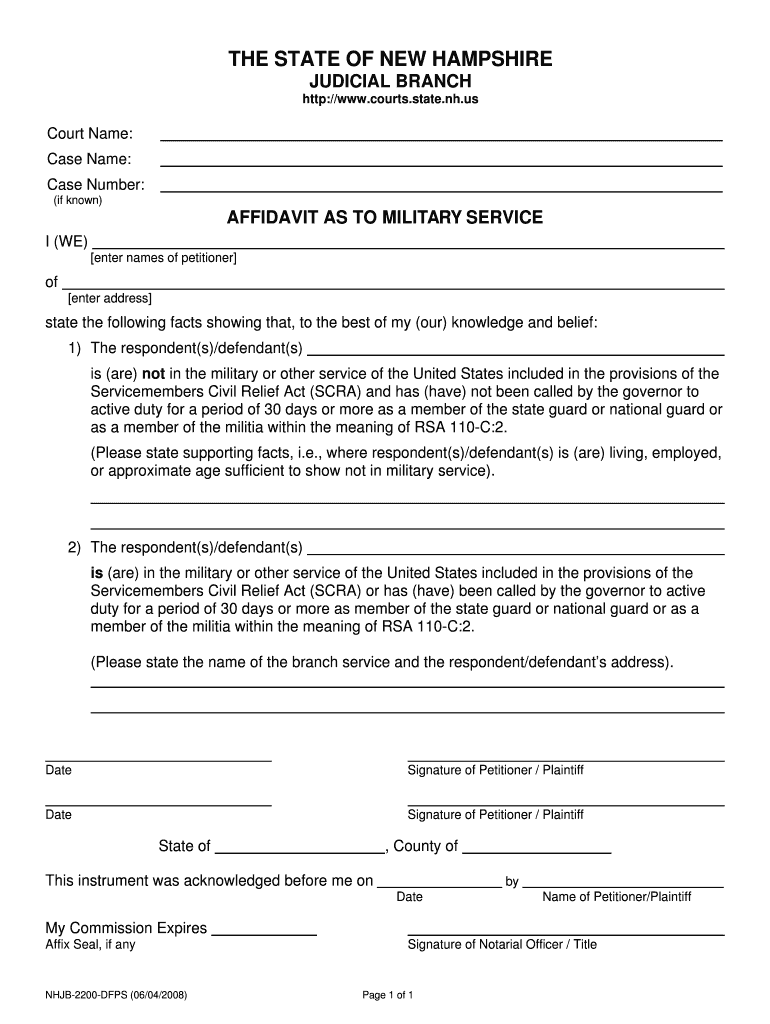
The "Free Petition for Small Estate Administration - New Hampshire" is a legal document used to administer a small estate within the state of New Hampshire. It enables individuals to manage and distribute a deceased person’s estate without undergoing a full probate process, which can be costly and lengthy. This form is specifically designed for estates that fall beneath certain monetary thresholds, simplifying the proceedings for eligible estates.
The purpose of using this form is to streamline the estate administration process, ensuring that the assets of the deceased are distributed in accordance with their wishes or state laws, without undue delay or expense.
Eligibility Criteria
To utilize the "Free Petition for Small Estate Administration - New Hampshire," certain eligibility criteria must be met. These criteria are typically based on the total value of the estate, which must fall below a specified limit as defined by New Hampshire state law.
- The estate must generally be under a threshold of $25,000, though this can vary.
- The decedent must have been a resident of New Hampshire at the time of death.
- There should be no disputes among potential heirs or beneficiaries about the distribution of assets.
Meeting these criteria simplifies the legal process and avoids the need for a full probate, thereby saving time and costs involved with settling the estate.


How to Use the Free Petition for Small Estate Administration - New Hampshire
Using the form involves several key steps to ensure proper execution and acceptance by the relevant New Hampshire authorities.
- Gather Estate Information: Collect all pertinent details, including the total value of the estate, a list of assets, and any liabilities or debts.
- Identify Beneficiaries: Clearly determine who the beneficiaries are and their entitlement to the estate.
- Complete the Form: Carefully fill out the form with accurate and complete information, ensuring that all sections are addressed.
- Attach Required Documents: Include necessary supporting documents that validate the information provided, such as death certificates and asset documentation.
- Signing and Notarization: Ensure the petition is signed by you and any other necessary parties. In certain cases, notarization may be required to authenticate the signatures.
Once completed, submit the form to the appropriate local court for review and processing.
Steps to Complete the Free Petition for Small Estate Administration - New Hampshire
Understanding the steps involved in completing the form is crucial for a smooth administration process.
- Read the Instructions: Begin by thoroughly reading any instructions accompanying the form to understand the requirements fully.
- Fill Out Personal Information: Enter the decedent’s personal information, including their full name, date of birth, and date of death.
- Itemize Estate Assets: List all estate assets, including bank accounts, real estate, and personal property, along with their values.
- List Debts and Liabilities: Document any outstanding debts or obligations the estate must settle.
- Identify Heirs and Beneficiaries: Provide detailed information about the heirs and their respective shares of the estate.
- Review and Sign: Carefully review the completed form for accuracy before signing it. Consider professional advice to ensure compliance with legal standards.
By following these structured steps, the potential for oversight is minimized, facilitating a quicker approval process by the court.
Key Elements of the Free Petition for Small Estate Administration - New Hampshire
This form contains essential elements that guide the administration of a small estate.
- Decedent's Information: Full details about the deceased, including personal and last residence information.
- Estate Valuation: A comprehensive accounting of the estate’s total value and an itemized list of assets.
- Heir and Beneficiary Information: Names and contact details of all parties entitled to a portion of the estate.
- Liabilities and Debts: Clear documentation of any debts owed by the estate.
- Signatures and Notarization: Required signatures from the petitioner and possibly a notary to validate the petition.
These elements ensure that all necessary legal and procedural requirements are addressed.
State-Specific Rules for the Free Petition for Small Estate Administration - New Hampshire
New Hampshire has specific rules governing the use of this form. Understanding these rules is crucial for a valid petition.
- The petition can only be used if the estate’s total value does not exceed the state-set limits.
- The estate must have no ongoing disputes among beneficiaries.
- The decedent must not have left a will that complicates the straightforward distribution of assets under the small estate administration process.
Adhering to these state-specific guidelines assists in avoiding rejection or delays in processing.
How to Obtain the Free Petition for Small Estate Administration - New Hampshire
Acquiring the form involves certain steps and considerations.
- Court Websites: The form is usually available for download on the New Hampshire Judicial Branch's official website.
- Legal Assistance: Consulting with an estate attorney can provide access to the form and relevant advice on its completion.
- Local Probate Courts: Visiting local probate courts can furnish individuals with not only the form but also resources for understanding it.
Required Documents
Providing the correct supporting documents is essential for successful petition acceptance.
- Death Certificate: Official proof of the decedent’s death is necessary.
- Asset Documentation: Proof of asset values, such as bank statements and property deeds.
- Debt Records: Documents showing existing debts and obligations of the estate.
- Beneficiary Identification: Official identification proving the relationship to the deceased.
Submitting comprehensive documentation ensures the form is complete and supports the petition’s validity.