01. Edit your form online
Type text, add images, blackout confidential details, add comments, highlights and more.

Type text, add images, blackout confidential details, add comments, highlights and more.
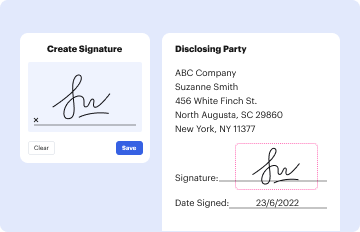
Draw your signature, type it, upload its image, or use your mobile device as a signature pad.

Send it via email, link, or fax. You can also download it, export it or print it out.
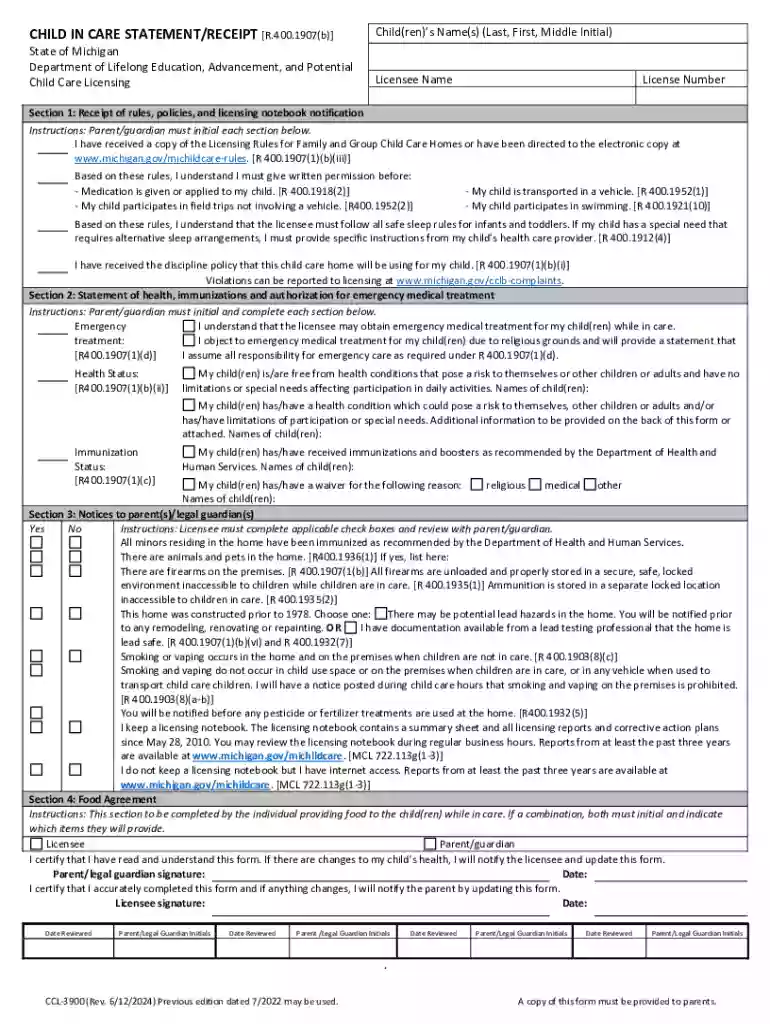
The Child in Care Statement/Receipt R(b) is a document issued by the Michigan Department of Lifelong Education, focusing on the terms and conditions that parents or guardians need to acknowledge when enrolling a child in a licensed care facility. It ensures that both parties understand the child care rules concerning health, safety, and the rights of the child while in care.
The form serves as an official record that confirms acknowledgment of the child care services regulations. It outlines the obligations of the care provider and the rights of the parents or guardians, maintaining transparency about the service terms.
To effectively use this form, both the parents or guardians and the child care provider must complete and sign it. This ensures there is a mutual understanding of conditions such as:
This form should be reviewed and understood thoroughly before signing. Once completed, keep a copy for your records as it will be essential for future reference in case of disputes or inquiries.
Ensure all required fields are completed to avoid delays or complications in processing your child's care arrangement.
The form contains crucial sections that address specific responsibilities and rights, including:
Each element is critical for the protection and safety of the child and ensures compliance with Michigan state regulations.
Understanding key terms in the form is essential:
Recognize these terms, as they dictate specific conditions agreed upon between you and the provider.
The primary users of this document are:
Knowing the stakeholders involved is important for understanding the form's importance in child care arrangements.


Legally, this document is essential for:
Ensure that the form is correctly filled out and stored as it serves as a key legal document between you and the child care facility.
In Michigan, child care providers are required to comply with certain state-specific regulations:
Understanding state-specific laws ensures both the parents and care providers fulfill their responsibilities effectively.
We've got more versions of the CHILD IN CARE STATEMENT RECEIPT R 400 1907(b) form. Select the right CHILD IN CARE STATEMENT RECEIPT R 400 1907(b) version from the list and start editing it straight away!
At DocHub, your data security is our priority. We follow HIPAA, SOC2, GDPR, and other standards, so you can work on your documents with confidence.