01. Edit your form online
Type text, add images, blackout confidential details, add comments, highlights and more.

Type text, add images, blackout confidential details, add comments, highlights and more.

Draw your signature, type it, upload its image, or use your mobile device as a signature pad.

Send it via email, link, or fax. You can also download it, export it or print it out.
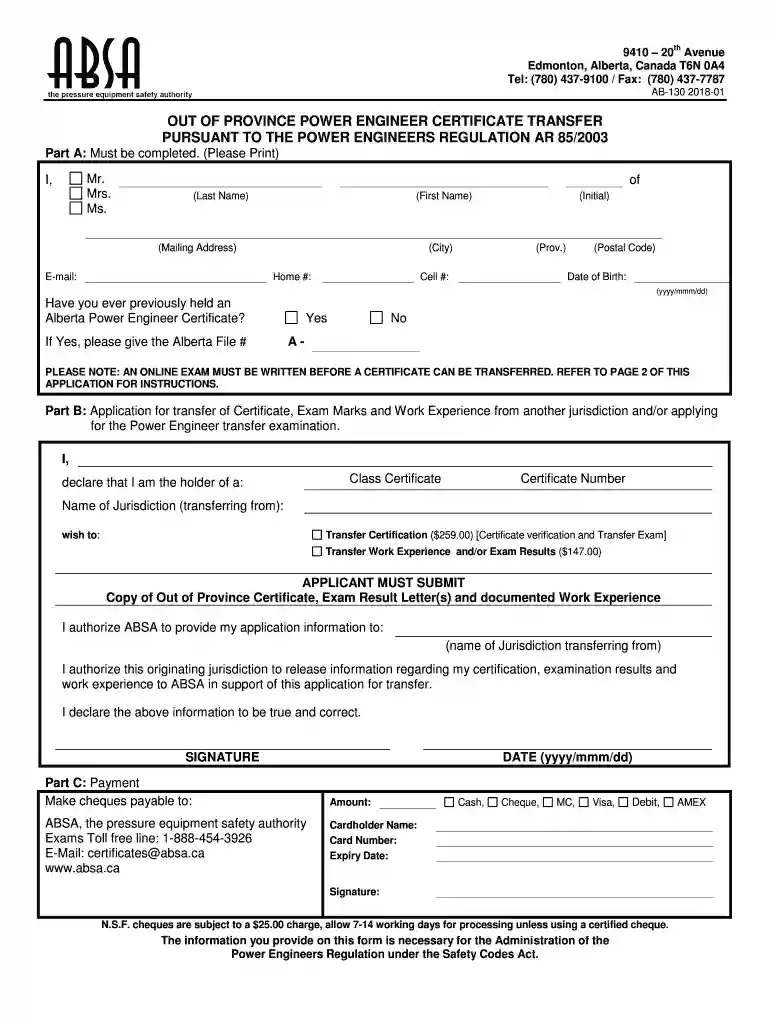
The AB-130 Out of Province Power Engineer Certificate Transfer Application (D0040804-14) DOC wdNOSTAMP is a vital document used by power engineers seeking to transfer their certification from one Canadian jurisdiction to Alberta. This form ensures that power engineers can streamline their certification process while enabling the mutual exchange of information between different jurisdictions. It plays a crucial role in maintaining industry standards across provincial lines.
To access the AB-130 Out of Province Certification Transfer Application, applicants can download it from official Alberta regulatory websites or request it from industry-related organizations. Ensuring you retrieve the most current version of the form is essential to comply with the latest procedural standards.
Personal Information: Fill out your full name, contact details, and current power engineer certification level.
Certification Details: Provide information about the original issuing province, your certificate number, and the date of issue.
Documentation: Attach all necessary documents that support your application, such as proof of current certification and work experience.
Examination Requirements: Confirm your understanding and readiness to complete any Alberta-specific examinations that may be required.
By following these steps, applicants can ensure a thorough and error-free submission.
This form is invaluable for ensuring power engineers maintain their qualification while moving between provinces. It allows engineers to work legally in Alberta by transferring their credentials without starting the certification process anew. Furthermore, it reduces bureaucratic barriers and supports labor mobility within Canada.
Power engineers certified in provinces other than Alberta, but seeking employment in Alberta, are the primary users of the AB-130 form. This includes engineers who have recently relocated or are contemplating a move to Alberta for professional advancement opportunities.
These elements ensure that the application process is streamlined and that the applicant's qualifications are recognized across provincial borders.
The form complies with both provincial and national laws governing the certification and practice of power engineers. Adhering to legal guidelines ensures that transferred certificates meet Alberta's regulatory requirements, thereby enabling engineers to practice legally and ethically within the province.
Applicants must submit supporting documentation alongside their application. This includes:
These documents serve as evidence of the applicant's qualifications and prior experience, facilitating the transfer process.
The approval process involves review and verification by Alberta's regulatory body. Typically, applicants can expect a processing period of several weeks, contingent on the completeness of their submission. Monitoring official communication channels during this period is crucial for timely responses to any additional requirements or inquiries.
By addressing these aspects, the content ensures that applicants have a comprehensive understanding of the AB-130 application process, promoting successful completion and timely certification transfers.
We've got more versions of the AB-130 Out of Province Power Engineer Certificate Transfer Application (D0040804-14) DOC wdNOSTAMP form. Select the right AB-130 Out of Province Power Engineer Certificate Transfer Application (D0040804-14) DOC wdNOSTAMP version from the list and start editing it straight away!
At DocHub, your data security is our priority. We follow HIPAA, SOC2, GDPR, and other standards, so you can work on your documents with confidence.