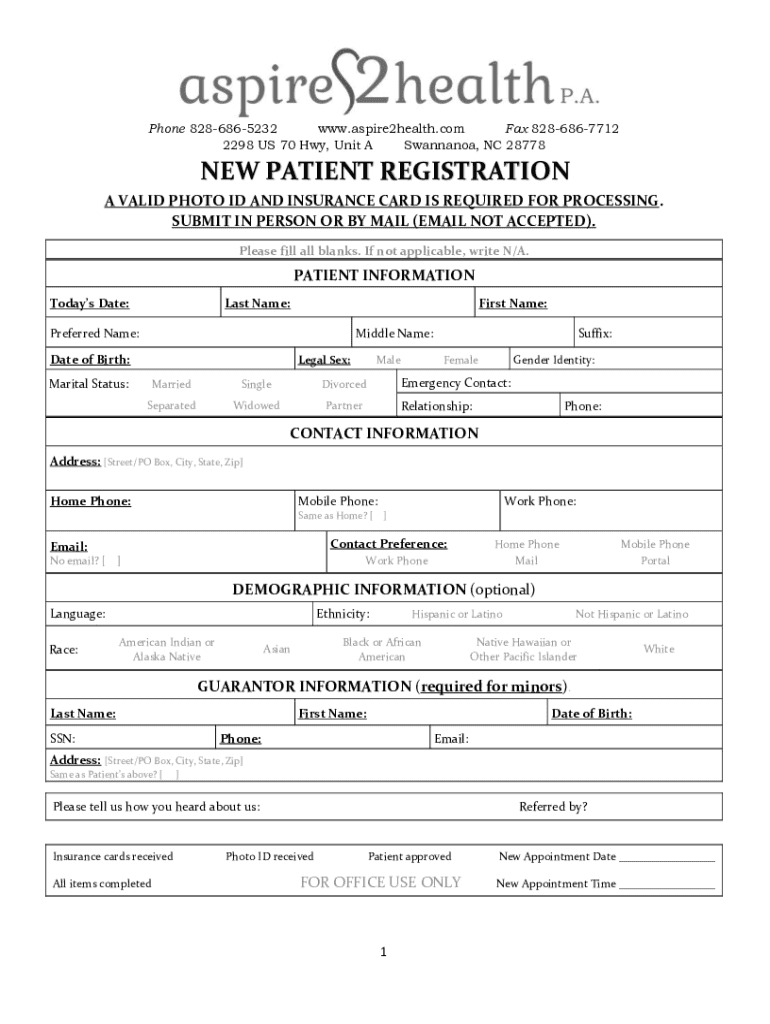







Definition and Purpose of the Fillable Online New Patient Registration Form
The Fillable Online New Patient Registration Form is a digital tool designed to streamline the process of onboarding new patients at healthcare facilities like Aspire Health. This form serves two primary purposes: collecting essential patient information and ensuring that all necessary details are obtained upfront to facilitate seamless integration into the healthcare provider's system. Typically, this form captures demographic information, contact details, insurance information, and health history, offering a comprehensive snapshot of the patient’s needs and background.
Successfully completing this form enables patients to expedite the registration process, reducing wait times and ensuring that healthcare providers have all essential information prior to the patient’s first visit. It is not only a timesaver for patients but also assists administrative staff in maintaining organized records and meeting insurance and legal requirements.
Steps to Complete the Fillable Online New Patient Registration Form
-
Gather Required Documents:
- Have your valid photo ID ready.
- Collect your insurance card.
- Prepare any existing health records or medication lists you may have.
-
Access the Form:
- Locate the fillable form online, typically on the healthcare provider's website like Aspire Health.
- Ensure you have a stable internet connection for uninterrupted access.
-
Enter Personal Information:
- Fill in your full name, address, date of birth, and contact details.
- Provide emergency contact information for safety purposes.
-
Add Health History:
- Include any allergies, medications, and significant medical history.
- Document any family health history that might be pertinent.
-
Review and Sign:
- Check all entries for accuracy.
- Use the electronic signature feature to sign the document digitally.
-
Submit the Form:
- Send it directly through the healthcare provider’s online portal.
- Some platforms allow for saving the form and submitting it via email.
Who Typically Uses the Fillable Online New Patient Registration Form
The fillable online new patient registration form is commonly used by a diverse group of individuals seeking healthcare services. Primarily, it is used by:
- First-Time Visitors: Individuals who are accessing a healthcare provider's services for the first time.
- Parents or Guardians: Completing forms on behalf of minors who require medical attention.
- Patients with Chronic Conditions: Who may require regular updates to their medical information whenever they visit a new specialist or healthcare facility.
- Elderly Patients: Often assisted by caregivers or family members in filling out the form to ensure comprehensive care.
This form is integral to ensuring that all patients receive the personalized care they need, based on accurate and detailed information.


Important Terms Related to the Fillable Online New Patient Registration Form
Understanding specific terms related to the Fillable Online New Patient Registration Form can help in accurate completion. Some key terms include:
- Demographics: Basic patient information like age, gender, and address.
- Guarantor: The person responsible for financial matters related to the patient if they are a minor.
- Health History: A record of past medical treatments, conditions, and familial health issues.
- Insurance Information: Details about the patient’s health insurance provider, plan, and coverage.
These terms ensure all relevant parties involved in the patient's care are on the same page regarding expectations and responsibilities.
Legal Use of the Fillable Online New Patient Registration Form
The legal use of the Fillable Online New Patient Registration Form is aligned with privacy regulations such as HIPAA in the United States. Patients are assured that their personal and health information will be handled confidentially and only used for healthcare-related purposes.
By electronically signing the form, patients agree to the terms laid out by the healthcare provider, including the sharing of pertinent medical information with authorized entities for treatment and billing purposes. Healthcare providers must comply with regulations to maintain the confidentiality and security of patient data.
Key Elements of the Fillable Online New Patient Registration Form
The form is structured to cover crucial elements that safeguard both the patient’s health and the provider’s ability to deliver adequate care. Key elements include:
- Identification: Accurate identification through name, date of birth, and photo ID.
- Insurance Coverage: Current insurance plan details and coverage specifics.
- Medical Records: Previous medical records, current medications, allergies, and any treatment plans.
- Emergency Contacts: Specific contacts to be reached in case of an emergency.
Each section plays a vital role in preparing both the patient and the healthcare provider for effective healthcare delivery.
Software Compatibility and Integration
The fillable form benefits from being compatible with various software and online platforms. Patients can fill out the form using tools like DocHub, which offer flexibility and accessibility. DocHub’s integration with services such as Google Drive ensures that patients can store, retrieve, and submit forms effortlessly.
Software compatibility facilitates seamless importation of the form into existing digital records within the healthcare provider’s systems, ensuring that patient data is readily accessible for future visits. This digital approach minimizes errors often associated with manual data entry, improving overall efficiency.
State-Specific Rules for the Fillable Online New Patient Registration Form
While the form is primarily standardized, state-specific rules can influence certain sections, especially those related to minors, consent, and insurance requirements. Healthcare providers may include additional sections based on regional regulations, such as consent forms for specific treatments or state-mandated disclosures.
Patients should be aware that varying laws can affect the information required on these forms, and it’s advisable to check with their healthcare providers for any additional documentation or details that might be necessary to comply with state laws.