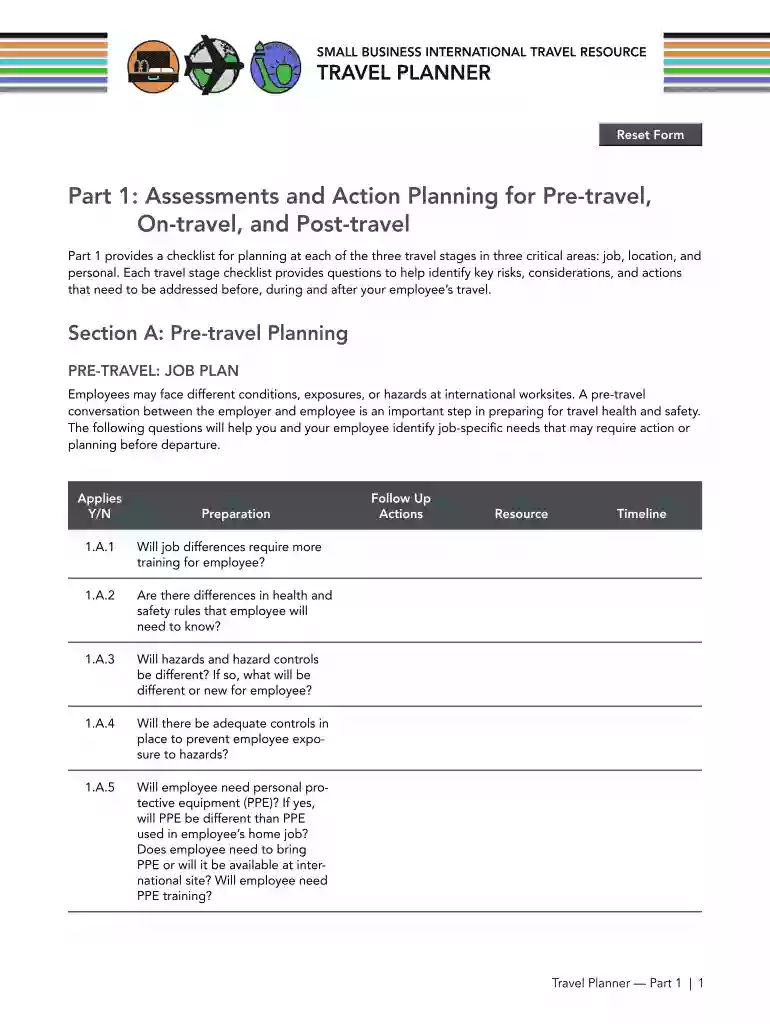
Key Elements of the Small Business International Travel Resource Travel Planner
The "Small Business International Travel Resource Travel Planner" is meticulously crafted to ensure a comprehensive approach to international business trips. It covers various aspects essential for pre-travel, on-travel, and post-travel phases. Key elements of the planner include:
- Risk Assessment: This section identifies potential risks associated with international travel, such as health issues or political instability, and advises precautionary measures.
- Health and Safety Protocols: It emphasizes the importance of vaccinations, health insurance, and emergency procedures to ensure travelers' well-being.
- Documentation Checklist: A list of necessary travel documents, including passports, visas, and travel insurance, ensures all paperwork is in order before departure.
- Communication Strategies: Provides guidelines on maintaining communication with the home office and emergency contacts while abroad.
- Cultural Sensitivity Guidance: Offers insights into cultural norms and practices to foster respectful and successful international engagements.
How to Use the Small Business International Travel Resource Travel Planner
Utilizing the planner effectively can streamline travel preparations and execution. The following steps outline its usage:
- Pre-Travel Preparation: Begin by reviewing the risk assessment section to identify and mitigate potential travel hazards. Prepare all necessary documentation as listed in the checklist.
- On-Travel Implementation: Follow safety protocols diligently and maintain regular communication with your home office. Ensure to have contingency plans ready as per the planner's recommendations.
- Post-Travel Review: After returning, evaluate the trip outcome against the planner's objectives. Document lessons learned and feedback for future reference.
Steps to Complete the Small Business International Travel Resource Travel Planner
Completing this planner involves a series of detailed steps:
- Gather Preliminary Information: Collect necessary business data, travel destination details, and participant information.
- Conduct a Thorough Risk Analysis: Use the planner to assess travel risks and design contingency plans.
- Compile Necessary Travel Documentation: Ensure all required documents are prepared and verified.
- Set Up Communication Channels: Establish a reliable communication framework with relevant stakeholders.
- Review Health and Safety Measures: Confirm health protocols are understood and followed by all travelers.
Important Terms Related to the Small Business International Travel Resource Travel Planner
Understanding key terms enhances the effective use of the planner:
- Contingency Plan: A proactive strategy for addressing unexpected events encountered during travel.
- Cultural Intelligence: The ability to understand and interact respectfully with diverse cultures.
- Travel Insurance: A protection plan covering potential medical emergencies or travel disruptions.
Digital vs. Paper Version
While the planner is available in both digital and paper formats, the digital version offers advantages such as:
- Ease of Access: Accessible via computers and mobile devices, providing convenience regardless of location.
- Interactive Updates: Allows real-time edits and updates, ensuring the most current information is available.
- Environmental Benefits: Reduces paper use, aligning with eco-friendly business practices.
Examples of Using the Small Business International Travel Resource Travel Planner
Real-world application of this planner includes:
- Pre-Conference Travel: Executives use the planner to coordinate international conference trips, ensuring all logistic details are settled.
- Market Expansion Trips: Small businesses venturing into new international markets use the planner to strategize travel plans and verify compliance with local regulations.
- Cultural Exchange Programs: Organizations planning to engage in international cultural activities employ the planner for seamless execution and cultural alignment.
Why Use the Small Business International Travel Resource Travel Planner
Incorporating this planner into business travel arrangements offers several benefits:
- Enhanced Safety: Ensures comprehensive safety measures are in place, reducing risks encountered during international travel.
- Increased Efficiency: Streamlines travel processes, saving time and resources.
- Improved Cultural Engagement: Equips travelers with insights and knowledge for engaging effectively with diverse cultures and customs.
Required Documents
The planner outlines a robust documentation framework crucial for international travel:
- Passports and Visas: Verified and current travel documents for all destinations.
- Travel Itinerary: Detailed itinerary covering all travel activities and engagements.
- Medical Records: Documents supporting health requirements, including vaccination records.
Business Types that Benefit Most from the Small Business International Travel Resource Travel Planner
Certain business types derive significant advantages from using this planner:
- Export Companies: Businesses involved in international trade utilize the planner to manage travel for market research and client engagement.
- Consulting Firms: Consultants deploying teams abroad benefit from structured travel preparations outlined in the planner.
- Non-Profit Organizations: Charitable organizations conducting international outreach use the planner to ensure donor and volunteer travel safety.
How to Obtain the Small Business International Travel Resource Travel Planner
Businesses can access the planner through various channels:
- Company Resources: Large firms may provide the planner as part of their employee travel support package.
- Industry Associations: Membership in professional associations may offer access to such resources.
- Digital Platforms: Available for download from reputable business and travel websites for easy integration into business travel processes.