






Definition and Meaning
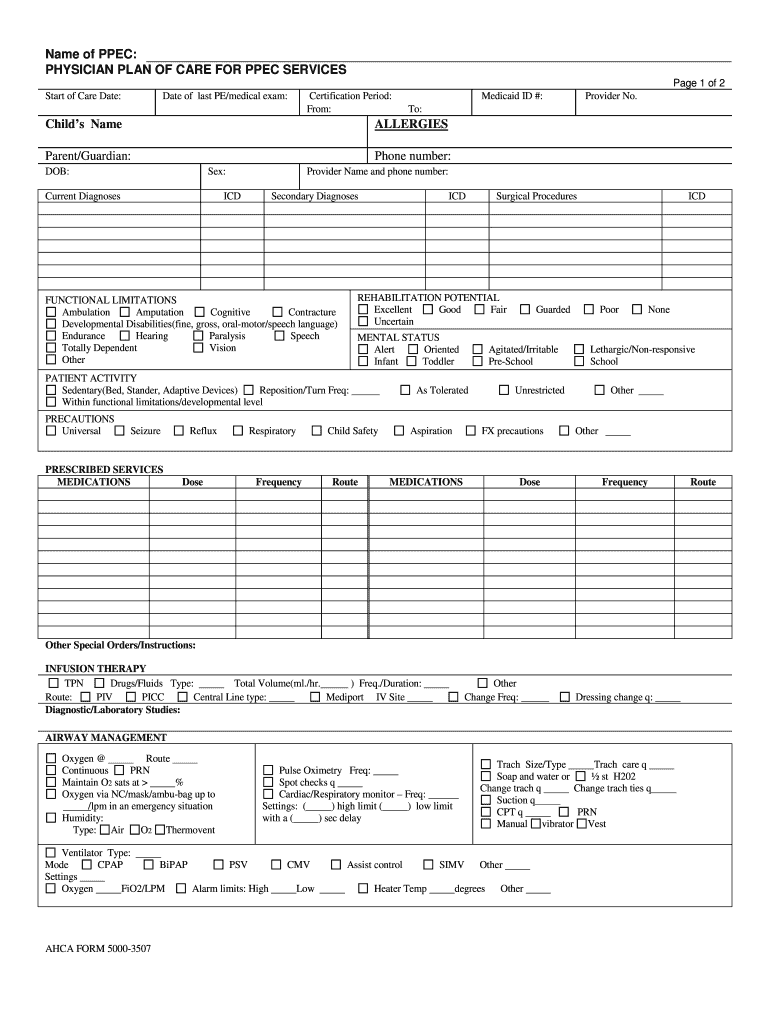
The Physician Plan of Care for Pediatric PPEC Services, commonly referred to as the PPEC Plan of Care, is a detailed medical document essential for managing the health and well-being of children receiving Prescribed Pediatric Extended Care (PPEC) services. This plan encompasses a comprehensive overview of a child's medical needs, prescribed services, medications, and overall care strategy. It serves as a cornerstone in ensuring that a child receives consistent, coordinated, and optimal care. Typically formulated by healthcare professionals, the PPEC Plan of Care outlines specific interventions and the frequency and duration of required services.
Key Components
- Patient Information: The plan captures detailed demographics and personal information about the child, ensuring clarity and precision in identifying the patient.
- Current Diagnoses: Includes the child's existing medical diagnoses and conditions that require attention and treatment.
- Prescribed Services and Medications: Details specific services and medications prescribed to address the child's health concerns.
- Rehabilitation Potential and Functional Limitations: Evaluates the child's capability for rehabilitation and identifies any limitations they might face.
How to Use the PPEC Plan of Care
The PPEC Plan of Care is used as a guiding document by healthcare providers and caregivers to execute actionable and effective care strategies for children. It provides a structured approach to implementing care involving multiple stakeholders, including physicians, therapists, and family members.
Using the Plan Effectively
- Review Thoroughly: Healthcare providers should review the PPEC Plan comprehensively to understand the outlined objectives and goals.
- Coordination with Team Members: Discuss the plan with all relevant care team members to ensure synchronized efforts in providing the child's care.
- Adherence to Guidelines: Follow the specified protocols, ensuring all prescribed treatments and services are provided as per the plan.
Steps to Complete the PPEC Plan of Care
Completion of the PPEC Plan of Care involves meticulous data gathering and documentation to tailor the care plan to the child's unique needs.
Step-by-Step Instructions
- Gather Patient Information: Collect comprehensive details, including medical history, current prescriptions, and relevant diagnoses.
- Consult with Medical Professionals: Work collaboratively with doctors, nurses, and therapists to define the care requirements.
- Document Care Services: Clearly outline the necessary services and state their frequency and duration.
- Specify Medical Equipment and Supplies: List any equipment or supplies needed for the child's care.
- Establish Discharge Plans: Develop a clear course of action for transitioning the child out of the PPEC setting when appropriate.
Important Terms Related to PPEC Plan of Care
Understanding specific terminology is crucial for effectively using and implementing the PPEC Plan.
Key Terms
- Prescribed Pediatric Extended Care (PPEC): A structured program providing specialized care for children with complex medical conditions.
- Rehabilitation Potential: The capability of a child to recover or improve with therapy.
- Functional Limitations: Restrictions in a child's ability to perform certain tasks or activities.
Legal Use of the PPEC Plan of Care
The PPEC Plan of Care serves as a legal document outlining the medical and care responsibilities for a child under healthcare supervision. It forms a basis for medical decisions and service provision and can be referenced in legal scenarios requiring verification of medical intent.
Compliance and Requirements
- Ensure the plan complies with State and Federal regulations regarding pediatric care.
- Maintain clear documentation to demonstrate adherence to care protocols, which can be critical in legal evaluations.
Who Typically Uses the PPEC Plan of Care
The primary users of the PPEC Plan of Care include a variety of healthcare providers, parents, and caregivers involved in the child's care continuum.

Typical Users
- Pediatricians and Specialists: Physicians responsible for overseeing the child's medical treatment and coordination.
- Nurses and Therapists: Healthcare professionals who perform daily care activities and rehabilitation exercises.
- Family Members and Caregivers: Those directly involved in the day-to-day care and support of the child.
Key Elements of the PPEC Plan of Care
The PPEC Plan is structured around core elements that allow for precise and effective care delivery.
Essential Sections
- Nutritional and Dietary Needs: Specific requirements for the child's nutritional intake, essential for growth and development.
- General Care Requirements: Activities and routines that contribute to maintaining or improving the child's health status.
- Equipment Needs: Details necessary medical equipment for daily care activities.
Steps to Obtain the PPEC Plan of Care
Obtaining the PPEC Plan of Care requires navigating specific channels to ensure it aligns with the child's healthcare needs.
Process
- Consult Healthcare Providers: Engage with your child’s primary care physician or pediatric specialist to initiate the process.
- Collect Necessary Information: Gather all relevant medical records and insurance details.
- Schedule Assessments: Arrange for evaluations by necessary specialists to enrich the plan with accurate and comprehensive data.
State-Specific Rules for the PPEC Plan of Care
Different states may have specific regulations guiding the PPEC services and associated care plans.
Understanding State Variations
- Regulatory Requirements: Each state may impose distinct documentation and approval processes.
- State-Specific Services: Availability of services and eligibility criteria can vary geographically.
Understanding the PPEC Plan in-depth allows caregivers and healthcare providers to deliver optimal and targeted care to pediatric patients. By focusing on nuanced needs and regulatory aspects, users of this plan can ensure comprehensive attention to all facets of a child's health.