






Definition and Meaning of the Kardex Form
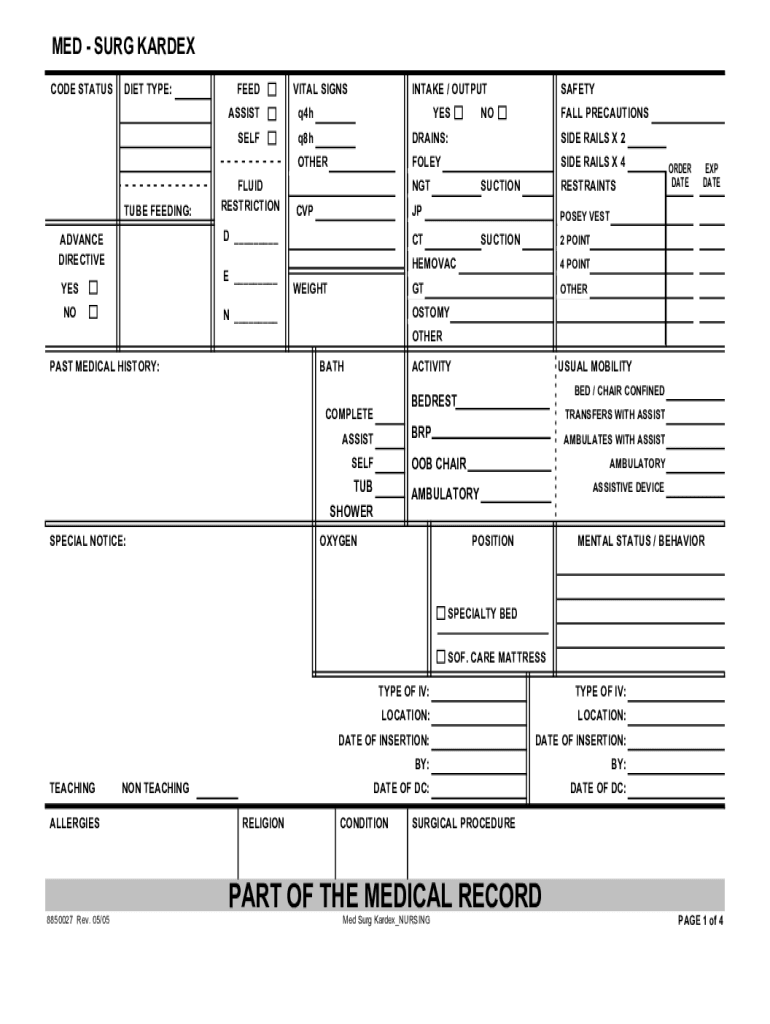
The Kardex form is primarily used in the medical field as a comprehensive communication tool that records essential patient care information. This form is designed to streamline healthcare management by summarizing a patient's current medical status and care plan. It includes various sections that cover a range of critical data, such as the patient's code status, dietary restrictions, vital signs, medical orders, treatments, and mobility assistance requirements.
The Kardex serves as a bridge between various healthcare providers, ensuring that all members of a care team have access to updated and relevant information. This facilitates better coordination and enhances patient safety by providing a clear overview of the patient's needs and treatment plan. Unlike many other forms, the Kardex is a living document that is frequently updated to reflect the most current patient information.
How to Use the Kardex Form
Utilizing the Kardex form involves several key steps aimed at ensuring accurate and up-to-date information is recorded and communicated among healthcare providers. Typically, nursing staff and other healthcare professionals are responsible for maintaining and regularly updating the Kardex.
-
Initial Setup:
- Begin by collecting comprehensive patient data, including personal details, current medical issues, allergies, and ongoing treatments.
- Ensure that all sections, such as diet type and mobility assistance, are initially filled out based on the patient's medical evaluation.
-
Regular Updates:
- Continuously update the form with new information such as changes in treatment, discharge planning details, or any new consultations and orders.
- Changes should be made promptly to ensure all team members have access to the latest patient information.
-
Sharing and Collaboration:
- Use the Kardex as a central point of information during team meetings and handoffs between shifts to maintain continuity of care.
- Highlight specific sections that may need immediate attention or current revision, such as recent changes in medication or treatment plan adjustments.
Who Typically Uses the Kardex Form
The Kardex form is primarily used by nursing staff, but several other healthcare professionals also utilize it as part of their daily workflows to ensure comprehensive patient care.
-
Registered Nurses (RNs): Regularly update and reference the Kardex to track patient care activities, medications, and treatment orders.
-
Nursing Assistants: Use the Kardex to understand daily care needs such as feeding, mobility assistance, and vital signs monitoring.
-
Doctors and Consultants: Review the Kardex to gain a quick overview of a patient's status and ongoing treatments, which is particularly useful in high-turnover environments like hospitals.
-
Rehabilitation Staff and Therapists: Reference mobility and physical therapy sections to tailor treatment sessions and monitor progress.


Important Terms Related to Kardex Form
Understanding specific terminology associated with the Kardex form is essential for effective use:
-
Code Status: This indicates the level of medical intervention a patient prefers should they encounter a life-threatening situation. Understanding this helps coordinate emergency interventions.
-
Dietary Restrictions: Includes any special diet programs or food allergies critical to patient care.
-
Vital Signs: Includes temperature, blood pressure, heart rate, and respiratory rate, essential for assessing a patient’s current health status.
-
Discharge Planning: Refers to the anticipated arrangements for post-hospital care, indicating preparations for the transition from hospital to home or another care facility.
Key Elements of the Kardex Form
The Kardex form is organized into various critical sections that help streamline patient data management and improve healthcare delivery.
-
Patient Identification: Includes basic information like name, age, and medical ID to avoid any mix-ups or errors.
-
Allergies and Alerts: Ensures the care team is aware of any allergies or critical warnings that might influence treatment.
-
Medications and Orders: Lists current medications, dosages, and other physician orders that must be followed.
-
Care Plan Goals: Outlines the specific treatment objectives and expected outcomes, guiding daily activities and long-term strategies.
Legal Use of the Kardex Form
While the Kardex form is not typically a legal document, it plays a crucial role in adhering to healthcare regulations and ensuring patient safety and quality of treatment.
-
Documentation Requirements: Meets standards for patient documentation, contributing to compliance with health care laws and accreditation requirements.
-
Healthcare Regulations: Supports adherence to protocols by providing a clear and detailed record of patient care activities, which may be reviewed during audits.
-
Educational Training: Serves as a learning tool for newer healthcare workers to understand the standard of care documentation.
Software Compatibility with the Kardex Form
With the growing trend of electronic health records (EHR), the Kardex form is often integrated into software systems to ensure easy access and updates.
-
Electronic Health Record Systems: Many hospital management systems incorporate Kardex-style forms to simplify digital record-keeping.
-
Cloud-based Solutions: Ensure that the Kardex form is accessible on various devices, allowing healthcare providers to update or review information remotely.
-
Data Security Measures: Adherence to standards such as HIPAA to protect patient information while allowing seamless data flow between team members.
Examples of Using the Kardex Form in Practice
The Kardex form is instrumental in various real-world healthcare scenarios to enhance patient care.
-
Hospital Settings: Used during daily shift changes to ensure incoming staff has all the necessary up-to-date patient details.
-
Rehabilitative Care: Helps track progress and modify care plans as patients progress or face challenges, enhancing personalized care delivery.
-
Chronic Disease Management: Provides a comprehensive record of long-term treatment protocols and patient responses, facilitating coordinated care.
These examples highlight the breadth of contexts in which the Kardex form can be effectively utilized to maintain high standards of patient care and communication among healthcare providers.