






Definition & Meaning
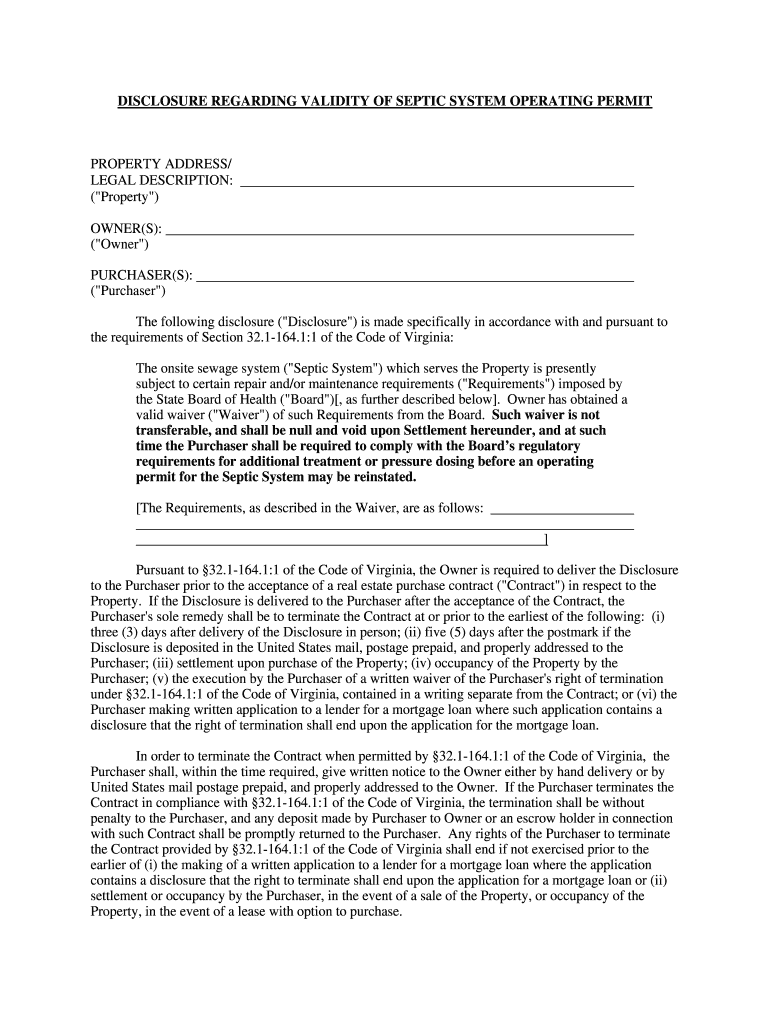
A "residential property disclosure statement" in the Dulles Area is a legal document that sellers must provide to potential buyers during the sale of a residential property. It contains critical information regarding the property's condition and any legal obligations associated with it. In Virginia, for example, this document includes disclosures about specific property features, such as the validity of a septic system operating permit, and outlines responsibilities related to the maintenance and repair requirements imposed by entities like the State Board of Health.
How to Use the Residential Property Disclosure Statement - Dulles Area
To effectively use the residential property disclosure statement in the Dulles Area, both sellers and buyers need to be aware of its purpose and contents. Sellers should:
- Review Legal Requirements: Ensure compliance with local and state laws when preparing the statement.
- Fulfill Disclosure Obligations: Accurately disclose all known material facts about the property as required.
- Provide the Statement Promptly: Deliver the completed statement to the buyer well before the sale is finalized.
Buyers should utilize the statement to:
- Assess Property Condition: Use the information to make informed decisions about purchasing.
- Negotiate Terms: Identify if any disclosed issues require renegotiation of terms or conditions.
- Plan for Future Obligations: Understand any post-sale responsibilities associated with property maintenance.
How to Obtain the Residential Property Disclosure Statement - Dulles Area
Obtaining the residential property disclosure statement in the Dulles Area involves a few steps:
- Contact the Seller or Real Estate Agent: Request the statement directly before proceeding with a sale contract.
- Visit Local Government Websites: Access publicly available resources where forms and templates might be provided for sellers.
- Review State Guidelines: Ensure the statement aligns with the specific disclosure requirements mandated by Virginia’s real estate laws.
Steps to Complete the Residential Property Disclosure Statement - Dulles Area
Completing the residential property disclosure statement in the Dulles Area requires careful attention to detail. Sellers should follow these steps:
- Gather Property Information: Include details about the property's current condition, history, and any legal encumbrances.
- Use Accurate Descriptions: Ensure all entries accurately represent the property's status and any known defects.
- Address Specific Sections: Complete mandatory areas such as septic system status, structural components, and environmental factors.
- Consult Legal Advice if Needed: Seek guidance from a legal expert to ensure compliance with real estate laws.
- Review and Sign: Double-check for completeness and errors before signing, ensuring the document is ready for delivery to potential buyers.
Who Typically Uses the Residential Property Disclosure Statement - Dulles Area
The typical users of a residential property disclosure statement in the Dulles Area include:
- Home Sellers: Obligated to provide detailed information about their property's condition to prospective buyers.
- Real Estate Agents: Assist clients in both completing and interpreting the statement throughout the transaction process.
- Home Buyers: Review the statement to gain insights into a property's condition and any issues they might need to address post-purchase.
- Legal Professionals: Offer guidance to ensure legal compliance and address any disputes that arise from undisclosed property issues.


Key Elements of the Residential Property Disclosure Statement - Dulles Area
The key elements of the residential property disclosure statement in the Dulles Area typically include:
- Property Condition: Information about the current physical state of the property, including structural and functional aspects.
- Legal Obligations: Details on any legal requirements the buyer might need to address, such as permits and waivers.
- Septic System Status: Specific disclosures about the presence and condition of septic systems, if applicable.
- Material Facts: Disclosure of issues affecting the value or desirability of the property, like previous damages or environmental hazards.
State-Specific Rules for the Residential Property Disclosure Statement - Dulles Area
In the Dulles Area, which is part of Virginia, state-specific rules influence the residential property disclosure statement:
- Virginia Residential Property Disclosure Act: Provides specific requirements for what must be disclosed, focusing on particular property conditions and obligations.
- Non-Transferable Waivers: Sellers may need to disclose information about non-transferable waivers concerning maintenance or repairs and their impact on new buyers.
- Timing for Disclosure: The statement should be delivered to buyers before the signing of a sales contract to legally secure property transactions.
Disclosure Requirements
Specific disclosure requirements for the residential property disclosure statement in Dulles Area include:
- Septic Permits and Waivers: Inform buyers about the validity and requirements associated with septic system permissions.
- Material Defects: Sellers must disclose significant issues that might not be apparent during a standard property inspection.
- Regulatory Compliance: Any known compliance or zoning issues that may affect future property use should be disclosed.
Each section of the form requires thorough attention to detail, ensuring both compliance with legal obligations and transparency in property transactions.