






Definition and Meaning
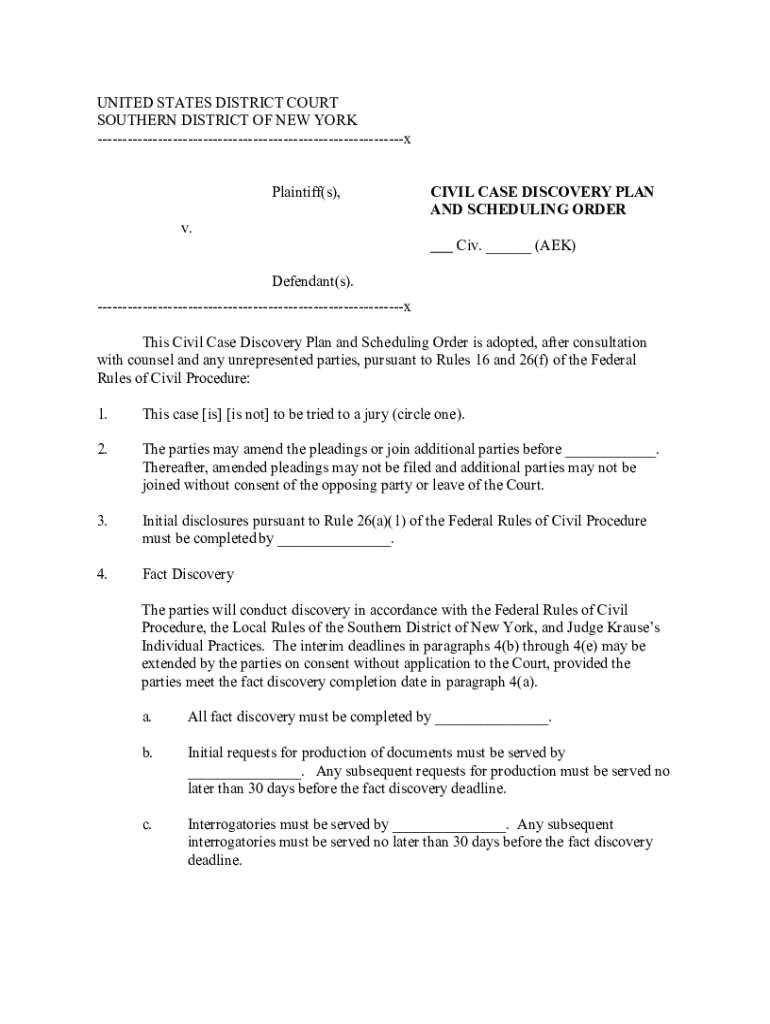
The Civil Case Discovery Plan and Scheduling Order is a formal document used in the judicial process of the United States. It mainly provides a roadmap of the chronological steps involved in a civil case concerning discovery and scheduling. The order sets out the required disclosures, discovery specifics, and other procedural elements necessary for the case's orderly progress. It is particularly utilized in courts like the United States District Court for the Southern District of New York to ensure that all parties comply with the applicable federal and local rules, thereby aiding in the effective management and resolution of the case.
How to Use the Civil Case Discovery Plan and Scheduling Order
When utilizing this document, parties involved in a civil lawsuit must carefully adhere to its outlined procedures and timelines. Here’s a step-by-step guide:
- Review Initial Disclosures: Understand what information must be exchanged between parties at the outset of the litigation.
- Adhere to Timelines: Pay close attention to deadlines for fact discovery and expert witness disclosures.
- Plan for Depositions: Coordinate depositions, ensuring compliance with federal and district court guidelines.
- Engage in Settlement Discussions: Participate earnestly in any scheduled settlement conferences or discussions.
- Prepare Pretrial Orders: Follow the timeline for submitting any necessary pretrial materials as outlined.
Utilizing this order effectively ensures that the case proceeds without unnecessary delays, ultimately contributing to a more efficient legal process.
Key Elements of the Civil Case Discovery Plan and Scheduling Order
Several critical components constitute the framework of this scheduling order:
- Initial Disclosures: These are the preliminary pieces of information that both parties are required to exchange, such as names of witnesses and relevant documents.
- Discovery Deadlines: Specific periods within which the parties must complete fact-finding, depositions, and other discovery activities.
- Amendment Procedure: Guidelines for altering pleadings if new evidence emerges.
- Motion Filing: Specifications on how and when parties can file motions to compel discovery or other procedural motions.
- Pretrial Conference: Scheduling of conference dates to facilitate settlement discussions and trial preparation.
Understanding each element ensures compliance with judicial expectations and aids in the efficient handling of a civil case.
Steps to Complete the Civil Case Discovery Plan and Scheduling Order
Completing this document involves several methodical steps:
- Consult with Counsel: Legal teams on both sides should meet to discuss procedural strategies.
- Draft the Plan: Initial disclosures and a timeline for various discovery phases should be established.
- Confirm Deadlines: Both parties must agree on the discovery schedule and any accommodations needed.
- File with the Court: Submit the completed plan and order for judicial approval, making any necessary amendments as instructed by the judge.
This sequence ensures that all procedural aspects are aligned, reducing the risk of overlooking critical deadlines or requirements.
Who Typically Uses the Civil Case Discovery Plan and Scheduling Order
This document is primarily utilized by legal professionals, including:
- Attorneys: Both plaintiff and defense attorneys use it to navigate the legal landscape of civil cases.
- Litigants: Individuals or entities involved in litigation to understand the discovery process.
- Judges and Court Officials: To monitor compliance with procedural timelines and facilitate case management.
The order offers a clear framework for all parties, promoting a coordinated approach to civil litigation.


Legal Use of the Civil Case Discovery Plan and Scheduling Order
Legally, this order serves several purposes:
- Facilitates Compliance: Ensures adherence to both federal and local discovery rules.
- Enhances Case Management: Provides the court with a tool to manage and streamline case proceedings.
- Supports Judicial Efficiency: Enables judges to oversee and enforce timelines, mitigating court backlogs.
- Guides Litigants: Offers a structured approach to preparing for trial, emphasizing necessary preparatory steps.
The order is integral in maintaining procedural integrity and effective trial preparation.
State-Specific Rules for the Civil Case Discovery Plan and Scheduling Order
Different jurisdictions might have unique requirements concerning this document. For instance:
- Local Rule Variations: Some states or districts may implement additional disclosure obligations or different mediation procedures.
- Timing Discrepancies: Jurisdictions may have varying deadlines for the completion of discovery phases.
Staying informed about these variations is crucial for legal teams operating in multiple jurisdictions.
Penalties for Non-Compliance
Failing to adhere to this order's stipulations can result in several sanctions:
- Monetary Fines: Imposed by the court for disregarding discovery deadlines.
- Adverse Inferences: Courts may draw unfavorable conclusions from a party's failure to disclose information.
- Dismissal of Claims: Persistent non-compliance might lead to the dismissal of a case or specific claims.
- Restrictive Orders: Limitations on presenting evidence or calling witnesses at trial.
These penalties underscore the importance of complying with all aspects of the discovery process and scheduling order.
Important Terms Related to the Civil Case Discovery Plan and Scheduling Order
Several terminologies frequently appear in this context:
- Discovery: The pretrial stage in a lawsuit where each party can obtain evidence from the opponent.
- Deposition: An out-of-court testimony by a party or witness, recorded for later use in court.
- Pleadings: Written statements by parties outlining the issues and defenses in the case.
- Motion: A formal request to the court for an order or ruling on a specific point.
- Settlement Conference: A meeting facilitated by a judge or neutral party to explore possible settlement options.
Familiarity with these terms is fundamental for individuals navigating the civil litigation process.