






Definition and Meaning
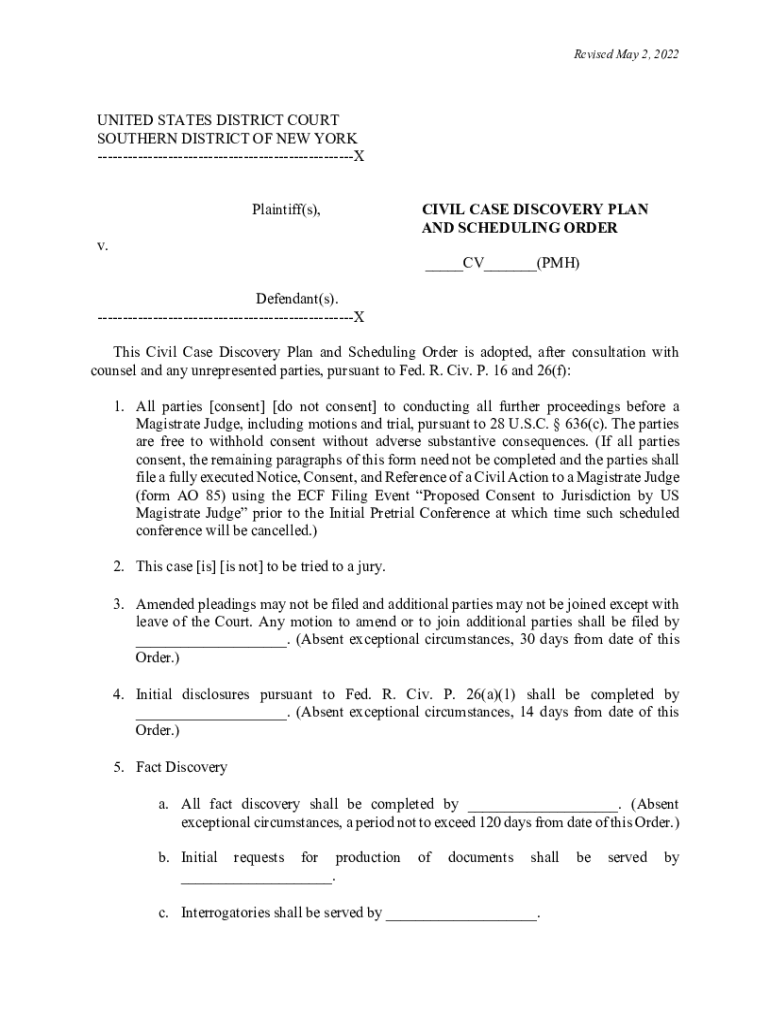
The document, "X Plaintiff(s), v - Southern District of New York," represents a Civil Case Discovery Plan and Scheduling Order used in the United States District Court for the Southern District of New York. This legal order outlines the procedures and timelines essential for managing the discovery phase in a civil litigation process. It includes mandates for disclosure timelines, outlines the conduct of fact and expert discovery, and sets milestones for pretrial procedures. Understanding this structure is crucial for litigants to ensure compliance with court schedules and procedures, thereby avoiding potential legal missteps.
Key Elements of the Document
- Consent to Trial Before a Magistrate Judge: This section allows parties to agree to have their case tried before a magistrate judge rather than a district court judge, which can streamline proceedings.
- Initial Disclosures: It mandates deadlines by which parties must disclose fundamental information about the case to each other.
- Fact and Expert Discovery: These are detailed schedules for exchanging fact-based evidence and expert witness evaluations, crucial for building each party’s case.
- Settlement Discussions: Guidelines are provided for engaging in settlement talks, potentially resolving disputes without a trial.
- Alternative Dispute Resolution: Offers options such as mediation or arbitration as alternative strategies for resolving disputes outside of court.
How to Use the Document
To effectively utilize the "X Plaintiff(s), v - Southern District of New York" document, parties involved in litigation should adhere strictly to the outlined schedules and procedures:
- Review the Timelines: Carefully note all deadlines for disclosures, discovery, and submissions.
- Coordinate with Legal Counsel: Work closely with your attorney to gather necessary documents and witnesses.
- Engage in Settlement Opportunities: Consider discussions and alternative dispute resolutions to potentially expedite the process.
Steps to Complete the Document
- Initial Review: Thoroughly read all components of the scheduling order to understand obligations.
- Data Gathering: Collect all relevant data and documentation required for initial disclosures.
- Listing of Witnesses: Prepare a list of fact and expert witnesses and schedule any necessary depositions.
- Compliance Check: Regularly verify adherence to all deadlines and procedural requirements.
Who Typically Uses the Document
- Attorneys: Legal professionals representing plaintiffs or defendants in civil litigation use this document to guide case preparation.
- Plaintiffs and Defendants: Individuals or entities involved in the lawsuit rely on the schedule to coordinate their legal strategies.
- Judicial Staff: Court staff utilize the document to monitor case progress and ensure compliance with judicial timelines.


Legal Use of the Document
The primary legal use of the "X Plaintiff(s), v - Southern District of New York" document is to structure civil litigation proceedings within the Southern District of New York. By adhering to the procedures and timelines outlined, legal entities ensure that all necessary steps are followed for a fair and efficient judicial process. Non-compliance with these requirements can result in legal penalties or dismissal of the case.
Important Terms Related to the Document
- Discovery: A pre-trial procedure where each party can obtain evidence from the opposing party.
- Pretrial: Events and discussions that occur before the trial phase, setting the groundwork for the trial.
- Magistrate Judge: A judicial officer who assists with pretrial matters and, with consent, can conduct civil trials.
- Disclosure: The process of revealing evidence and documents to the opposition as required by the court.
State-Specific Rules
While this document is specific to the Southern District of New York, it's important to recognize that each state may have variations in their procedures for managing discovery and scheduling. Attorneys must be aware of these differences to ensure full legal compliance and optimal strategic planning.
Filing Deadlines and Important Dates
Adherence to deadlines is critical in civil litigation. This document will specify:
- Initial Disclosure Deadline: Date by which fundamental information must be shared between parties.
- Fact Discovery Cutoff: Last day to complete the fact-finding process.
- Expert Discovery Deadline: Date by which expert witness evaluation must be concluded.
Timely compliance ensures that parties maintain their right to present evidence and arguments.
Required Documents
When working with the "X Plaintiff(s), v - Southern District of New York" scheduling order, ensure you have:
- Initial Disclosure Documents: Including evidence, witness lists, and any initial statements.
- Discovery Material: All gathered evidence and expert analysis reports.
- Settlement Discussion Records: Documentation of any negotiations or mediation attempts.
Failing to provide these documents by the deadlines can affect the proceedings negatively.
Software Compatibility
Many legal professionals use software such as:
- DocHub: For document management and secure storage.
- QuickBooks: For managing any financial disclosures or issues related to the case.
- TurboTax: In cases involving financial disputes or personal income matters.
These tools facilitate efficient handling of documents and data, aligning with the document's logistical requirements.
Real-World Examples and Scenarios
Consider a class action lawsuit related to corporate malfeasance:
- Fact Discovery: Obtaining internal communications from the corporation.
- Expert Witnesses: Engaging financial experts to analyze data.
- Alternative Dispute Resolution: Using mediation to reach a settlement before trial.
Each step showcases practical applications of the document in ongoing litigation.