




01. Edit your form online
Type text, add images, blackout confidential details, add comments, highlights and more.

Type text, add images, blackout confidential details, add comments, highlights and more.

Draw your signature, type it, upload its image, or use your mobile device as a signature pad.

Send it via email, link, or fax. You can also download it, export it or print it out.
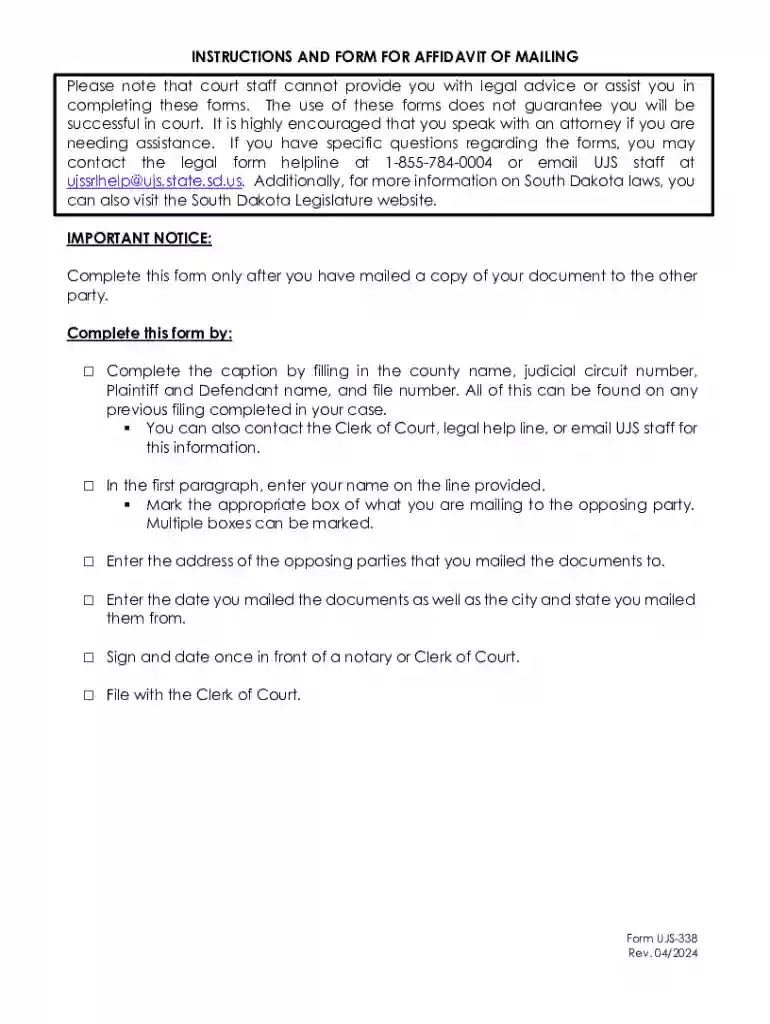
The Ujs-338 form is a legal document used primarily in the context of South Dakota court cases. It serves a specific purpose in the administrative processes and legal procedures related to South Dakota judiciary operations. This form is typically associated with affidavits, which are written statements confirmed by oath or affirmation, used as evidence in court. Such documents play a critical role in ensuring that all procedural elements of a court case are recorded accurately. For instance, the Ujs-338 could be an affidavit related to mailing, confirming the delivery and receipt of documents in legal proceedings. Its purpose aligns with upholding transparency and accountability within judicial activities.
To effectively use the Ujs-338 form, individuals must first understand its context within the court system. This involves recognizing when this specific form is required and how it complements other legal documents in court procedures. Typically, the process involves:
It is advisable for users to verify with their legal representatives or court staff to ensure the correct completion and utility of the form in their specific legal situation.
Completing the Ujs-338 form involves careful attention to legal details. The following steps guide through the process:
Mistakes in completing such forms could lead to complications in the legal process, necessitating the importance of accuracy and compliance with court guidelines.
Using the Ujs-338 form is essential when you need to document the mailing and delivery of legal documents within South Dakota's legal system. It serves vital functions including:
Without proper documentation such as the Ujs-338, there might be delays or complications, potentially affecting the outcome of legal proceedings.
The primary users of the Ujs-338 form are individuals directly involved in legal processes within South Dakota courts. This includes:
Each party plays a role in ensuring that the Ujs-338 form fulfills its purpose effectively within court proceedings.


A thorough understanding of the Ujs-338's key components is crucial for its correct usage:
These elements are pivotal in certifying that all procedural details related to mailing have been duly observed and recorded.
As the Ujs-338 is specific to South Dakota, understanding state-specific regulations is necessary. These may include:
Familiarity with these specific elements helps ensure that the form is used correctly and in compliance with all relevant state laws.
There are various ways to submit the Ujs-338 form, including:
Choosing the appropriate submission method depends on personal convenience and the deadlines applicable to the specific case. It is always beneficial to confirm these details with the court clerks to avoid any delay in proceedings.
We've got more versions of the Ujs-338 form. Select the right Ujs-338 version from the list and start editing it straight away!
At DocHub, your data security is our priority. We follow HIPAA, SOC2, GDPR, and other standards, so you can work on your documents with confidence.


