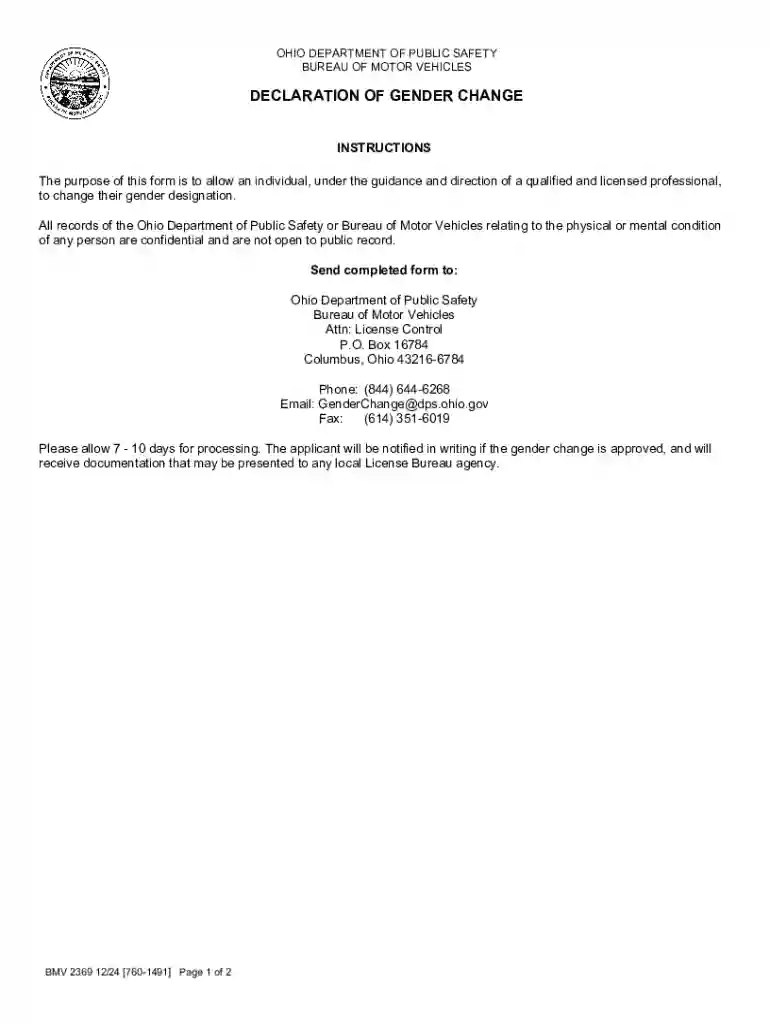
Definition & Meaning
The "Declaration of Gender Change" is a legal document that allows individuals to officially change their gender designation on various identification forms such as driver’s licenses, passports, and other official records. This form is crucial for individuals who wish to align their legal identity with their gender identity, ensuring that public records reflect their true gender. By utilizing this form, individuals can gain recognition and avoid potential complications that arise from having mismatched documentation.
How to Use the DECLARATION OF GENDER CHANGE
To use the Declaration of Gender Change effectively, follow these general steps:
- Obtain the Form: Secure a copy of the form from the issuing authority, such as the state’s Department of Motor Vehicles (DMV) or a similar agency.
- Complete the Form: Fill out the form with accurate personal information. Ensure that all mandatory fields are completed to avoid processing delays.
- Certification: Some jurisdictions may require certification by a licensed professional, such as a doctor or psychologist, to verify the gender change.
- Submit the Form: Submit the completed form to the relevant authority. This can typically be done in person, online, or via mail, depending on the state’s protocols.
- Receive Confirmation: After submission, wait for confirmation and instructions regarding the changes to your documents.
Steps to Complete the DECLARATION OF GENDER CHANGE
Completing the Declaration of Gender Change involves the following detailed steps:
- Locate the Form: Access the form through the appropriate state government website or office.
- Input Personal Information: Provide your full name, date of birth, current gender designation, and the new gender designation.
- Professional Endorsement: Obtain a signature from a licensed healthcare provider, if required, to confirm the gender transition.
- Attach Required Documents: Include any necessary supporting documents, such as a birth certificate or court order.
- Form Submission: Choose the method of submission—whether online, in person, or by mail—and follow the instructions provided for that method.
- Await Processing: Allow time for the processing of your application, during which you may follow up with the issuing authority as needed.
Key Elements of the DECLARATION OF GENDER CHANGE
Key elements found in a typical Declaration of Gender Change include:
- Personal Information: Essential details such as name, date of birth, and contact information.
- Current and New Gender Designation: The existing gender marker and the requested change.
- Healthcare Provider Certification: Verification by a qualified health professional if necessary.
- Supporting Documentation: Additional paperwork that may be required by the specific agency.
Legal Use of the DECLARATION OF GENDER CHANGE
The Declaration of Gender Change has several legal implications:
- Identity Cohesion: Ensures that all legal documents are consistent with the individual's gender identity.
- Legal Recognition: Provides formal acknowledgment of the individual's gender change by government agencies.
- Protection of Rights: Assists in safeguarding the individual's rights and reducing instances of discrimination or misunderstanding.
State-Specific Rules for the DECLARATION OF GENDER CHANGE
States in the U.S. may have varying regulations and requirements for gender change declarations. Some differences include:
- Professional Certification: Some states mandate a signed statement from a physician, while others do not.
- Age Requirements: Minors may need parental consent or meet additional criteria.
- Form Variations: Specific form designs and fields may differ depending on the state’s requirements.
Required Documents
To submit the Declaration of Gender Change, individuals typically need:
- A completed application form.
- Identification such as a driver’s license or birth certificate.
- A professional certification, if stipulated by the state.
- Any additional documents specified by the state authority.
Form Submission Methods (Online / Mail / In-Person)
Individuals have several options for submitting their Declaration of Gender Change:
- Online Submission: In some states, users can fill out and submit forms through an online portal.
- Mail Submission: Sending the completed form and documents by postal service is an option for those who prefer or require it.
- In-Person Submission: Visiting a government office to submit the form directly offers the opportunity for immediate clarification and assistance.
Eligibility Criteria
To be eligible for a Declaration of Gender Change, individuals generally need to:
- Be of age, with specific provisions for minors.
- Submit all necessary documents in full and correct form.
- Meet any medical endorsement requirements specific to their state.
Following these guidelines helps ensure a successful and smooth transition process for updating one’s gender designation legally.