Pain Clinic Referral Form - The Ottawa Hospital 2026

Get Form
Pain Clinic Referral Form - The Ottawa Hospital Preview on Page 1

Here's how it works

01. Edit your form online
Type text, add images, blackout confidential details, add comments, highlights and more.

02. Sign it in a few clicks
Draw your signature, type it, upload its image, or use your mobile device as a signature pad.

03. Share your form with others
Send it via email, link, or fax. You can also download it, export it or print it out.

Definition and Purpose of the Pain Clinic Referral Form - The Ottawa Hospital

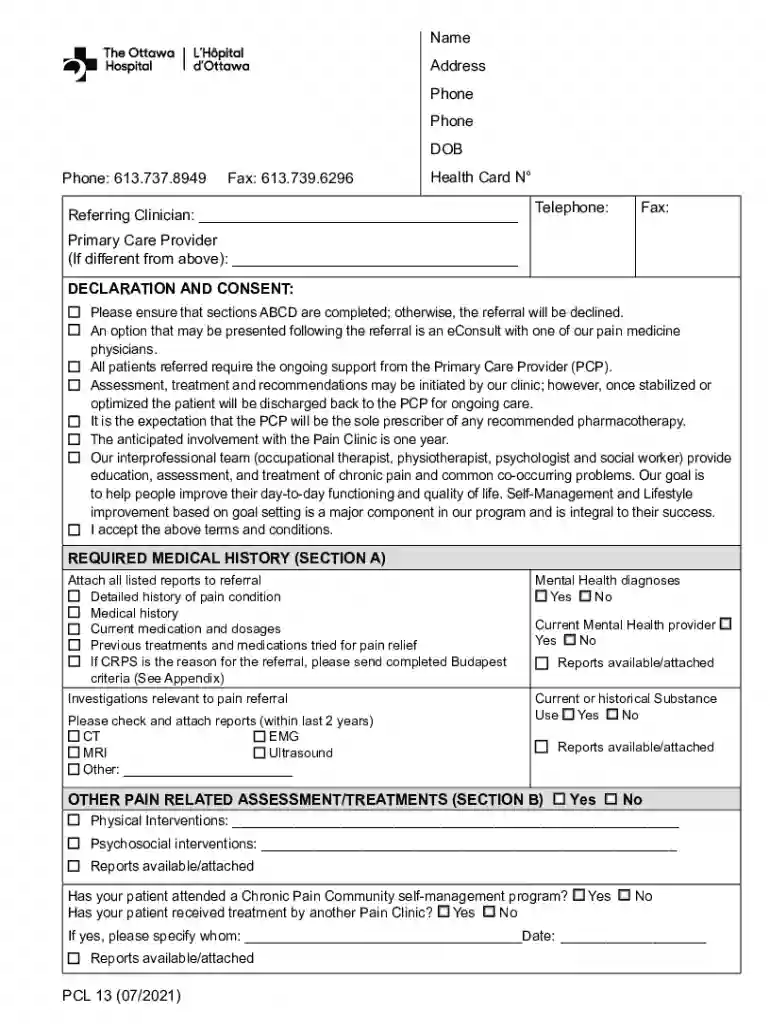
The Pain Clinic Referral Form - The Ottawa Hospital is a vital tool used to facilitate the referral of patients experiencing chronic pain to specialized pain management clinics. This form is designed to collect comprehensive patient information, ensuring that the referral process is efficient and thorough. It provides a structured approach for gathering essential details about the patient's medical history, current pain issues, and previous treatments.

Key Components of the Form

  • Patient Information: Includes personal details such as name, date of birth, and contact information.
  • Medical History: Requires documentation of past medical conditions, surgeries, and ongoing treatments.
  • Pain Assessment: Detailed sections for describing the patient’s current pain conditions, including intensity, duration, and affected areas.
  • Consent for Treatment: Obtains patient consent for referral and participation in advanced pain management therapies.

Steps to Complete the Pain Clinic Referral Form - The Ottawa Hospital

Completing the form accurately is crucial for ensuring that patients receive timely and effective care. Here’s a step-by-step guide:

  1. Gather Patient Information: Collect essential details including contact information and identification numbers.
  2. Complete Medical History: Document any existing conditions, medications, and previous attempts to manage pain.
  3. Assess Current Pain: Use the form’s pain assessment tools to provide a comprehensive view of the patient's condition.
  4. Consent and Acknowledgement: Review the consent section with the patient to ensure understanding and agreement.

Examples of Accurate Completion

  • Comprehensive Medical History: Ensure all relevant past medical issues are detailed to aid in the creation of a suitable management plan.
  • Detailed Pain Descriptions: Highlight key aspects such as type, frequency, and triggers of pain to assist clinic staff in understanding the patient's needs.

Who Typically Uses the Pain Clinic Referral Form - The Ottawa Hospital

The primary users of this referral form are healthcare professionals who are responsible for the care and treatment of patients with chronic pain. These include:


  • Primary Care Providers: Physicians and general practitioners use the form to refer patients to specialized pain clinics.
  • Specialists: Neurologists, rheumatologists, and other specialists may utilize the form when their patients require specialized pain management.
  • Interdisciplinary Team Members: Members of a healthcare team, such as physiotherapists or occupational therapists, may also initiate referrals.
decoration image ratings of Dochub

Scenarios for Use

  • Chronic Pain Management: When patients have not responded adequately to standard treatments, referrals are often considered.
  • Interprofessional Collaboration: The form is a tool for ensuring that all team members have access to consistent patient information.

Important Terms Related to the Pain Clinic Referral Form - The Ottawa Hospital

Understanding the terminology used in the form is essential for accurate completion and communication among healthcare providers.

Terminology

  • Interprofessional Care: A collaborative approach to healthcare where multiple health professionals work together to manage and optimize patient outcomes.
  • Chronic Pain: Pain that lasts longer than six months, beyond the normal healing period, affecting the patient's quality of life.

Legal Use of the Pain Clinic Referral Form - The Ottawa Hospital

Using the form correctly assures compliance with relevant legal and medical guidelines.

Legal Considerations

  • Patient Consent: Ensures patients are informed about the referral and the treatments they may receive.
  • Privacy Regulations: Complies with federal and provincial privacy laws, protecting patient information during the referral process.

Key Elements of the Pain Clinic Referral Form - The Ottawa Hospital

The form includes several vital sections to capture comprehensive patient data necessary for appropriate pain management referrals.

Core Sections

  • Pain Diagnosis and History: Captures detailed information about pain diagnoses, previous interventions, and outcomes.
  • Primary Care Provider Input: Emphasizes the role of the PCP in ongoing patient support and management.

Versions or Alternatives to the Pain Clinic Referral Form - The Ottawa Hospital

While the form itself is specific, knowing about different variants or templates can be useful.

Alternatives

  • Generic Referral Forms: While not as detailed, these can be used if the Ottawa Hospital’s specific form is not available.
  • Digital Variants: Many clinics accept digitally completed forms, enhancing submission efficiency and reducing paperwork.

Software Compatibility and Integration

In the context of managing pain clinic referral forms, understanding software compatibility is essential for efficient handling of documents.

Integration Options

  • DocHub Compatibility: DocHub can be used to fill out, sign, and send digital versions of the referral form.
  • Cloud Services: Integration with services like Google Drive and Dropbox for ease of access and storage of referral forms.

Understanding the comprehensive nature of the Pain Clinic Referral Form - The Ottawa Hospital is crucial for healthcare providers to ensure patients with chronic pain receive timely, appropriate, and personalized care. Through accurate completion and understanding of this form, healthcare professionals can improve patient outcomes and enhance the efficiency of referrals.

be ready to get more

Complete this form in 5 minutes or less

Get form

Got questions?

We have answers to the most popular questions from our customers. If you can't find an answer to your question, please contact us.
Contact us
Chronic Pain Generally speaking, pain is classed as chronic if it continues for over a period of three months. This category of pain incorporates: nerve pain, pelvic pain, abdominal pain, pain involving the joints and spine, cancer pain, post-surgery pain, and unusual pain in the limbs.
In many situations, it makes sense to get a referral from your primary care physician before you go to a pain management specialist. But every situation is unique so you might be able to visit the pain management doctor without a referral.
Your appointment with a pain management doctor will likely last around an hour. Youll discuss your medical history and current pain symptoms. The pain management doctor will perform a physical exam and possibly order tests. The doctor may order tests such as blood work or an MRI to help diagnose the pain.
Preparing for the Visit If you have a history of pain, gather all relevant medical records, including past diagnoses, medications, and treatment history. Identify the location of the pain to describe it accurately to your specialist. Its important to track both the intensity and duration of your pain.

Security and compliance

At DocHub, your data security is our priority. We follow HIPAA, SOC2, GDPR, and other standards, so you can work on your documents with confidence.

Learn more
ccpa2
pci-dss
gdpr-compliance
hipaa
soc-compliance
be ready to get more

Complete this form in 5 minutes or less

Get form