Definition and Purpose of Confirmation of Enrollment Forms
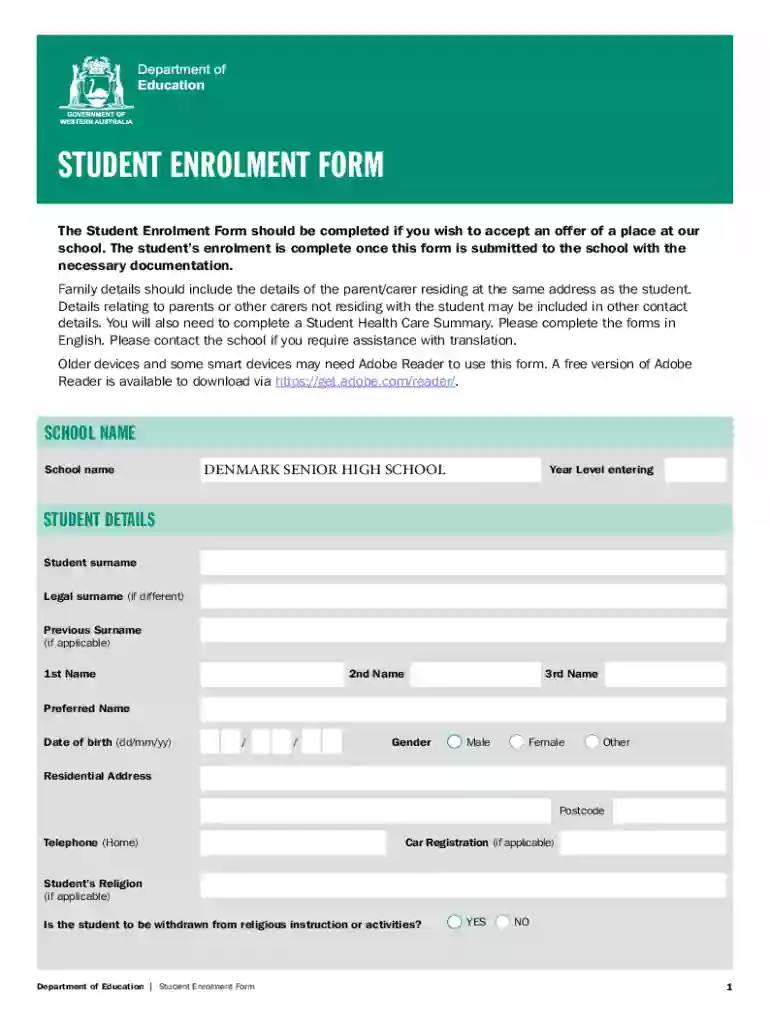
Confirmation of Enrollment Forms are official documents issued by educational institutions to verify the enrollment of a student in a particular course or program. These forms serve multiple purposes, such as providing proof of student status for financial aid, visa applications, or obtaining student benefits. The forms typically include important details like student identification, course information, and the duration of the enrollment.
Utility and Significance
- Student Verification: Used by students to confirm their active enrollment status.
- Financial Aid: Necessary for applications related to scholarships or loans.
- Visas and Residency: Required for international students to apply for or renew visas.
Key Elements of the Enrollment Form
The Confirmation of Enrollment Form involves several critical sections that capture essential data about the student and their educational program.
Student Information
- Name and Contact Details: Full name, address, phone number, and email contact.
- Student ID: Unique identifier provided by the institution.
Program Details
- Course or Program Name: Specific courses or degree programs the student is enrolled in.
- Enrollment Dates: Start and end dates for the current or upcoming terms.
Institutional Signatures
- Registrar's Approval: Confirmation with a signature from the registrar or authorized personnel validating the form’s information.
Steps to Complete the Enrollment Form
The process of completing the Confirmation of Enrollment Form involves several straightforward steps.
- Gather Personal Information: Compile personal data including name, contact information, and student ID.
- Provide Program Details: Fill in course names and corresponding details.
- Review and Sign: Ensure all provided data is correct before signing.
- Submit for Approval: Submit the form to the Office of the Registrar for validation.
- Collect the Completed Form: Once approved, collect the signed and stamped form for your records.
Tips for Accuracy
- Double-check all personal and course information before submission.
- Ensure that any required fields, such as signatures, are filled correctly.
- Verify deadlines for submission to avoid delays.
Students and Families
- Students: Primarily use the form to certify their educational status.
- Parents and Guardians: Often need the form for tax purposes or insurance.
External Institutions
- Banks and Financial Institutions: Require these for student accounts or loan processing.
- Government Agencies: Necessary for processing student visa renewals or applications.
Legal Considerations
Completion and submission of the Confirmation of Enrollment Form must adhere to specific legal guidelines to avoid complications.
Privacy and Data Protection
- Confidentiality: Ensure personal data is kept secure and only shared with authorized parties.
- FERPA Compliance: Adhere to the Family Educational Rights and Privacy Act for handling educational records.
Legal Implications
- Providing false information can result in disciplinary actions from the institution or legal consequences.
Digital vs. Paper Format
Recent advancements have seen a shift from traditional paper-based forms to digital platforms.
Digital Advantages
- Efficiency: Faster completion and submission processes.
- Accessibility: Easy access from any location with internet availability.
- Storage and Retrieval: Secure storage with convenient retrieval options.
Paper Form Benefits
- Tangible Proof: Physical copies can be used for institutions that require hard evidence.
- Compatibility: No technological requirements, suitable for all entities.
Eligibility and State-Specific Rules
The criteria for requiring a Confirmation of Enrollment Form can vary based on institutional policies and geographic location.
General Eligibility
- Active Enrollment: Only available to currently enrolled students.
- Program Participation: Necessary for students registering in official courses or degrees.
State-Specific Regulations
- Each state may have additional requirements for the issuance or acceptance of these forms, particularly for financial aid or residency purposes.
Common Use Cases and Examples
The form is frequently used in various scenarios where proof of student enrollment is critical.
Practical Applications
- Internships: Employers may require proof of current enrollment.
- Health Insurance: Some policies for students necessitate a confirmation form to provide coverage.
- Travel Discounts: Programs offering discounted travel fares for students often need this documentation.
These detailed insights ensure proper understanding and compliance when dealing with Confirmation of Enrollment Forms, ultimately facilitating smoother interactions with educational, financial, and legal entities.