01. Edit your form online
Type text, add images, blackout confidential details, add comments, highlights and more.

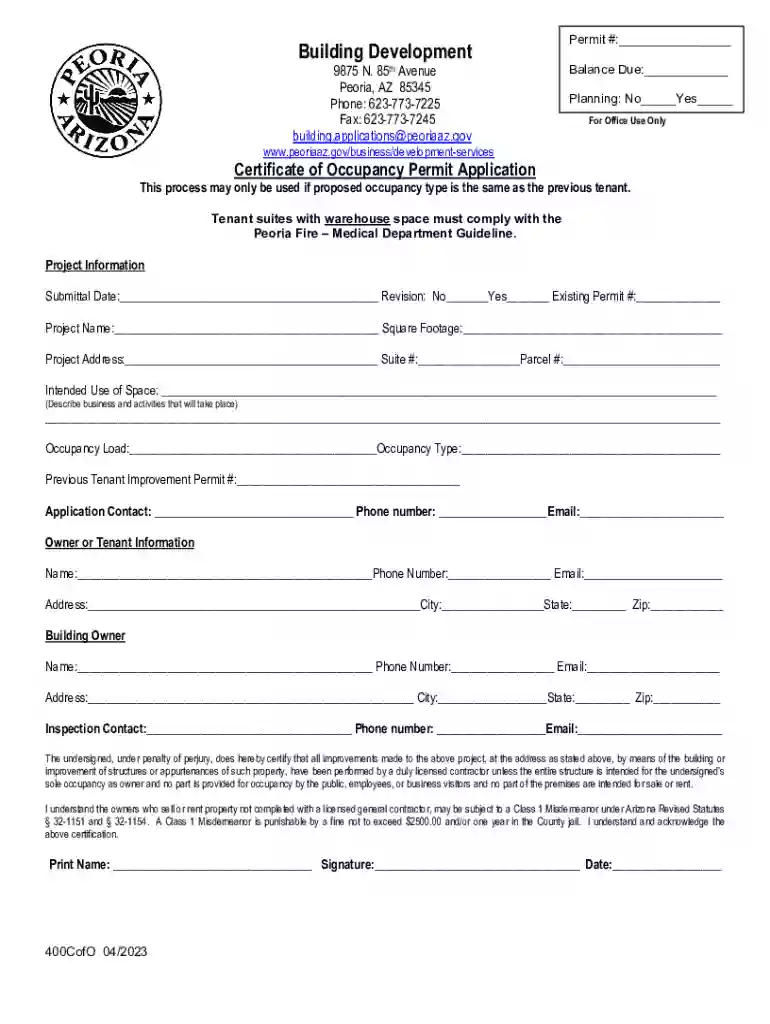
Type text, add images, blackout confidential details, add comments, highlights and more.

Draw your signature, type it, upload its image, or use your mobile device as a signature pad.

Send it via email, link, or fax. You can also download it, export it or print it out.
Forms, Guides, and Fees in the City of Peoria are essential documents that detail procedures and costs associated with various municipal activities. These documents help ensure compliance with local regulations, streamline processes, and provide guidance for citizens and businesses looking to engage with city services. Whether applying for permits, understanding local tax obligations, or participating in community planning, these resources are critical for navigating municipal requirements efficiently.
Forms, Guides, and Fees can be obtained through various channels in Peoria. Primarily, they are accessible on the city's official website, providing downloadable PDF formats for easy access. Alternatively, they can be obtained in person at designated city offices. In some cases, specific forms may be requested via mail for those unable to access electronic or in-person options.
Completing Forms in Peoria involves several key steps designed to ensure accuracy and compliance:
Identify the Required Form: Begin by determining which form is necessary for your specific need, whether it's a permit application, business license, or another official document.
Download or Collect the Form: Once identified, download the form from the city's website or collect it from the appropriate city office.
Read All Instructions: Carefully review all instructions provided with the form. Understanding the requirements and any associated fees or deadlines is critical.
Fill Out the Form Accurately: Using clear and legible handwriting or digital input, complete all required fields. Double-check for completeness to avoid delays.
Gather Supporting Documents: Some forms require additional documentation. Ensure all necessary documents are attached or prepared for submission.
Submit the Form: Forms can typically be submitted online, via mail, or in person. Follow submission guidelines to ensure proper processing.
Utilizing Forms, Guides, and Fees is crucial for several reasons. They ensure legal compliance with city regulations, provide clarity and guidance on procedural requirements, and facilitate efficient transactions with city departments. By adhering to these documents, individuals and businesses can minimize errors, avoid penalties, and expedite processes.
Forms, Guides, and Fees are used by a diverse group of stakeholders in Peoria, including:
Each group relies on these documents to fulfill specific regulatory requirements pertinent to their activities in the city.
These documents often contain several key elements:
Understanding these components ensures that users can navigate the process efficiently and meet all criteria.
The City of Peoria adheres to state-specific rules that may influence how certain forms and fees are structured. For example, state fire codes may dictate specific safety regulations for building permits, while state tax laws impact local business licensing requirements. It's important to be aware of any state-imposed rules, as non-compliance can result in fines or processing delays.
Proper legal use of Forms, Guides, and Fees entails adhering to all guidelines and requirements set forth by the city and state. Compliance ensures that any actions taken under these documents are recognized as lawful. Non-compliance, on the other hand, can lead to penalties or rejection of applications. Legal use also extends to the protection of personal information provided within these forms, ensuring data privacy in accordance with state and federal laws.
We've got more versions of the Forms, Guides and FeesCity of Peoria form. Select the right Forms, Guides and FeesCity of Peoria version from the list and start editing it straight away!
At DocHub, your data security is our priority. We follow HIPAA, SOC2, GDPR, and other standards, so you can work on your documents with confidence.