
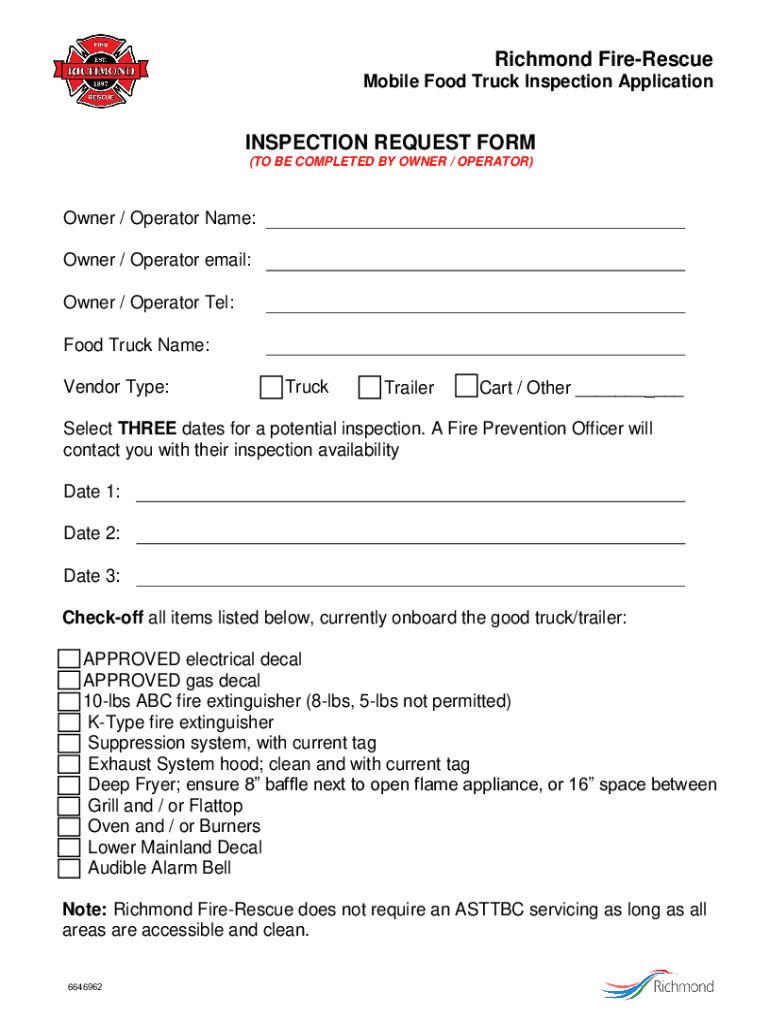







Definition & Meaning
The Mobile Food Truck Inspection Application is a specialized form used by mobile food vendors to ensure compliance with local health and safety regulations. This application is an essential tool for food truck owners who need to undergo regular inspections to maintain their licenses and operate legally in specific regions. The form encompasses a range of criteria, including food safety, sanitation, and equipment functionality, which inspectors evaluate to certify that a mobile food operation meets required standards.
Key Components
- Health and Safety Standards: The application outlines the necessary conditions that a food truck must meet, focusing on hygiene, temperature control, and equipment maintenance.
- Inspection Guidelines: Detailed procedures are included to guide inspectors in evaluating a food truck's compliance with local regulations.
- Certification Requirements: The form specifies the certifications and documents that truck operators need to submit to attest to their adherence to legal standards.
Steps to Complete the Mobile Food Truck Inspection Application
Completing the Mobile Food Truck Inspection Application involves several steps that ensure thorough preparation for the inspection process. This structured approach helps vendors smooth the approval path and avoid unnecessary delays.
- Gather Necessary Documentation: Before beginning the application, collect all relevant certifications such as food handler permits and previous inspection reports.
- Fill Out Application Sections: Carefully complete all sections of the application, ensuring accurate and up-to-date information is provided.
- Self-Inspection: Conduct a preliminary inspection using the application guidelines to identify and address potential compliance issues.
- Schedule Inspection: Submit the completed application to the relevant local health department and arrange a formal inspection date.
- Final Review and Submission: Review the application for accuracy before submission. Ensure that all required documents are attached.
Practical Examples
- Checklist Use: Many vendors use the application as a checklist to ensure all operational aspects meet health standards.
- Pre-Inspection Corrections: Vendors might use the form to identify and rectify minor compliance issues before the official inspection.
Important Terms Related to Mobile Food Truck Inspection Application
Understanding the terminology associated with the Mobile Food Truck Inspection Application is crucial for both vendors and inspectors to navigate the application process effectively.
Common Terms
- Compliant Status: Indicates a food truck's adherence to all the legislative and health standards after inspection.
- Critical Violation: Refers to severe breaches in health and safety protocols that must be corrected immediately to operate legally.
- Non-Critical Violation: Minor infractions that do not immediately affect the food truck’s operation but require eventual correction.
Usage Context
- Documentation: Terms are typically used in official documentation and inspection reports to categorize compliance levels and needed improvements.
- Training: Vendors often include these terms in staff training materials to ensure everyone understands compliance importance.
Key Elements of the Mobile Food Truck Inspection Application
Each section of the Mobile Food Truck Inspection Application serves a distinct purpose in evaluating the readiness and compliance of a food truck operation. Key elements provide a framework for both self-assessment and formal evaluation.
Section Breakdown
- Owner Information: Details about the business owner and contact information.
- Truck Specifications: Information about the truck, including make, model, and any modifications.
- Equipment List: An inventory of all cooking and food storage equipment on board.
- Sanitation Protocols: Documentation of cleaning procedures and schedules.
- Safety Measures: Details regarding installed fire safety and first-aid equipment.
Nuances and Edge Cases
- Temporary Permits: Some food trucks operating at events may require additional temporary permits, detailed within this application section.
- Multiple Vehicle Fleets: For businesses with several vehicles, the application allows for detailed information on each unit.
State-Specific Rules for the Mobile Food Truck Inspection Application
Compliance requirements for the Mobile Food Truck Inspection Application can vary, contingent on state-specific regulations. Vendors need to be aware of these differences to ensure proper adherence and avoid legal penalties.
Variations Across the U.S.
- California: Emphasizes stringent air quality controls and eco-friendly fuel usage standards.
- Texas: Focuses heavily on fire safety certifications and equipment handling protocols.
- New York: Additional emphasis is placed on the sanitation of food storage and preparation areas.
Understanding Compliance
- Regional Focus: Food truck owners often review local guidelines alongside the application to ensure all specific requirements are met.
- Legal Updates: Vendors must stay informed about any changes in state regulations impacting application criteria.
Examples of Using the Mobile Food Truck Inspection Application
Examples highlight practical applications of the Mobile Food Truck Inspection Application in real-world scenarios, showcasing how it aids vendors in maintaining compliance and improving operations.
Successful Cases
- Compliance Achievements: A food truck in Chicago effectively used the checklist section within the application to pass a rigorous mid-year inspection with no violations.
- Operational Improvements: Post-inspection feedback, documented in the application, facilitated operational changes leading to improved customer service ratings.
Lessons Learned
- Enhanced Training: Regular application of the guidelines within the form improves staff preparedness for inspections.
- Preventive Maintenance: Using the form as a regular reference for equipment upkeep bolstered operational reliability and safety.
How to Obtain the Mobile Food Truck Inspection Application
Securing a Mobile Food Truck Inspection Application is a straightforward process that involves accessing the appropriate channels and ensuring readiness for an inspection request.
Acquisition Channels
- Local Health Departments: Applications are typically available through official city or county health department websites.
- Business Registration Offices: Some jurisdictions provide forms as part of business registration kits for mobile vendors.
Preparation Tips
- Online Access: Many regions offer digital versions of the application, which can be downloaded and filled out electronically.
- In-Person Support: For those unfamiliar with digital processes, local offices can provide paper forms and additional guidance.
Penalties for Non-Compliance
Failure to comply with the standards outlined in the Mobile Food Truck Inspection Application can result in severe penalties for food truck operators. These repercussions emphasize the importance of adherence to health regulations.
Possible Consequences
- Fines: Monetary penalties imposed for violations or failure to maintain compliance post-inspection.
- License Suspensions: Temporary halts in operations until compliance issues are resolved and re-inspected.
- Permanent Closures: Repeated or severe breaches may lead to the revocation of operational licenses.
Avoiding Penalties
- Regular Updates: Keep informed on regulation changes affecting compliance to mitigate potential risks.
- Professional Consultation: Engaging with compliance specialists can help in interpreting complex regulatory requirements and setting corrective measures in place.




