Definition & Meaning
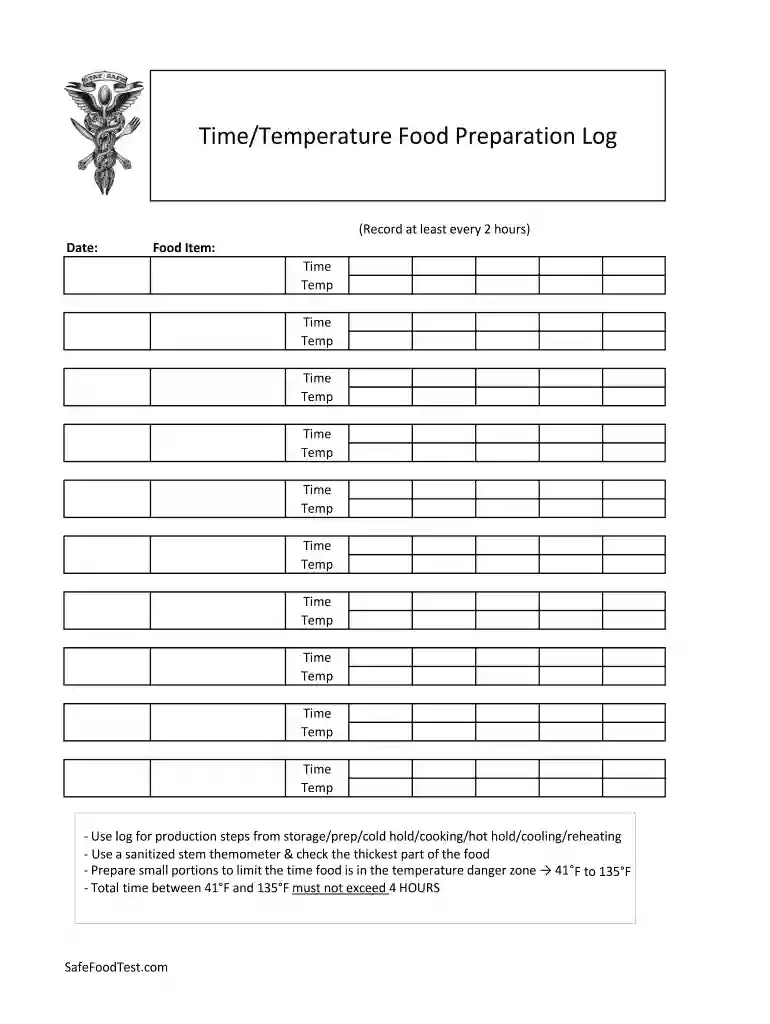
A Time Temperature Food Preparation Log is a detailed document used in food service environments to record the temperatures of food items during various stages of preparation. It's a critical component in managing food safety, ensuring that food is not kept within the temperature danger zone, which ranges from 41°F to 135°F, for extended periods. By utilizing this log, establishments can maintain compliance with food safety regulations and minimize the risk of foodborne illnesses. The log promotes the use of sanitized thermometers and advocates for consistent monitoring to protect consumer health.
How to Use the Time Temperature Food Preparation Log
To effectively use a Time Temperature Food Preparation Log, follow these steps:
- Preparation: Begin by ensuring your thermometer is sanitized and calibrated before taking any measurements.
- Recording the Initial Temperature: As soon as food enters the preparation area, record its initial temperature on the log.
- Monitoring Intervals: Check and record the temperature at regular intervals, especially during cooking and reheating stages.
- Final Temperature: Document the final cooking temperature to ensure it meets safety standards for consumption.
- Post-Preparation Monitoring: For cold dishes, regularly check that storage temperatures remain below 41°F.
- Signatures and Review: Each entry should be signed by the staff member responsible for the check to maintain accountability.
Steps to Complete the Time Temperature Food Preparation Log
Completing a Time Temperature Food Preparation Log involves several critical steps:
- Setup: Familiarize yourself with the log format and ensure you have all necessary tools, like thermometers and pens, readily available.
- Initial Entry: Record the date, time, food item, and initial temperature upon starting preparation.
- Progressive Monitoring: At designated intervals, document the temperature, method of preparation (e.g., boiling, frying), and time.
- Safety Checks: Note if any corrective actions were necessary when temperatures fall outside safe ranges.
- Completion: Upon completion of cooking and cooling, enter final temperatures and any deviations noted during preparation.
Key Elements of the Time Temperature Food Preparation Log
The log contains essential components that ensure comprehensive monitoring:
- Date and Time: Fundamental for tracing when each food item was checked.
- Food Item Description: Clearly states what food is being monitored.
- Temperature Records: Includes initial, during, and completion temperatures.
- Process Description: Details specific preparation methods.
- Corrective Actions: Notes any steps taken if temperature deviated from standards.
- Staff Signatures: Confirms accountability and validates the log's entries.
Legal Use of the Time Temperature Food Preparation Log
The log is a critical legal tool for ensuring food safety compliance. Regulations in the United States mandate accurate temperature logging to prevent foodborne illnesses. The log serves as a legal record proving an establishment's commitment to safe food handling practices. It is essential for audits and inspections by health departments, helping protect against potential legal actions from food safety breaches.
Examples of Using the Time Temperature Food Preparation Log
Consider a restaurant preparing chicken:
- Initial Temperature Check: Raw chicken is verified below 41°F upon receipt.
- Cooking Monitoring: Temperatures are recorded at increments as the chicken reaches 165°F, ensuring thorough cooking.
- Cooling Phase: Post-cooking, the chicken's temperature is checked every hour until it drops below 41°F.
- Documentation: The entire process, including precise times and corrective actions taken (if any), is documented securely in the log.
Who Typically Uses the Time Temperature Food Preparation Log
This log is widely utilized by:
- Restaurants and Cafes: For daily operations requiring precise temperature monitoring.
- Caterers and Event Managers: Ensuring safe food delivery and service at events.
- Institutional Food Services: In schools, hospitals, and care homes, maintaining strict safety protocols.
- Food Inspectors: To verify compliance during inspections.
State-Specific Rules for the Time Temperature Food Preparation Log
While federal guidelines set basic requirements, individual states may have specific rules:
- California: Strict enforcement of the temperature range, with detailed corrective action requirements.
- New York: Additional logging for high-risk foods like seafood.
- Texas: Mandatory training for staff involved in temperature monitoring and log maintenance.
State differences demand a thorough understanding to ensure complete compliance with all applicable regulations.
Digital vs. Paper Version
Choosing between digital and paper versions depends on operational needs:
- Digital Logs: Allow for automated entries, integration with kitchen management systems, and easy retrieval during inspections.
- Paper Logs: Still favored where digital solutions are impractical due to cost or infrastructure constraints.
- Hybrid Approach: Some employ both, ensuring backup and flexibility.
In both cases, maintaining accuracy, security, and accessibility of the logs is paramount to their effectiveness.