







Definition and Meaning
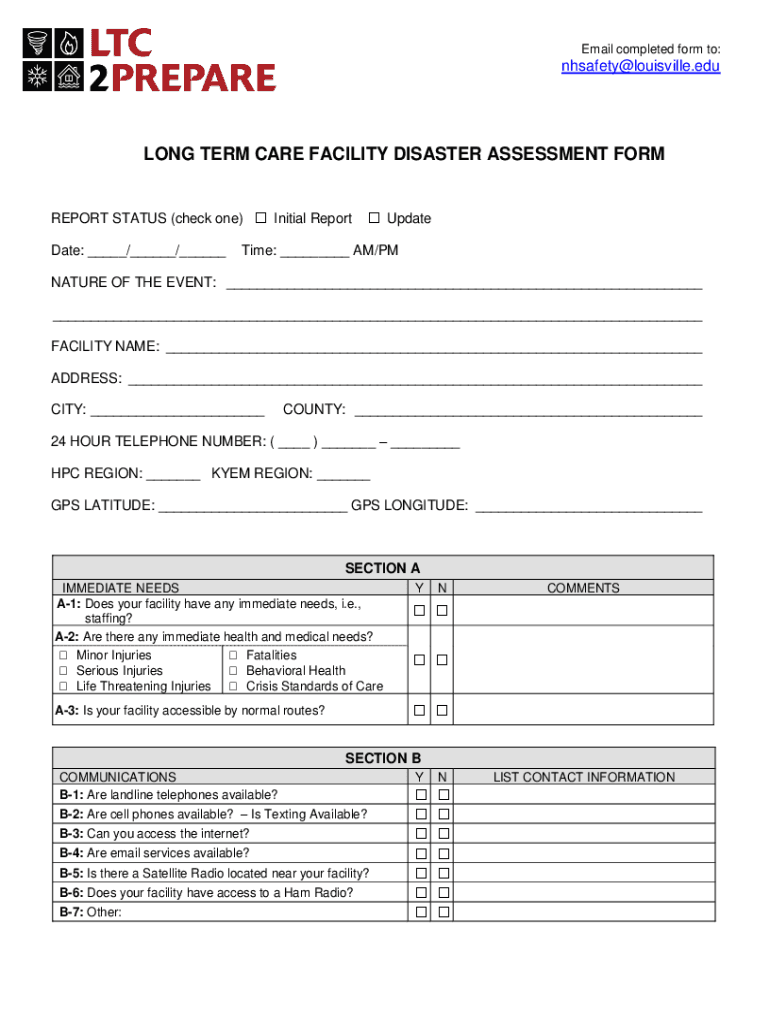
The Long Term Care Facility Disaster Assessment Form, designated as "kyepltc," is a specialized tool used to gather crucial data about a facility's readiness and needs during a disaster scenario. Its purpose is to ensure comprehensive evaluation and planning in response to emergencies, such as natural disasters or system failures, that impact long-term care facilities. This assessment form is integral to maintaining operational capabilities and safeguarding resident welfare during critical events.
Key Elements of the LONG TERM CARE FACILITY DISASTER ASSESSMENT FORM - kyepltc
The form consists of various sections that capture essential information related to a facility's status and immediate necessities during a disaster:
-
Facility Information: This section records details such as the facility name, address, contact information, and the time and date of assessment. Accurate facility information is vital for efficient communication and resource allocation.
-
Nature of the Event: Describes the type of disaster (e.g., earthquake, flood, power outage) and its impact on the facility. Understanding the nature of the event helps in tailoring the response to meet specific challenges.
-
Immediate Needs: Identifies urgent requirements for supplies or assistance, such as medical supplies, evacuation support, or additional staffing. Prioritizing immediate needs is crucial to address the most pressing concerns promptly.
-
Communications and Security: Evaluates current communication capabilities and security measures. This includes assessing the functionality of phones, internet, and security systems to ensure continued operation during a crisis.
Legal Use of the LONG TERM CARE FACILITY DISASTER ASSESSMENT FORM - kyepltc
In the United States, completion of disaster assessment forms like the "kyepltc" is often a regulatory requirement for long-term care facilities as mandated by both state and federal agencies. Facilities use the form to comply with legal and safety standards aimed at protecting residents during emergencies. Failing to properly document a facility's preparedness may result in penalties or legal ramifications should resident safety be compromised.
Steps to Complete the LONG TERM CARE FACILITY DISASTER ASSESSMENT FORM - kyepltc
-
Gather Necessary Information: Before filling out the form, collect all relevant data about the facility, including existing safety protocols, current stock of emergency supplies, and condition reports of critical systems.
-
Fill Out Facility Details: Begin with general facility information, ensuring all entries are precise and updated. This includes confirming contact numbers and addresses.
-
Describe the Event: Use clear and concise terms to describe the disaster's nature and impact. This section benefits from input from facility staff who directly experienced the event.
-
Evaluate Needs and Resources: Identify urgent needs and available resources. Detail each requirement and prioritize them based on urgency.
-
Check Communication and Security: Assess operational status of communication and security systems. Note any deficiencies and planned corrective actions.
Who Typically Uses the LONG TERM CARE FACILITY DISASTER ASSESSMENT FORM - kyepltc
-
Long-Term Care Facility Staff: Personnel such as administrators and emergency coordinators use the form to ensure preparedness and responsive action during a crisis.
-
Regulatory Agencies: State and federal bodies may use the form during inspections to evaluate compliance with emergency readiness standards.
-
Emergency Management Teams: These teams rely on the form's data to coordinate and deploy resources effectively during disaster response.


Important Terms Related to the LONG TERM CARE FACILITY DISASTER ASSESSMENT FORM - kyepltc
-
Assessment Date: Refers to the exact time and date when the disaster assessment was conducted. This is important for creating a timeline of events.
-
Urgent Needs: Critical requirements identified during the assessment that need immediate action to ensure the safety and operation of the facility.
-
Structural Assessment: An evaluation of the facility's physical integrity following a disaster. This often involves checking for damages that could compromise safety.
-
Healthcare Bed Census: The count of available and occupied healthcare beds, which helps in planning for patient care and evacuation scenarios if necessary.
Examples of Using the LONG TERM CARE FACILITY DISASTER ASSESSMENT FORM - kyepltc
-
Hurricane Impact: A long-term care facility on the Florida coast uses the form to document an evacuation process during a hurricane, noting facility damages and resources required for returning residents safely.
-
Power Outage: A facility in the Midwest experiences a significant power outage. The form aids in assessing backup power needs and coordination with utility companies to restore service.
-
Pandemic Response: During a health crisis, the form helps facilities assess their ability to manage patient care and staff safety, identifying needs for PPE and additional healthcare personnel.
Software Compatibility and Digital Versions
DocHub offers a digital platform to manage forms like the "kyepltc," enabling easy editing, collaboration, and secure storage. Compatible with tools such as TurboTax and QuickBooks for financial assessments, DocHub also integrates with Google Workspace for seamless data management and sharing. Digital versions of the form are beneficial for real-time updates and multi-user collaboration, ensuring that all stakeholders have access to the most current information.
State-Specific Rules for the LONG TERM CARE FACILITY DISASTER ASSESSMENT FORM - kyepltc
Certain states may impose specific requirements for disaster assessment in long-term care facilities. For example, California mandates detailed fire risk planning, while states prone to hurricanes may require specific flood response strategies. Facilities must stay informed about their state's specific guidelines to ensure compliance and effective disaster response.




