




01. Edit your form online
Type text, add images, blackout confidential details, add comments, highlights and more.

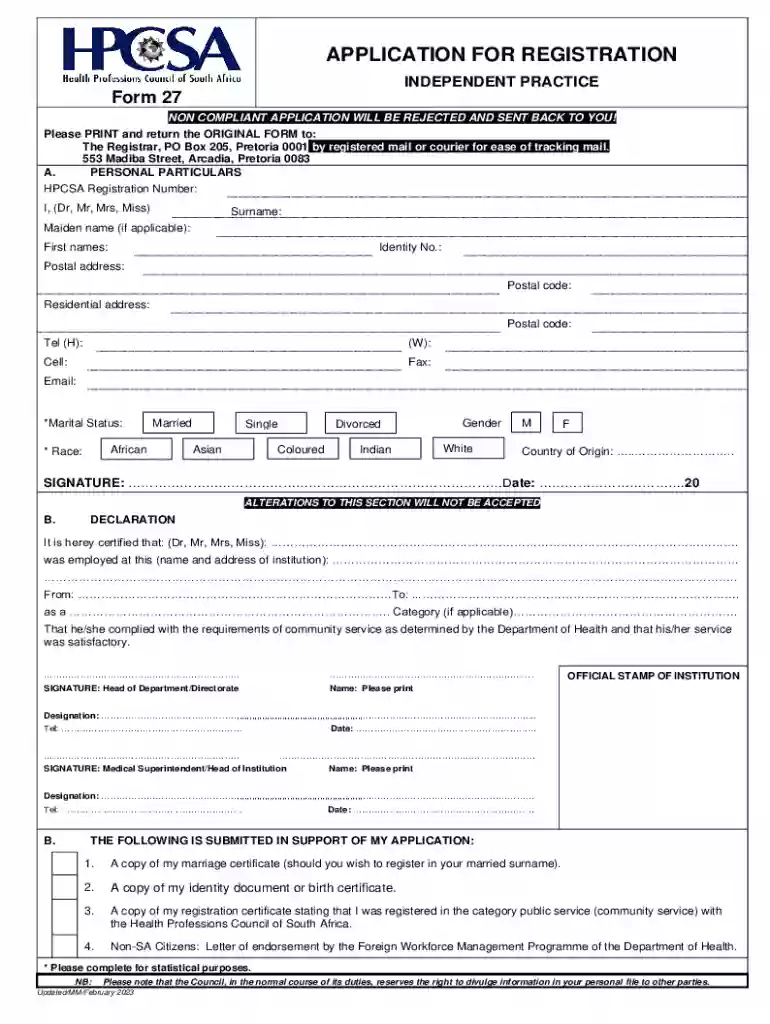
Type text, add images, blackout confidential details, add comments, highlights and more.

Draw your signature, type it, upload its image, or use your mobile device as a signature pad.

Send it via email, link, or fax. You can also download it, export it or print it out.
An "Application for Registration" is a formal document required for initiating the process of officially recording an entity or individual in a regulatory database. This registration process is crucial for compliance with specific legal, professional, or business requirements. For instance, professionals in fields such as healthcare may need to register with a governing body like the Health Professions Council of South Africa (HPCSA) to practice independently.
Registrations serve to create a verifiable record that aligns the registrant with industry standards or regulations. This process is not exclusively limited to professional practice; it extends to business entities seeking legal recognition or eligibility for government programs. The application's structure varies depending on its purpose but generally requires personal details, declarations, proof of identity, and sometimes legal compliance certificates.
Effectively using the Application for Registration involves understanding its structure and the information required. The first step is to gather relevant personal or organizational details such as your full name, contact information, and identification numbers. This information must align precisely with any legal documentation to avoid discrepancies.
After preparing the required information, accurately fill in each section of the form. Pay close attention to sections asking for specific declarations or attestations of compliance with regulatory standards. Review the completed form thoroughly to ensure that all fields are correctly filled and nothing is omitted before submission.
Review the Requirements:
Compile Necessary Documents:
Fill Out Personal Information:
Complete Declarations:
Attach Required Documentation:
Review and Sign:
Submit the Form:
The application process requires various documents to support the information provided:
Ensuring these documents are current and certified will facilitate a smooth application process.
Understanding the terminology used in the Application for Registration is fundamental for accuracy:
Grasping these terms will assist in effectively navigating the application process.
The Application for Registration must strictly adhere to legal standards to maintain validity. Misleading information or forgery can lead to rejection, penalties, or even legal action. This form acts as a legal record; thus, understanding its implications, such as eligibility for professional practice or rights as a recognized entity, is crucial.
Within the United States, regulations such as the ESIGN Act also ensure that applications can legally be processed electronically, maintaining the same legally binding nature as physical signatures.
Failing to comply with registration requirements can result in various penalties:
These consequences highlight the importance of completing the application accurately and thoroughly.
Different states may have unique requirements or additional fields in the Application for Registration. For instance, some states may need additional compliance documentation, such as state-specific ethical training certificates or additional personal declarations.
It's essential to consult state-specific guidelines or seek legal advice to fully understand localized requirements. This ensures the application is compliant with not only general standards but also those specific to a particular jurisdiction.
We've got more versions of the Application for Registration form. Select the right Application for Registration version from the list and start editing it straight away!
At DocHub, your data security is our priority. We follow HIPAA, SOC2, GDPR, and other standards, so you can work on your documents with confidence.

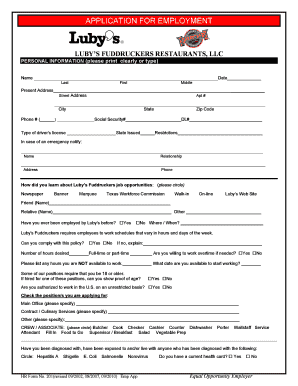
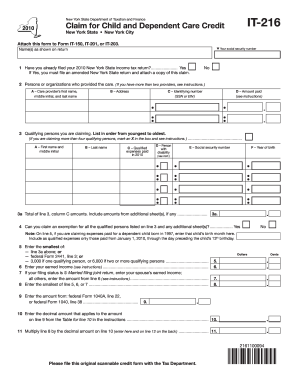
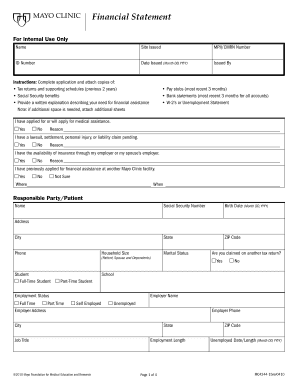

Application for Vehicle Registration. Before coming into an agency, you must make an appointment online at . PLEASE ASK FOR
To renew your registration, please include your completed renewal application, Form MV-105, Pennsylvania Registration Renewal Application, or Form MV-140,


