







Definition & Meaning
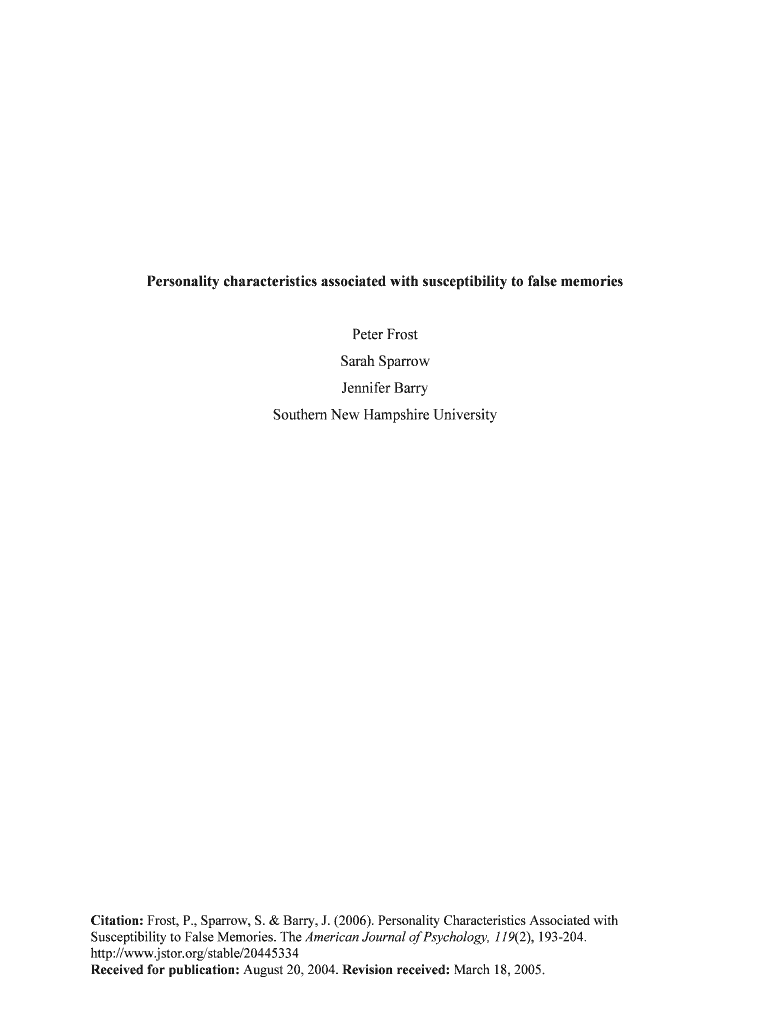
The concept of "Personality characteristics associated with susceptibility to false memories Southern New Hampshire" explores the relationship between individual personality traits and their potential impact on the formation of false memories. The study focuses on analyzing personality through frameworks such as the Myers-Briggs Type Indicator (MBTI), which evaluates traits like introversion-extroversion and thinking-feeling. False memories occur when individuals recall events that never happened or remember them differently than they occurred.
How to Use the Personality Characteristics Framework
Understanding how personality traits influence susceptibility to false memories can be utilized in several professional fields, including psychology, counseling, and legal settings. For instance, therapists may use this framework to better understand clients' memory recall processes, particularly in situations where accurate memory is critical. In legal contexts, it can aid in assessing witness reliability by evaluating their personality characteristics.
Key Elements of the Study
- Introversion vs. Extroversion: Extroverted individuals have shown a higher likelihood of recognizing false events when receiving confirmatory feedback. This finding has implications for how social influences can modify memory recall.
- Thinking vs. Feeling Orientation: Those with a feeling orientation are generally more susceptible to false memories, highlighting the role emotional processing plays in memory accuracy.
- Social Influence: The study emphasizes the role of social confirmatory feedback in altering the perception of past events, underlining the interconnectedness between personality and external influences.
Examples of Practical Applications
Research on personality's role in susceptibility to false memories can provide insights into various real-world scenarios:
- Court Cases: Legal practitioners might leverage this knowledge to assess the credibility of eyewitness testimony, especially in cases where memory accuracy is in question.
- Therapeutic Setting: Clinicians can tailor therapeutic techniques to accommodate personality traits, thereby improving the effectiveness of interventions in dealing with traumatic or unclear memories.
Who Typically Engages with This Content
Professionals working in fields that demand rigorous attention to memory and personality dynamics are primary users of this research:
- Psychologists and Therapists: Use it to inform treatment plans and improve patient outcomes.
- Legal Professionals: Leverage insights to assess witness reliability and case accuracy.
- Academic Researchers: Further explore the implications of personality on cognitive processes that affect memory.
Important Terms Related to the Study
- False Memories: Recollections of events that never occurred or are remembered incorrectly.
- Myers-Briggs Type Indicator (MBTI): A tool used to assess various personality traits, relevant in this context for analyzing tendencies towards false memories.
- Confirmatory Feedback: Social feedback that can reinforce or alter an individual’s memory recall.
Legal Use of Personality Insights
Understanding how personality affects memory recall has significant legal implications:
- Witness Credibility: The ability to discern how personality traits affect memory can influence the evaluation of witness statements.
- Jury Selection: Insights from this research could potentially guide attorneys in selecting jury members less susceptible to false memories based on personality assessments.
Software Compatibility for Data Analysis
When analyzing data derived from studies on personality and false memories, it is crucial to use compatible software:
- Statistical Packages: Software like SPSS or R can be utilized to process and interpret large datasets, offering robust tools for intricate analyses.
- Personality Assessment Tools: Platforms that can generate MBTI results, aiding in the correlation of personality traits with memory studies.
State-Specific Rules and Considerations
While the core findings on personality and false memories remain consistent, context can vary based on state guidelines:
- New Hampshire Context: Interpretations of these findings might differ based on local legal and psychological practice standards, shaping how memory is addressed in professional settings.
State-by-State Differences
While susceptibility to false memories might not inherently differ by state, the application and interpretation of the findings could vary:
- Southern New Hampshire Focus: Cultural and legal norms locally could influence how personality traits are integrated into professional practices like law and therapy.
By understanding these aspects, professionals in Southern New Hampshire can effectively apply insights from the study of personality characteristics concerning false memories, tailoring their approaches in legal, psychological, and academic environments.




