






Definition and Purpose of Rule 17 200Form 216
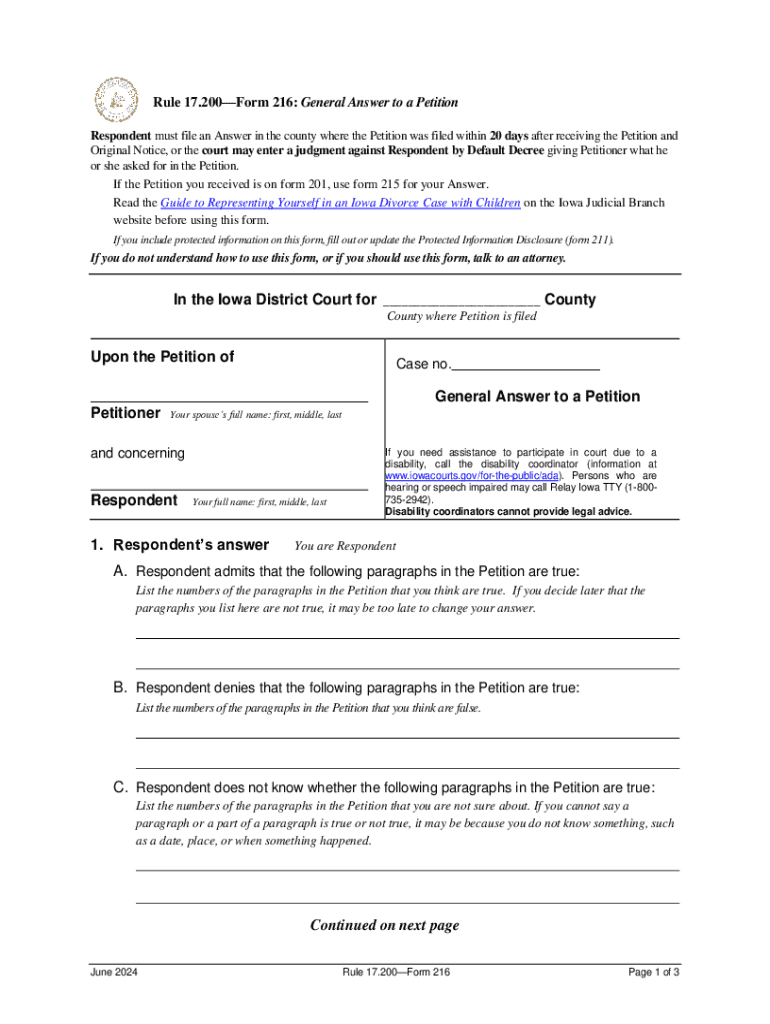
Rule 17 200Form 216, also known as the General Answer to a Petition for Dissolution of Marriage, is a legal document used in Iowa. This form allows the respondent in a divorce case to provide a structured response to the initial petition filed by the petitioner. Its primary purpose is to outline the respondent's admissions, denials, or lack of sufficient information regarding the claims made in the petition. This form ensures that the respondent's position is formally recorded and acknowledged by the court.
Key Components of the Form
- Admissions and Denials: The form requires the respondent to specify which allegations they admit to, deny, or claim insufficient knowledge to respond to.
- Children's Living Arrangements: If applicable, the form outlines the respondent's perspective on the current and proposed living arrangements for any children involved.
- Protective Orders: The form includes sections for the respondent to address any existing protective or restraining orders.
- Identification of the Parties: The form identifies both the petitioner and respondent, ensuring clarity of the involved parties.
Steps to Complete Rule 17 200Form 216
Completing Rule 17 200Form 216 requires careful attention to detail. Below are the essential steps:
-
Read the Petition Thoroughly: Begin by comprehensively reviewing the original Petition for Dissolution of Marriage. Understanding the claims and what needs to be addressed is crucial.
-
Respond to Each Allegation: Clearly state whether you admit, deny, or lack sufficient information to respond to each specific claim or allegation mentioned in the petition.
-
Detail Children's Living Arrangements: If children are involved, provide a detailed account of their current and proposed living situations, including your preferences or objections.
-
Address Protective Orders: Note any protective orders currently in place and state your position regarding these orders.
-
Review and Sign: Once completed, ensure all sections are filled accurately, then sign the form to validate your response.
-
File the Form: Submit the completed form to the appropriate court within the specified 20-day timeframe from receiving the petition.
Practical Example
Consider a scenario where the petitioner has claimed that the respondent abandoned the marital residence, affecting living conditions. The respondent can use this form to provide an alternative narrative, perhaps explaining a necessary temporary relocation due to work commitments.
Legal Use and Implications
Understanding the Legal Framework
- Filing Requirements: The form must be filed in response to a petition within 20 days, as per Iowa's legal requirements.
- Document Accuracy: Accuracy in detailing one's admissions and denials is critical, as these responses form part of the legal record.
- Impact on Proceedings: The form influences the court's understanding of the respondent's stance and can affect subsequent legal decisions or proceedings.
Penalties for Non-Compliance
Failure to respond using Rule 17 200Form 216 within the given timeframe can result in a default judgment. This would generally favor the petitioner, potentially granting the requests made in the original petition without the respondent's input.
Important Terms Related to the Form
Glossary of Terms
- Petitioner: The individual who initiates the petition for divorce.
- Respondent: The individual who responds to the divorce petition.
- Allegation: A claim made in the petition that requires a response.
- Default Judgment: A judgment passed by the court in the absence of a timely response from the respondent.
State-Specific Considerations
While Rule 17 200Form 216 is specific to Iowa, variations may exist in other states, requiring residents to adhere to different form names, formats, and completion instructions based on their jurisdiction's family law procedures.
Obtaining the Form
Where and How to Access
- Court's Website: The form can typically be downloaded from the Iowa Judicial Branch's official website.
- In-Person: Physical copies are available at county courthouses.
- Legal Counsel: Attorneys can provide the necessary forms as part of their legal services.
Submission Methods
- Online Filing: Many jurisdictions provide electronic filing options through their court's e-filing systems.
- Mail: Forms can also be mailed to the appropriate courthouse office.
- In-Person Submission: Alternatively, the form can be submitted in person at the court's filing office to ensure receipt and compliance.
Who Typically Uses Rule 17 200Form 216
Typical User Profiles
- Individuals Seeking Divorce: Respondents in a divorce petition case who must formally respond to allegations and claims.
- Legal Representatives: Attorneys representing clients in divorce cases to ensure accurate and timely responses.
By choosing the most relevant and useful tasks and features, those using Rule 17 200Form 216 can adeptly navigate the legal process, ensuring their responses are precise, timely, and effective in protecting their interests.