Definition and Meaning of the Learning Mobility of Individuals in School Education and Adult Learning
"Learning Mobility of Individuals in School Education and Adult Learning" refers to a program aimed at fostering personal development through educational opportunities abroad. It is part of broader initiatives like Erasmus+, designed to enhance skills, employability, and cultural understanding by providing an opportunity for individuals to participate in educational activities in a foreign country. This includes both structured learning experiences and informal learning in diverse settings, promoting a well-rounded educational experience.
Key Objectives
- Promote intercultural awareness and exchange.
- Enhance professional and personal skills.
- Support lifelong learning and social inclusion.
Program Characteristics
- Typically involves short-term and long-term mobilities.
- Targets students and educators in the United States and abroad.
- Emphasizes collaboration and partnership between educational institutions.
How to Use the Learning Mobility of Individuals Program
Participation in the Learning Mobility of Individuals program requires careful planning and adherence to specific criteria.
Steps to Enroll
- Research Eligible Programs: Identify universities or educational institutions offering mobility opportunities.
- Apply for Grants: Many mobility programs offer financial support; applying early increases your chances.
- Registration: Complete required paperwork and registration processes for the selected program.
- Prepare Documentation: Gather necessary documents like passports, visas, and proof of acceptance.
Practical Use
- Engage in exchange programs or internships abroad.
- Collaborate with international peers on research projects.
- Attend workshops and seminars to enhance pedagogical skills.
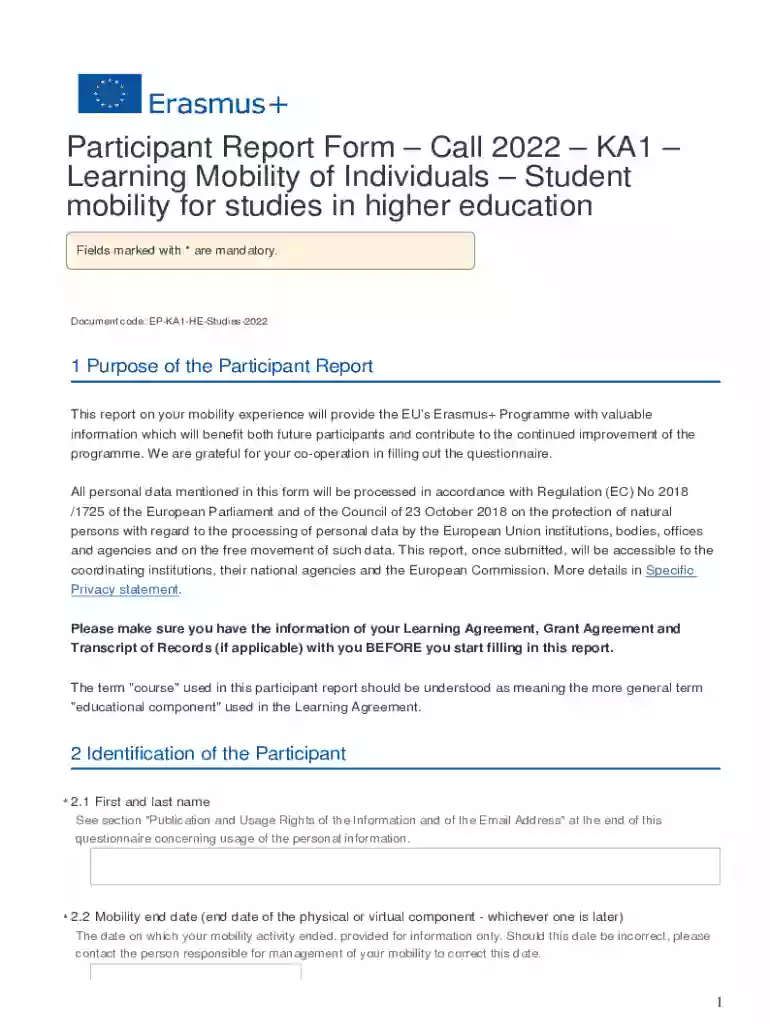
Steps to Complete the Learning Mobility of Individuals Form
Completing the form for participation in the program necessitates attention to detail and precise documentation.
- Personal Information: Provide accurate personal details including name, contact info, and identification numbers.
- Mobility Details: Specify the type, location, and duration of mobility.
- Objectives and Motivation: Clearly articulate personal and professional goals.
- Consents and Declarations: Read and sign consent sections for data processing and participation terms.
Submission Review
- Double-check all entries for accuracy.
- Ensure all sections are complete to avoid delays.
Key Elements of the Learning Mobility of Individuals Form
Effective completion of the form involves understanding its critical components.
Core Sections
- Participant Information: Personal data, emergency contacts.
- Mobility Experience Details: Host institution, duration, and focus of mobility.
- Feedback and Evaluation: Post-mobility assessment and feedback for program improvement.
Additional Requirements
- Inclusion of a study plan or learning agreement.
- Documentation of language skills and previous educational achievements.
Legal Use of the Learning Mobility of Individuals Program
Understanding the legal framework surrounding the mobility program is essential for compliance.
Compliance Aspects
- Data Protection: Adherence to data privacy laws, ensuring secure handling of participant information.
- Visa Regulations: Meeting the legal requirements of the host country regarding visas and stay permits.
- Insurance and Liability: Participants must have adequate health and travel insurance during their stay.
Target Participants
- Students: Individuals in higher education seeking global learning experiences.
- Educators: Teachers and trainers pursuing professional development and cultural exchange.
- Adult Learners: Individuals seeking lifelong learning opportunities to enhance skills and employability.
Institutional Participants
- Universities and colleges.
- Vocational and technical education providers.
- Adult education centers.
Important Terms Related to the Learning Mobility of Individuals Program
Familiarity with key terms aids in navigating the program efficiently.
Common Terminology
- Erasmus+: The overarching program of which learning mobility is a part.
- Learning Agreement: A document outlining study plans and commitments.
- Grant Agreement: Contract detailing financial aid and conditions.
Examples of Using the Learning Mobility of Individuals Program
Practical examples showcase the program’s impact and benefits.
Case Studies
- Higher Education Students: A student pursuing a semester abroad under Erasmus+ to obtain a global perspective and improve language proficiency.
- Professional Development for Educators: Teachers attending international workshops on innovative teaching methods and subject-specific updates.
- Adult Learning Opportunities: Participating in vocational training abroad to specialize in a specific trade or profession.
Required Documents for Learning Mobility of Individuals
Documents ensure eligibility and facilitate smooth participation in the program.
Essential Documentation
- Application Form: Fully completed and signed.
- Letter of Motivation: Explaining the reasons for participating.
- Academic Transcripts: Proof of current and previous educational achievements.
- Language Certificates: Evidence of language skills if required by the host institution.