






Definition and Purpose of the SCDMV Form 400
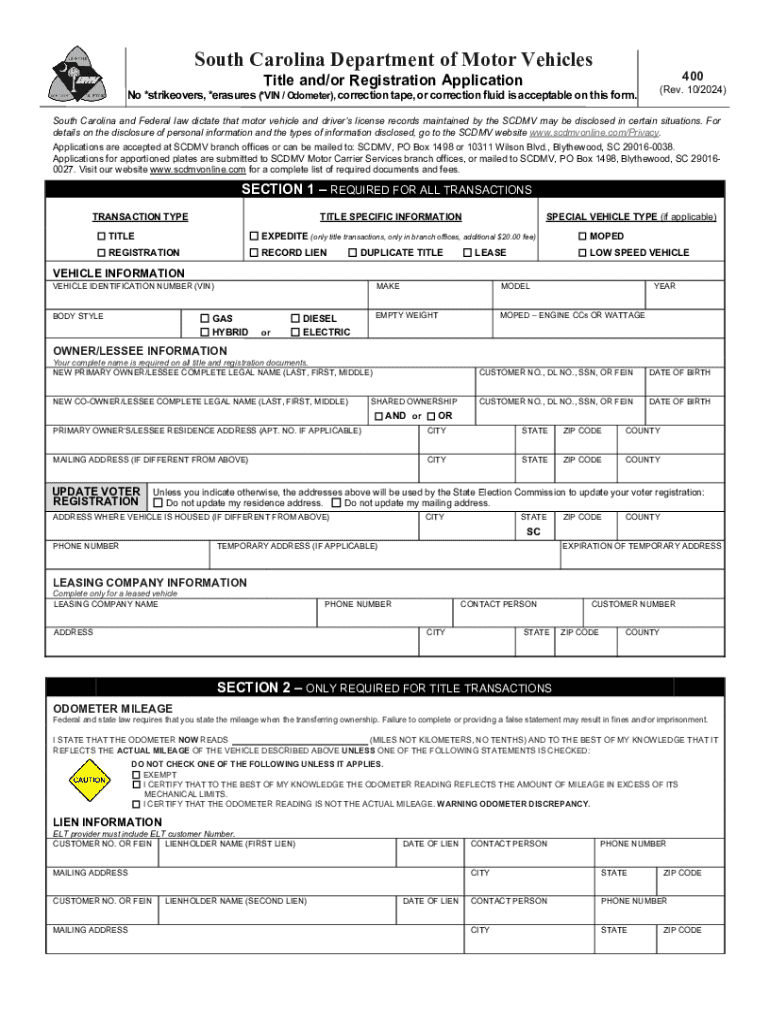
The SCDMV Form 400, officially known as the Title Application, is a crucial document issued by the South Carolina Department of Motor Vehicles. Its primary purpose is to facilitate the process of applying for a vehicle title or registering a vehicle within the state of South Carolina. This form is used by individuals when they acquire a new vehicle, transfer ownership, or replace a lost title.
The form captures essential details, including the vehicle's identification number (VIN), owner information, odometer readings, lien details, and proof of insurance, thereby ensuring that all legal requirements for vehicle ownership are met. The SCDMV Form 400 serves as an official record, providing the state with necessary information for maintaining accurate vehicle registrations.
Steps to Complete the SCDMV Form 400
Filling out the SCDMV Form 400 involves several key steps to ensure accuracy and compliance. The following procedure offers guidance on how to complete the form correctly:
-
Gather Required Information:
- Vehicle Identification Number (VIN)
- Make, model, and year of the vehicle
- Odometer reading at the time of application
- Owner's personal information (name, address, and contact details)
- Proof of insurance or liability coverage
-
Access the Form:
- Obtain the SCDMV Form 400 from the SCDMV website or request a hard copy from a local DMV office.
-
Complete the Sections:
- Input all necessary details accurately in each section, being mindful to check for clarity and legibility.
-
Review and Sign:
- Thoroughly review the filled form for any errors or omissions. Sign and date the document to validate your application.
-
Submit the Form:
- Follow the instructions to submit the form either online, by mail, or in person at your local SCDMV office. Be aware of any applicable fees that may need to accompany your application.
Completing the SCDMV Form 400 correctly is critical for a smooth registration process and can prevent delays.
Important Terms Related to the SCDMV Form 400
Understanding key terms associated with the SCDMV Form 400 can help navigate the vehicle registration process more effectively. Here are some important terms:
- VIN (Vehicle Identification Number): A unique code used to identify individual motor vehicles, akin to a vehicle’s fingerprint.
- Odometer: A device that measures the distance traveled by the vehicle, important for title applications.
- Lien: A legal claim against the vehicle, often relevant if the vehicle is financed; this must be disclosed on the form.
- Proof of Insurance: Required documentation showing that a vehicle has been insured, meeting state minimum coverage requirements.
Familiarizing yourself with these terms ensures clearer communication throughout the title application process, contributing to a seamless experience.
Who Typically Uses the SCDMV Form 400?
The SCDMV Form 400 is typically used by a variety of individuals and entities, including:
- Individuals Purchasing a Vehicle: First-time buyers who need to register their newly acquired vehicle.
- Vehicle Owners Transferring Ownership: When a vehicle changes hands, the new owner must submit a Form 400 to establish title rights.
- People Replacing Lost Titles: Vehicle owners who misplace their title can use this form to apply for a duplicate.
- Dealers and Businesses: Car dealerships and businesses that frequently buy or sell vehicles utilize this form regularly for title applications.
Understanding who utilizes the form helps frame its relevance across varied scenarios in vehicle ownership and registration.


Key Elements of the SCDMV Form 400
The SCDMV Form 400 comprises several critical components that ensure the effective processing of vehicle title applications. Key elements include:
- Owner Information Section: Captures personal details for the vehicle's new owner, including name, address, and contact data.
- Vehicle Description: This section outlines the specifics of the vehicle, such as make, model, year, and VIN, which are vital for identification.
- Odometer Disclosure Statement: A mandated statement reflecting the vehicle's mileage at the time of purchase or registration.
- Lienholder Information: If applicable, details regarding any lien on the vehicle must be disclosed here.
Ensuring that these elements are accurate is essential for legal compliance and clarity in vehicle ownership documentation.