Nova Scotia Lease Agreement Pdf - Fill Online, Printable 2026

Get Form
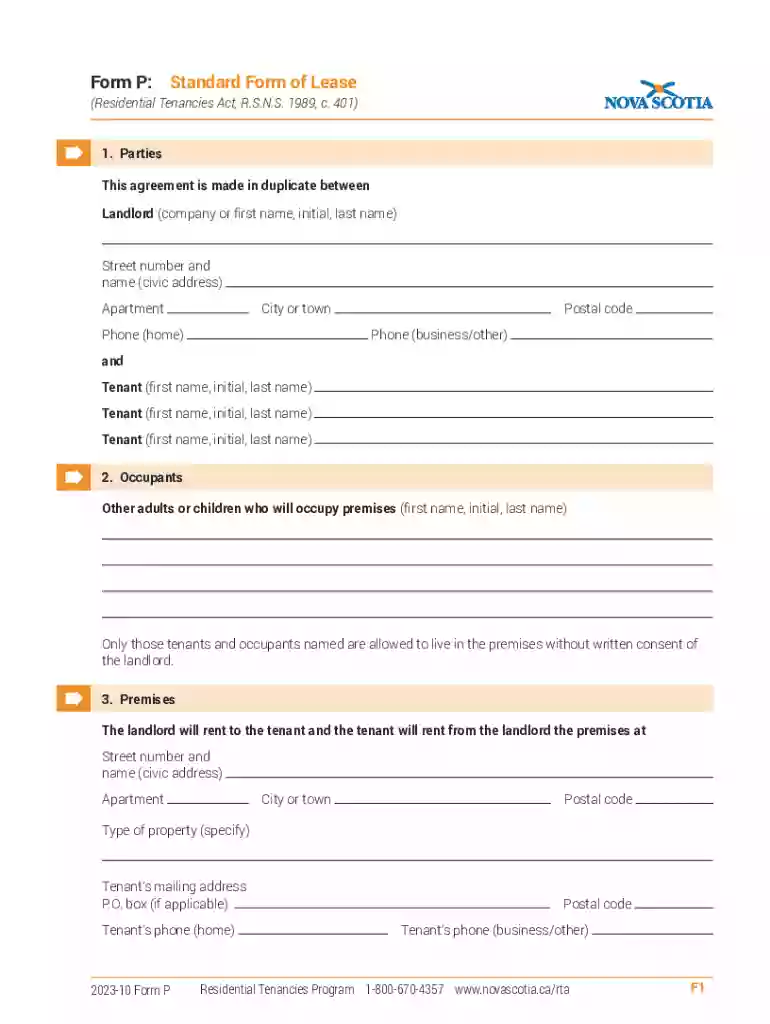
standard form of lease nova scotia Preview on Page 1

Here's how it works

01. Edit your standard form of lease nova scotia online
Type text, add images, blackout confidential details, add comments, highlights and more.

02. Sign it in a few clicks
Draw your signature, type it, upload its image, or use your mobile device as a signature pad.

03. Share your form with others
Send nova scotia rental agreement via email, link, or fax. You can also download it, export it or print it out.

Definition & Purpose of the Nova Scotia Lease Agreement

The Nova Scotia Lease Agreement is a legal document used to outline the terms and conditions between a landlord and tenant for residential property leasing. Primarily governed by the Residential Tenancies Act, it ensures both parties understand their rights and responsibilities. Key components include identifying the parties involved, detailed property descriptions, and provisions for rent payment. It is essential for safeguarding the interests of both landlords and tenants by clearly defining the scope of the agreement and preventing potential disputes.

How to Use the Nova Scotia Lease Agreement PDF - Fill Online, Printable

To use the Nova Scotia Lease Agreement PDF effectively, begin by downloading the document through an online platform like DocHub. You can fill it in digitally, taking advantage of the platform's tools to insert necessary information accurately. Specific sections allow you to input names, property addresses, the amount of rent, and payment schedules. Once completed, review the document for accuracy, and then share it electronically with all parties involved for their signatures using the legally binding signature feature available on DocHub.

Steps to Complete the Nova Scotia Lease Agreement PDF

  1. Access the Form: Obtain the PDF via DocHub or another trusted document management service.
  2. Enter Parties Information: Fill in the landlord's and tenant's full names and contact details.
  3. Property Details: Accurately describe the location, type of property, and any included fixtures or fittings.
  4. Rent and Payment Terms: Clearly state the rent amount, due dates, and payment methods.
  5. Lease Duration: Define the term of the lease, including start and end dates.
  6. Additional Clauses: Include any specific terms or conditions, such as pet policies or maintenance responsibilities.
  7. Review: Ensure all sections are complete and accurate before proceeding.
  8. Sign and Share: Utilize electronic signature capabilities to finalize the contract officially.

Key Elements of the Nova Scotia Lease Agreement

  • Parties Involved: Clearly identifies the landlord and tenant.
  • Property Description: Detailed overview of the rental unit, including address and particulars.
  • Rent Specifications: Amount, payment frequency, and method.
  • Security Deposit: Terms concerning the deposit amount and conditions for its return.
  • Lease Term: Duration of tenancy, renewal options, and termination conditions.
  • Maintenance Obligations: Responsibilities of both landlord and tenant regarding property upkeep.
  • Legal Conditions: Compliance with the Residential Tenancies Act, including statutory conditions and rent increase guidelines.

Legal Use of the Nova Scotia Lease Agreement PDF

The Nova Scotia Lease Agreement must adhere to the statutory standards under the Residential Tenancies Act. Legal use entails ensuring compliance with state-specific regulations, such as allowable reasons for termination or procedures for handling security deposits. The document provides a framework that legally binds both parties, serving as evidence in legal disputes or court proceedings concerning tenancy issues.

Important Terms Related to the Nova Scotia Lease Agreement

  • Statutory Conditions: Legal obligations included in every lease under the Residential Tenancies Act.
  • Security Deposit: Money held by the landlord for potential damages or unpaid rent.
  • Rent Increase Guidelines: Legislatively defined limits and notice requirements for raising rent.
  • Notice to Quit: The formal process for ending a tenancy by either landlord or tenant.

State-Specific Rules for the Nova Scotia Lease Agreement

In Nova Scotia, lease agreements must conform to the Residential Tenancies Act, which stipulates specific rules on security deposits, notice periods for termination, and conditions for lawful rent increases. Knowing these geographic-specific regulations is critical for both parties to avoid penalties and ensure a smooth leasing process.

Examples of Using the Nova Scotia Lease Agreement PDF - Fill Online, Printable

In practical scenarios, a landlord in Halifax might use DocHub to create and complete a lease agreement with a tenant for a condo rental. By filling out the PDF online, specifying terms such as a pet policy or an included parking space, and securing electronic signatures, both parties achieve a hassle-free setup process, ensuring legal compliance and mutual understanding before the tenant moves in.

Versions or Alternatives to the Nova Scotia Lease Agreement PDF

While a standard PDF version is commonly used, there may be alternatives like specific tenancy agreements for university accommodation or commercial leases, each with tailored clauses. These variations cater to different property types and tenant needs, ensuring appropriate coverage under the Residential Tenancies Act.

Digital vs. Paper Version of the Nova Scotia Lease Agreement

Using a digital version offers benefits such as ease of editing, storage, and sharing, as well as enhanced security through electronic signatures and encryption. However, a paper version might be preferred by those who require physical archiving or lack digital access. Both methods have their place, but digital forms are generally more efficient and environmentally friendly.

be ready to get more

Complete this form in 5 minutes or less

Get form

Got questions?

We have answers to the most popular questions from our customers. If you can't find an answer to your question, please contact us.
Contact us
How to Write a Lease/Rental Agreement Step 1 Name the Parties. Step 2 Describe the Premises. Step 3 Define the Lease Term. Step 4 Set Rent Payment Details. Step 5 Assign a Security Deposit Amount. Step 6 Set Property Rules. Step 7 Mention Right of Entry. Step 8 Establish Guidelines for Early Termination.
The Lessee has paid to the Lessor / s a sum of Rs. only being month / s rent in respect of the said premises as deposit of rent to be adjusted towards the rent for the last month / s of the tenancy. also be borne and paid by lessor (landlord).
Heres a list of standard fields that you should include in your lease agreement: Tenant information. Include each tenants full name and contact information. Rental property description. Security deposit. Monthly rent amount. Utilities. Lease term. Policies. Late fees.
Yes, a property owner can write their own lease. Where she may or may not work has nothing to do with it.
Templates for lease agreements are widely available online; however, it is important to know how to write a lease agreement and what information must be included. Even if you decide to draft your own lease agreement, it is good practice to have it reviewed by an experienced attorney before executing.

Security and compliance

At DocHub, your data security is our priority. We follow HIPAA, SOC2, GDPR, and other standards, so you can work on your documents with confidence.
Learn more
ccpa2
pci-dss
gdpr-compliance
hipaa
soc-compliance
be ready to get more

Complete this form in 5 minutes or less

Get form

People also ask

A tenancy agreement should include: the names of all people involved. the rental price and how its paid. information on how and when the rent will be reviewed. the deposit amount and how it will be protected. details of when the deposit can be fully or partly withheld (for example to repair damage youve caused)
The following must be included (at a minimum) to have a binding lease: Parties Names: Names of the landlord and tenant(s). Property Description: Street address and property details. Rent Amount ($): An amount of money a tenant pays for occupying the property. Term (timeframe): The start and end date.

standard form of lease ns