Definition & Meaning
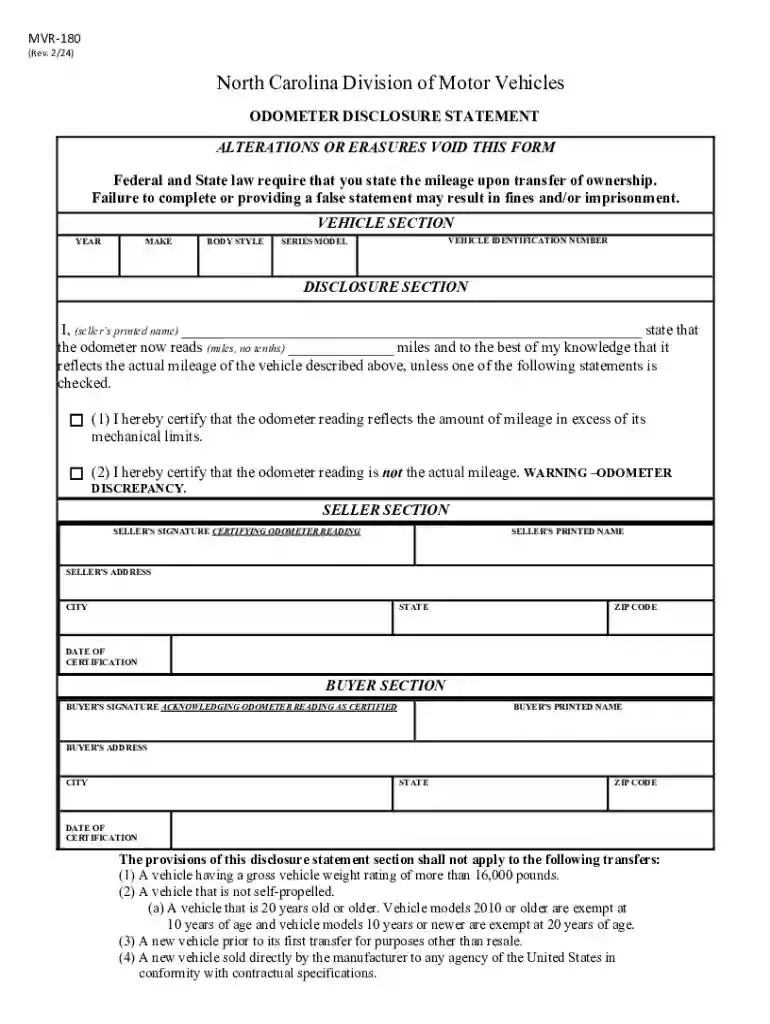
The Odometer Disclosure Statement (MVR-180) is a legal document required in North Carolina for the transfer of vehicle ownership. This form is integral to ensuring a transparent transaction between the seller and buyer by disclosing the vehicle's mileage at the time of sale. It certifies the accuracy of the odometer reading, providing legal assurance to both parties. Sellers must complete the form truthfully, as there are legal penalties for submitting false information.
Key Elements of the Odometer Disclosure Statement (MVR-180)
The primary components of the Odometer Disclosure Statement include:
- Vehicle Details: Information such as make, model, year, and vehicle identification number (VIN) is required.
- Odometer Reading: The exact mileage on the vehicle at the time of transfer.
- Seller Information: Name, address, and signature verify the seller's identity and attestation.
- Buyer Information: Name and signature ensure the buyer acknowledges the disclosed mileage.
- Exemptions: Certain vehicles are exempt, such as those over ten years old, but exemptions must be clearly stated.
How to Use the Odometer Disclosure Statement (MVR-180)
Using the MVR-180 form involves a series of steps to ensure compliance:
- Complete Seller's Section: Provide vehicle and odometer details while ensuring accuracy.
- Full Buyer Details: Have the buyer complete their section to acknowledge receipt.
- Signatures Required: Both parties must sign to validate the transfer legally.
- Submit or Retain Copies: Submit to the appropriate DMV or retain for personal records, depending on the state regulations.
Steps to Complete the Odometer Disclosure Statement (MVR-180)
To complete the MVR-180 form accurately:
- Gather Information: Prepare all necessary details, including vehicle paperwork and identification.
- Accurate Odometer Reading: Check and record the current mileage without rounding or estimating.
- Fill Out Sections Carefully: Ensure each section is fully and legibly completed.
- Review for Accuracy: Double-check all entries to prevent delays or legal issues.
- Both Parties Sign: Signatures from both seller and buyer are essential.
Legal Use of the Odometer Disclosure Statement (MVR-180)
The legal framework for the MVR-180 ensures that:
- Accuracy Is Verified: The form’s legal standing is based on truthful odometer readings.
- Protection Against Fraud: Enforces penalties for tampering with or misrepresenting mileage.
- Record Keeping: Provides a traceable record of vehicle ownership transitions.
State-Specific Rules for the Odometer Disclosure Statement (MVR-180)
Specific rules in North Carolina include:
- Who Must File: All vehicle sellers and buyers, except exempt vehicles.
- Exemptions: Vehicles that are models over ten years old do not require an odometer statement.
- Filing Methods: Submissions may need to be part of the title transfer process at the DMV.
Penalties for Non-Compliance
Misrepresenting the odometer can result in:
- Fines and Penalties: Legal consequences such as fines or voided sales if discrepancies are found.
- Potential Legal Action: Buyers may pursue legal action for damages if misled.
- Loss of Transaction Legitimacy: The transaction could be rendered invalid, leading to further complications.
Examples of Using the Odometer Disclosure Statement (MVR-180)
Real-world scenarios:
- Car Dealerships: Utilizing the form to confirm mileage during trade-ins or sales.
- Private Sales: Individuals selling vehicles must complete the form to transfer ownership.
- Auction Sales: Vehicles sold at auction also require mileage disclosure for transparent transaction integrity.
Who Typically Uses the Odometer Disclosure Statement (MVR-180)
The form is commonly used by:
- Private Sellers: Individuals transferring vehicle ownership.
- Dealerships: Facilitating numerous sales requiring odometer certifications.
- Auction Houses: Handling large volumes of vehicle transfers under state regulation.
Each section of this guide offers detailed explanations, aimed at maximizing utility for readers needing thorough understanding and guidance on completing and submitting the Odometer Disclosure Statement (MVR-180).