01. Edit your f7 application form online
Type text, add images, blackout confidential details, add comments, highlights and more.

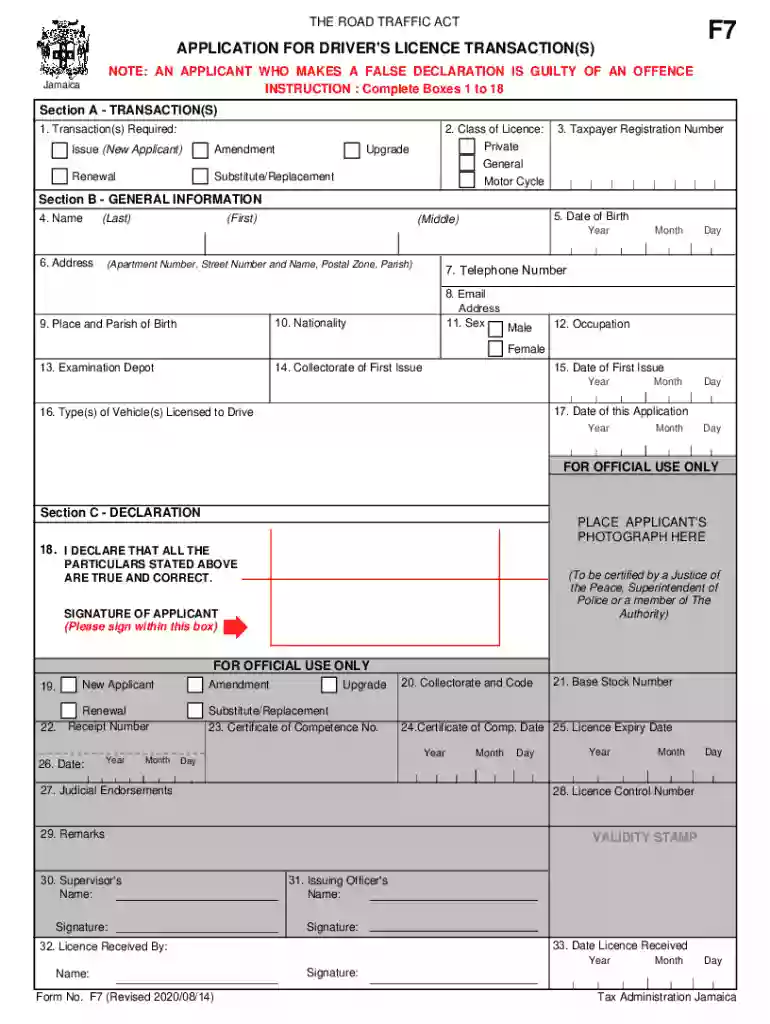
Type text, add images, blackout confidential details, add comments, highlights and more.

Draw your signature, type it, upload its image, or use your mobile device as a signature pad.

Send jamaica f7 via email, link, or fax. You can also download it, export it or print it out.
RCW 46 20 091 refers to a specific statute under Washington State law related to the application process for obtaining or renewing a driver's license. It outlines the necessary information applicants must provide, focusing on the penalties associated with making false statements during the application. The statute stresses the importance of accurate information to maintain the integrity of the licensing process. Inaccuracies or dishonest information can lead to legal consequences, including fines and potentially criminal charges.
Within the legal framework, making a false statement on a driver's license application in Washington is considered a serious offense. Authorities take compliance very seriously due to the critical role of driver's licenses in public safety and identification. Legal repercussions can include fines, suspension of the license, or further legal action. This underscores the importance of providing truthful and complete information during the application process.
Gather Necessary Documentation: Ensure all required documents are available before starting the application process. This often includes proof of identity, residency, and any other state-specific requirements.
Provide Accurate Information: Fill out your application form with meticulous attention to detail, ensuring that all statements and details are true and correct.
Submit the Application: Depending on the method chosen, you can submit your application online, by mail, or in person. Verify that all sections are complete to avoid delays.
Await Approval: After submission, the application will undergo review by the Department of Licensing. The approval time can vary based on the completeness and accuracy of the provided information.
Penalties for providing false information under RCW 46 20 091 can be severe. Potential repercussions include fines and revocation of the driver's license. These consequences are designed to deter fraudulent applications and ensure only qualified individuals receive a license. Legal action may follow significant breaches, highlighting the importance of honesty throughout the application process.
Understanding key terms within the RCW 46 20 091 context is fundamental. Terms such as "applicant," "false statement," and "license revocation" carry specific meanings, informing both the legal expectations and potential consequences involved.
The Washington State Department of Licensing issues the RCW 46 20 091 application form. They are responsible for processing applications, verifying information, and ensuring compliance with state regulations. Applicants should contact the department directly for any questions regarding the form or its requirements.
Washington has unique state-specific guidelines governing the application process for driver's licenses. While many rules generally align with federal standards, some particularities in document requirements and processing procedures relate specifically to Washington's legal and administrative framework.
Applicants have the option to complete the RCW 46 20 091 application in either digital or paper formats. The digital version offers quick submission through the state's online portal, while the paper application can be mailed or submitted in person.
For individuals who utilize digital applications, compatibility with software systems like TurboTax or QuickBooks is usually not necessary for the RCW 46 20 091 form, as these platforms are more commonly associated with financial documentation. However, ensuring the digital format aligns with your device's software capabilities is important for smooth processing.
We've got more versions of the f7 application form form. Select the right f7 application form version from the list and start editing it straight away!
At DocHub, your data security is our priority. We follow HIPAA, SOC2, GDPR, and other standards, so you can work on your documents with confidence.