
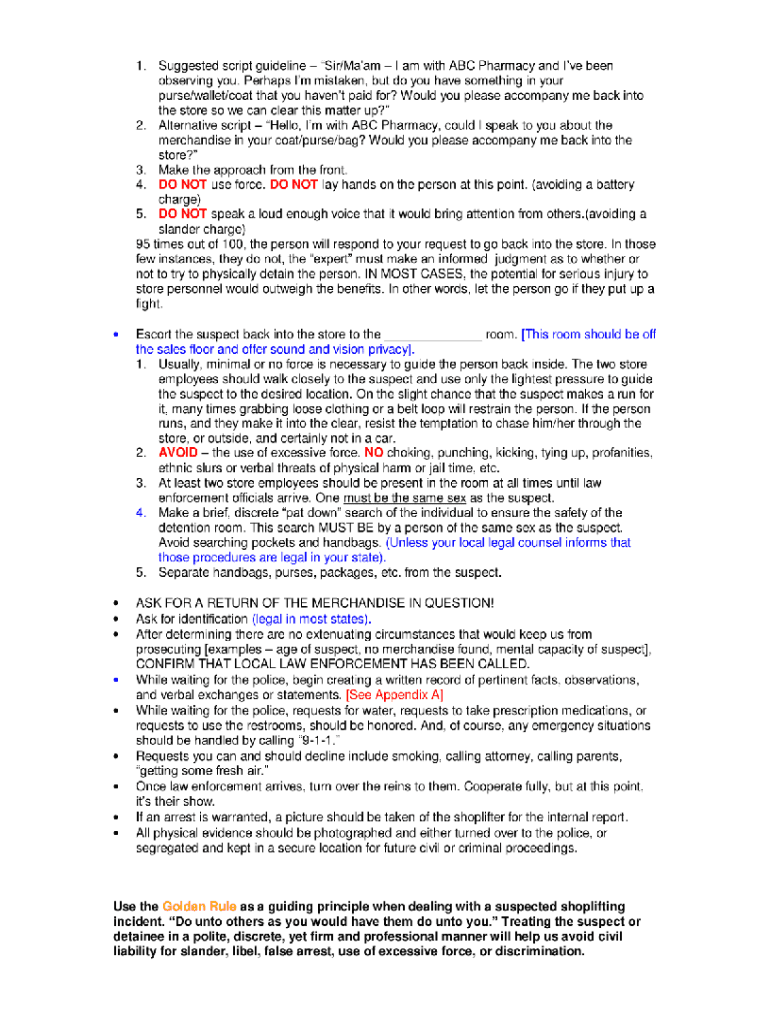







Definition and Purpose of a Shoplifting Police Report
A shoplifting police report serves as a formal record documenting the occurrence of a shoplifting incident. It provides essential details about the event, including particulars about the suspect, the stolen items, and the circumstances leading to the incident. The report is crucial for legal proceedings, insurance claims, and internal record-keeping for law enforcement agencies and retailers. It typically includes the date, time, and location of the incident, descriptions of the suspect and the items stolen, witness statements, and any evidence gathered at the scene.
How to Use a Shoplifting Police Report Example
A shoplifting police report example is a template or guide that demonstrates how to accurately fill out the report. By studying a completed example, individuals can better understand the necessary information and format required to create an effective and comprehensive report. This example can be particularly helpful for new police officers or security personnel who are tasked with documenting incidents. It helps ensure that all critical information is included and presented clearly, reducing the chance of errors that could complicate legal proceedings or insurance claims.
Obtaining a Shoplifting Police Report Example
Accessing a shoplifting police report example can often be done through law enforcement agency resources or training materials provided to security personnel in retail settings. Many police departments offer examples as part of their procedural manuals or training courses. Additionally, some legal aid organizations and educational platforms may provide templates or samples online to help the public and professionals better understand what a thorough report entails. These resources are valuable for individuals involved in security or law enforcement training, ensuring they can prepare accurate documentation of incidents.
Steps to Complete a Shoplifting Police Report
-
Collect Initial Data: Gather preliminary information such as the time, date, and location of the incident. Note descriptions of the suspect(s) and details about the stolen items.
-
Witness Statements: Record statements from any witnesses present at the time of the incident, ensuring to capture their contact information for further inquiries.
-
Evidence Collection: Document any physical evidence, such as surveillance footage or recovered stolen items, including photographs and inventory lists if applicable.
-
Suspect Information: Provide detailed descriptions of the suspect, including clothing, physical characteristics, and any distinguishing features. If apprehended, include statements or admissions.
-
Complete the Report Form: Utilize the report example as a guide to structure your report, ensuring all sections are filled out accurately and thoroughly.
-
Review and Submit: Double-check the completed report for accuracy and completeness before submitting it to the relevant law enforcement agency or security department.
Importance of Documenting Shoplifting Incidents
Filing a police report for a shoplifting incident is vital for several reasons. Firstly, it creates a formal record that can be used in future legal proceedings, which is crucial if charges are pressed against the suspect. It also supports insurance claims for losses incurred by the retailer and helps deter future incidents by establishing a legal deterrent. Moreover, comprehensive documentation aids police in identifying patterns of theft and allocating resources effectively to prevent crime.
Key Elements in a Shoplifting Police Report
- Incident Details: Date, time, and specific location of the incident.
- Suspect Description: Age, gender, physical characteristics, and any known aliases or identifying marks.
- Itemized List of Stolen Goods: Detailed description, quantity, value, and condition of the items taken.
- Witness Accounts: First-hand observations and statements about the incident.
- Evidence Collected: Photographs, video recordings, physical evidence descriptions.
- Officer Observations: Any additional commentary or observations noted by the responding officer.
Legal Implications of Filing a Shoplifting Report
Filing a shoplifting police report is an important legal step. It officially records the event, which can be used as evidence in court if the suspect is apprehended and charged. The report can also be used to support civil claims for recovery of losses or damages experienced by the retailer. Accurate and detailed reporting is essential to uphold the integrity of the legal process and ensure justice is served.
State-Specific Variations in Reporting
While the core elements of a shoplifting police report tend to be consistent, variations can occur depending on state laws and protocols. Each state may have specific statutes regarding the reporting process, including mandatory reporting timeframes, the value threshold for felony charges, and privacy laws affecting the disclosure of suspect information. Knowledge of these variations is crucial for law enforcement and legal professionals who work across different jurisdictions to ensure compliance with local legal standards.




