




01. Edit your abc 231 form online
Type text, add images, blackout confidential details, add comments, highlights and more.

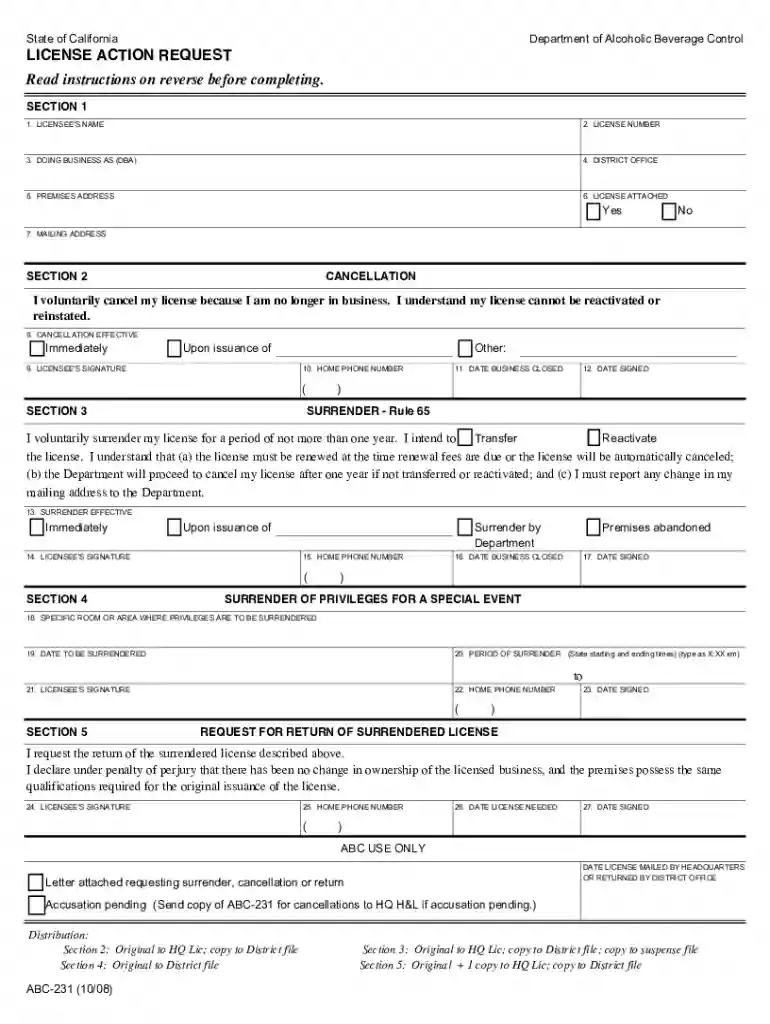
Type text, add images, blackout confidential details, add comments, highlights and more.

Draw your signature, type it, upload its image, or use your mobile device as a signature pad.

Send license action request form via email, link, or fax. You can also download it, export it or print it out.
A License Action Request is a formal application used predominantly within the context of regulatory compliance, most frequently associated with the California Department of Alcoholic Beverage Control. This document is vital for licensees who wish to voluntarily cancel or surrender their alcohol licenses. By submitting this request, license holders communicate their intention to cease operations linked to their license, whether due to business closure, change in business strategy, or other reasons. Understanding its implications is essential, as the cancellation procedure is irreversible, and once a license is surrendered or cancelled, it cannot be reactivated.
Using a License Action Request involves several steps to ensure that the form effectively communicates the license holder's intent. Typically, the process begins with completing sections that convey accurate licensee information. These sections require details such as the license number, business address, and contact information to ensure identification. Subsequently, the licensee must outline their reason for cancellation or surrender. This might include temporary closure or permanent termination of service. The form needs to be thoroughly reviewed for accuracy before final submission, as errors could lead to delays or miscommunication with regulatory authorities.
Gather Required Information: Before filling out the form, collect all necessary information such as the license number and contact details to ensure complete entries.
Fill Out the Form: Carefully enter the required information in the corresponding sections. Attention must be paid to detail to avoid errors that may complicate processing.
Specify Cancellation Details: Provide a clear reason for cancellation and affirm the decision is voluntary. Indicate whether the cancellation is permanent or temporary.
Outline Surrender Conditions: If applicable, detail any specific conditions under which the license is being surrendered, including timelines or supplementary agreements.
Sign and Submit: Once all sections are completed, the form must be signed by authorized individuals. Submission may vary based on specific state guidelines, often involving mail or electronic submission to the appropriate department.
The License Action Request comprises several critical sections, each serving a distinct purpose:
This form serves a legal function by ensuring that the process of surrendering or cancelling a license complies with state regulations. The legal acceptance of the cancellation means that the licensee must adhere to all stipulations outlined in state codes, ensuring there is no further entitlement to the privileges offered by the surrendered license. The form acts as a legal record of this request, certified by the signatures of relevant parties, which confirms the voluntary nature and understanding of the action being undertaken.
Typical users of the License Action Request form include business owners holding an alcoholic beverage license through the California Department of Alcoholic Beverage Control. These business owners could range from restaurant operators to liquor store proprietors who are modifying their business model or shutting down operations. Additionally, corporate entities planning to restructure their licensing might also employ this form to properly document their intentions with regulatory bodies.


California's regulations regarding the cancellation and surrender of alcoholic beverage licenses specifically emphasize the permanence of such actions. State rules mandate that once a license is cancelled through this request, it is not possible to reactivate it. Each license type may have specific considerations based on local laws and statutes; hence, licensees should familiarize themselves with their specific conditions or consult legal counsel for advice before submission.
Restaurant Closure: A restaurant owner decides to close the business permanently, necessitating the cancellation of their liquor license.
Business Relocation: An operator plans to move their venue to a new location outside of the current jurisdiction, prompting a license surrender.
Corporate Restructuring: A company merges with another entity, requiring consolidation or cancellation of duplicate licenses.
The License Action Request form can generally be submitted through various methods. Many regulatory bodies, such as the California Department of Alcoholic Beverage Control, allow submission via mail or electronic systems. Online submission may involve uploading a completed PDF form, while physical submissions require mailing to designated addresses. It’s important for applicants to verify the preferred method with the specific department before submission to ensure efficient processing.
Failure to properly execute and submit a License Action Request can result in several penalties. These may include administrative fines or extended delays during unresolved license statuses. Non-compliance with form submissions or late notice of surrender could also lead to reputational damage or limitations for future license applications. Therefore, it's crucial for businesses to adhere to all specified deadlines and guidelines in preparing and sending their request.
We've got more versions of the abc 231 form form. Select the right abc 231 form version from the list and start editing it straight away!
At DocHub, your data security is our priority. We follow HIPAA, SOC2, GDPR, and other standards, so you can work on your documents with confidence.




Fetch information about the authentication requests needed for the specified authentication action. One of the following values: login, login-continueRead more
Please print your name as your signature, authorizing your request(s) found on this form. Reason for your request today*. Personal information change requestRead more


