Definition and Purpose of the CRAFFT Screening Questionnaire
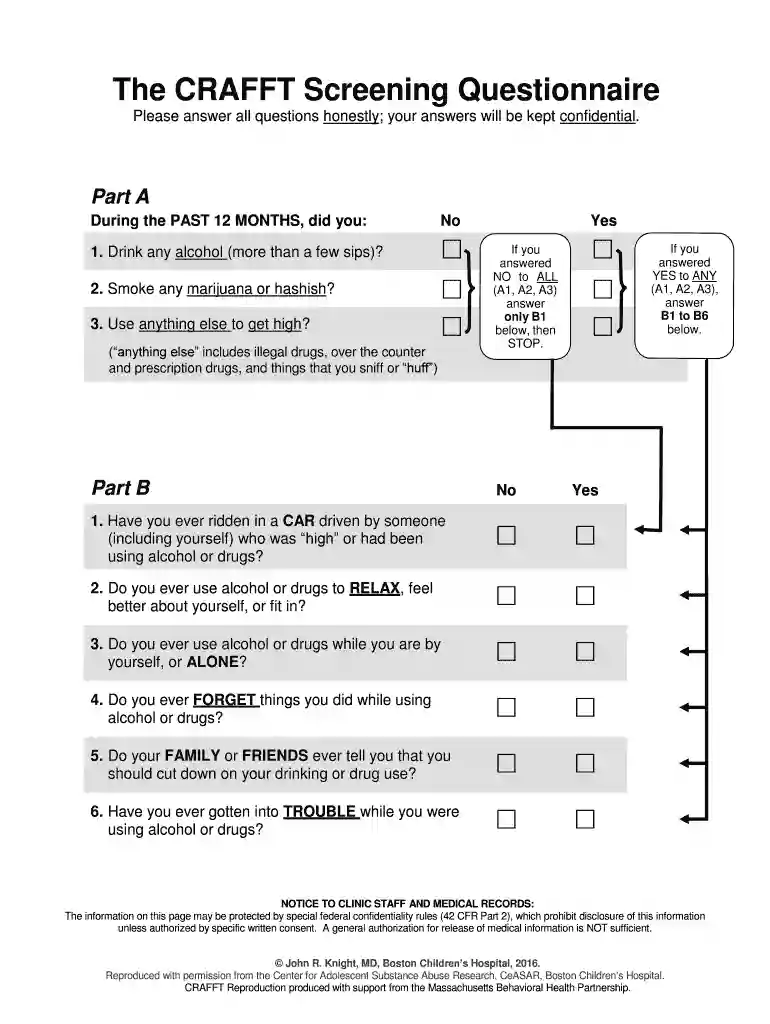
The CRAFFT Screening Questionnaire is a validated assessment instrument designed to evaluate substance use among adolescents. This tool helps determine whether a young person has encountered any issues with alcohol or drugs within a specified timeframe, such as the past twelve months. By focusing on behaviors, consequences, and experiences related to substance use, the questionnaire provides a confidential way for health care providers to identify individuals who may require a more thorough evaluation or intervention for substance use disorders.
Key Components of the CRAFFT Screening Questionnaire
The screening tool consists of two distinct parts, each serving a specific purpose in assessing the risk of substance use problems among adolescents.
- Part A: This section inquires about the use of alcohol or drugs. It serves as an initial screening to determine whether the second part of the questionnaire is necessary.
- Part B: This part explores more specific behaviors and consequences related to substance use. It provides further insight into the extent and impact of substance use issues, guiding clinicians towards appropriate next steps, such as advising, counseling, or referring the adolescent for specialized treatment.
How to Use the CRAFFT Screening Questionnaire
Utilizing the CRAFFT Screening Questionnaire involves a series of steps to ensure accurate and effective assessment:
- Initial Assessment: Clinicians should introduce the questionnaire as part of a routine health evaluation to reduce stigma and encourage honest responses.
- Administer Part A: Begin with Part A to quickly determine if there is any recent use of alcohol or drugs.
- Proceed to Part B: If Part A indicates potential use, continue with Part B to examine the behaviors and consequences associated with that use.
- Interpret Results: Review the responses to assess risk and determine if further action is necessary.
- Follow-Up Actions: If the questionnaire indicates potential issues, healthcare professionals should discuss results with the adolescent and consider referrals or additional interventions as needed.
Obtaining the CRAFFT Screening Questionnaire
Health professionals can acquire the CRAFFT Screening Questionnaire through various means:
- Professional Associations: Many healthcare and addiction treatment organizations provide access to approved screening tools, including the CRAFFT questionnaire.
- Online Databases: Certain medical and psychological research databases offer downloadable versions of the questionnaire.
- Training Workshops: Attendance at relevant workshops or seminars may provide access to comprehensive screening materials, including the CRAFFT.
Legal Use of the CRAFFT Screening Questionnaire
The legal framework surrounding the CRAFFT Screening Questionnaire pertains to confidentiality and the ethical use of screening tools for minors:
- Confidentiality Protocols: The results should be kept confidential, protecting the adolescent's privacy and encouraging honest responses.
- Parental Consent: Depending on the jurisdiction, parental consent may be required before administering the questionnaire to minors.
- Mandatory Reporting: Should the evaluation indicate a risk of harm to the adolescent or others, clinicians may be legally obligated to follow up with appropriate authorities according to local laws.
Variants or Alternatives to the CRAFFT Screening Questionnaire
Various other screening tools may be used in combination or as alternatives to the CRAFFT, depending on specific assessment needs:
- HEADSS Assessment: Focuses on a broader range of adolescent behavioral health issues, including home, education, activities, and substance use.
- CAGE Questionnaire: Often used for adults, this tool screens specifically for alcohol abuse but can be modified for younger populations.
- AUDIT-C: A shorter tool focusing on alcohol consumption patterns, informative in settings where alcohol use is a primary concern.
Important Terms Related to the CRAFFT Screening Questionnaire
Understanding terminology related to the CRAFFT Screening Questionnaire aids in comprehensive evaluation and communication:
- Adolescents: Typically refers to individuals aged twelve to twenty-one, the primary demographic for the CRAFFT.
- Substance Use Disorder: A medical condition characterized by an inability to control the use of drugs or alcohol despite adverse consequences.
- Risk Assessment: The process of determining potential risk factors associated with substance use and devising an action plan accordingly.
Steps to Complete the CRAFFT Screening Questionnaire
Administering the CRAFFT involves a series of systematic steps, ensuring adherence to best practices:
- Introduction: Explain the purpose of the questionnaire to the adolescent to foster a cooperative atmosphere.
- Part A Questions: Ask the initial set of questions focusing on recent substance use.
- Evaluate Responses: Determine if progressing to Part B is necessary based on initial answers.
- Part B Questions: Administer the second part, focusing on behaviors and consequences if warranted.
- Score and Interpret: Analyze the responses to identify potential risk areas.
- Discuss Findings: Engage in a conversation with the adolescent regarding their answers and any concerns raised.
- Determine Next Steps: Based on the outcome, decide on the recommendation for intervention or treatment as applicable.
Selecting the above blocks provides a comprehensive yet focused understanding of "The CRAFFT Screening Questionnaire," catering to those who administer, evaluate, or refer based on its findings.