




01. Edit your family needs assessment questionnaire pdf online
Type text, add images, blackout confidential details, add comments, highlights and more.

Type text, add images, blackout confidential details, add comments, highlights and more.

Draw your signature, type it, upload its image, or use your mobile device as a signature pad.

Send family needs assessment example via email, link, or fax. You can also download it, export it or print it out.
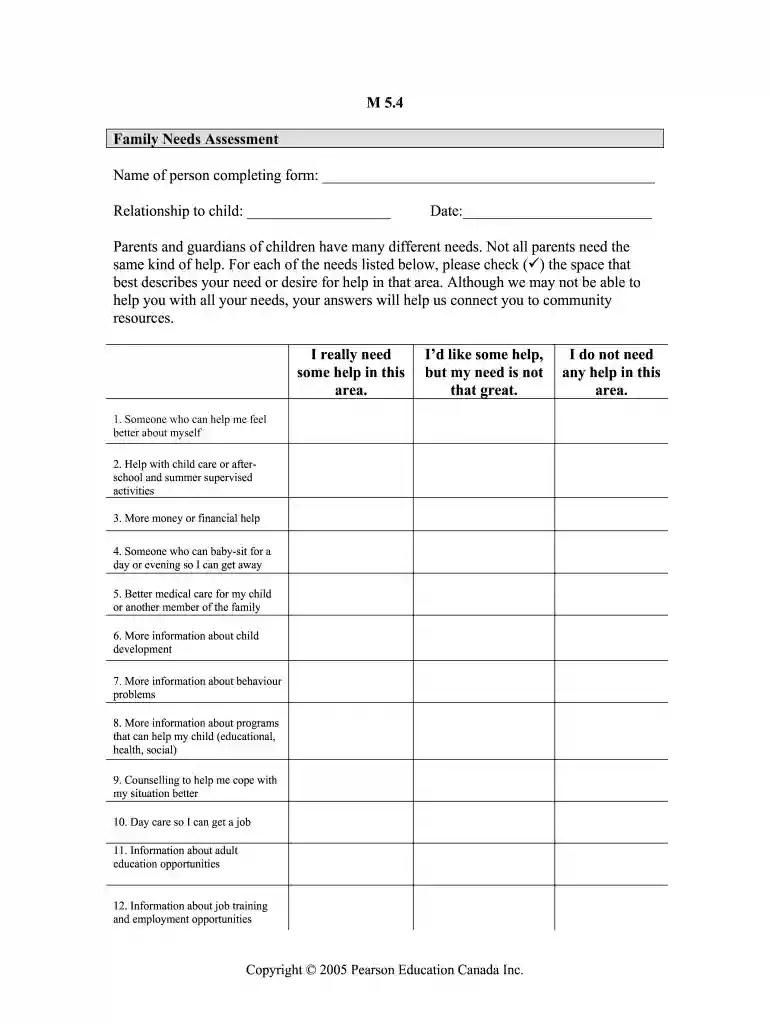
The Family Needs Assessment Questionnaire is a structured tool designed to help families identify specific support needs. It focuses on various critical areas essential for well-being, allowing insightful conversations between families and service providers. This form typically incorporates multiple sections to guide respondents through a comprehensive evaluation of their needs.
The primary purpose of a Family Needs Assessment Questionnaire is to gather detailed information on the family’s challenges and support requirements. This tool enables service providers to customize assistance based on the identified needs. The questionnaire often includes sections that assess:
Gathering this data is crucial for tailored service delivery. Service providers can use the responses to offer relevant resources and interventions, effectively targeting the families' specific circumstances.
A well-structured Family Needs Assessment Questionnaire typically includes the following components:
This combination ensures a thorough understanding of family dynamics and specific challenges, allowing for a more holistic assessment.
A Family Needs Assessment Questionnaire can cover a variety of topics. Here are some commonly included categories:
By structuring questions in this way, the questionnaire helps to create a comprehensive picture of family needs, leading to more effective support.
The Family Needs Assessment Questionnaire can be administered in various formats, including:
Choosing the right method depends on the population served, accessibility, and the resources available for administration.
Once the Family Needs Assessment Questionnaire is completed, data analysis takes place to identify trends and specific needs. The findings can inform:
By applying the findings from the questionnaire, organizations can foster improved outcomes and better services for families, ensuring they receive the necessary support to thrive.
At DocHub, your data security is our priority. We follow HIPAA, SOC2, GDPR, and other standards, so you can work on your documents with confidence.
Child and Family Health- Does anyone in your family have any need for resources or support in the areas listed below? Y N Health insurance and/or access toRead more
The tool covers three areas: Communication (9 items), Learning at Home (7 items), and Community Partnerships (6 items). This needs assessment tool will: Read more
This guide provides advice on planning needs assessments and discusses the following methods that can be used to determine health information needs: anRead more


