







Definition and Meaning
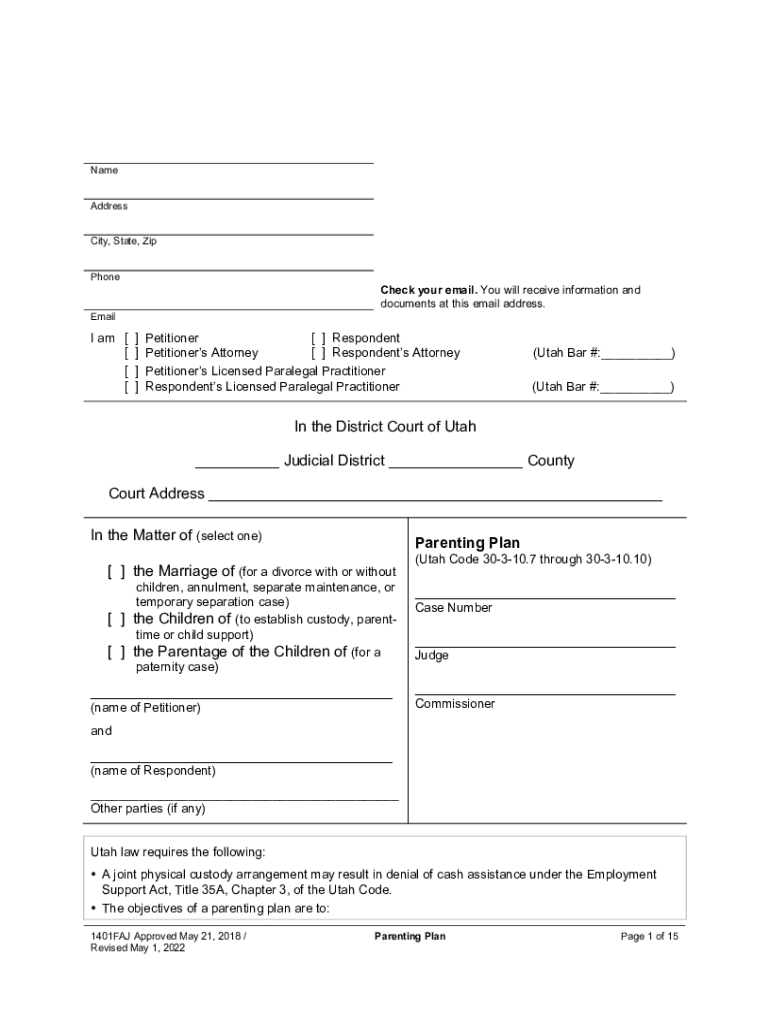
The "In the Matter of Parenting Plan - legacy utcourts" refers to a legal document used within the Utah District Court system to outline the arrangements regarding child custody, parent-time, decision-making, and communication between parents following a separation or divorce. This form serves as a guide and framework to ensure that the best interests of the children are prioritized and provides detailed instructions for parents as they navigate these matters legally and amicably.
Purpose of the Parenting Plan
- Child Custody Arrangements: Establish clear guidelines about which parent holds physical and legal custody.
- Parent-Time Schedule: Outline the specific schedule for when children will spend time with each parent.
- Decision-Making Protocols: Establish guidelines for making significant decisions regarding the children's lives.
- Communication Framework: Ensure open lines of communication between parents for the children's welfare.
How to Use the In the Matter of Parenting Plan
Understanding how to use the form effectively requires following the provided structure and ensuring all relevant sections are completed. This tailored process helps accommodate each family's unique situation.
- Gather Necessary Information: Collect all relevant details pertaining to each parent and child, including contact information, preferred schedules, and any pertinent legal considerations.
- Complete Each Section Carefully: Fill out each segment of the plan with precision, ensuring clarity in descriptions of custody, visitation schedules, and decision-making processes.
- Include Children’s Needs: Consider the emotional, educational, and physical needs of each child. Examples include accounting for school schedules or after-school activities.
- Seek Legal Review: Having a legal professional review the completed form can aid in ensuring all terms are legally sound.
Key Elements of the Parenting Plan
The parenting plan is composed of several key components aimed at ensuring thoroughness and comprehensiveness.
Custody Arrangements
- Physical Custody: Decide where the child resides on a day-to-day basis.
- Legal Custody: Define which parent can make decisions regarding the child's education, healthcare, and welfare.
Visitation and Parent-Time
- Regular Schedule: Establish a default schedule that details weekdays and weekends with each parent.
- Holiday Arrangements: Specify arrangements for birthdays, holidays, and other special occasions.
Decision-Making Procedures
- Outline protocols for how decisions about education, health care, religious activities, and other key areas are made collaboratively.
Steps to Complete the Parenting Plan
Creating an effective parenting plan involves several significant steps designed to ensure the document fully addresses the needs and rights of all parties involved.
- Initial Drafting: Begin by drafting a preliminary version that covers all main areas of concern.
- Parent Collaboration: Encourage both parents to participate in discussions to develop a mutually acceptable arrangement.
- Legal Advice: Consult with an attorney experienced in family law to review the draft for completeness and compliance with Utah laws.
- Finalize the Document: Make necessary adjustments based on feedback and finalize the plan.
- Court Submission: Submit the finalized plan to the District Court for approval.
State-Specific Rules for Utah
Several specific legal nuances exist in Utah regarding the completion and submission of parenting plans.
Utah Legal Statutes
- Utah Code: Familiarize with Utah Code that governs child custody and visitation rights.
- Evidence Requirements: Understand what evidence may be required to support claims or requests within the plan.
Filing Requirements
- Submission Rules: Home jurisdiction rules dictate where and how to file the form.
- Approval Process: Be aware of the approval timeline, as the court must officially sanction the plan.
Who Typically Uses the Parenting Plan
The plan is essential for parents undergoing separation or divorce proceedings in Utah.
- Divorcing Parents: To establish legally-binding arrangements for child custody and visitation.
- Unmarried Parents: When needing to formalize custody or visitation agreements without marriage dissolution.
- Legal Guardians: Those who are involved in guardianship and seek to establish care arrangements.


Required Documents
Compiling the appropriate documentation is critical for the completion and approval of the parenting plan.
Documents to Gather
- Birth Certificates: For each child included in the plan.
- Proof of Residency: For parents to show living arrangements and addresses.
- Existing Court Orders: Any previous court rulings regarding custody or visitation.
Form Submission Methods
Ensuring the form's successful submission requires understanding the available methods for filing.
- Online Submission: Utah's court system may offer digital submission options for greater convenience.
- Mail-in Option: Submitting the completed form via certified postal mail.
- In-Person Filing: Direct submission at the appropriate District Court office ensures immediate receipt confirmation.
Conclusion
Mastering the intricacies of the "In the Matter of Parenting Plan - legacy utcourts" form is crucial for parents intending to safeguard their children's welfare and adhere to Utah's legal requirements. By following structured steps, obtaining necessary legal advice, and paying close attention to state-specific rules, parents can create an effective parenting plan that addresses essential custody and visitation elements while maintaining compliance with court standards.




