




01. Edit your arizona form 10193 online
Type text, add images, blackout confidential details, add comments, highlights and more.

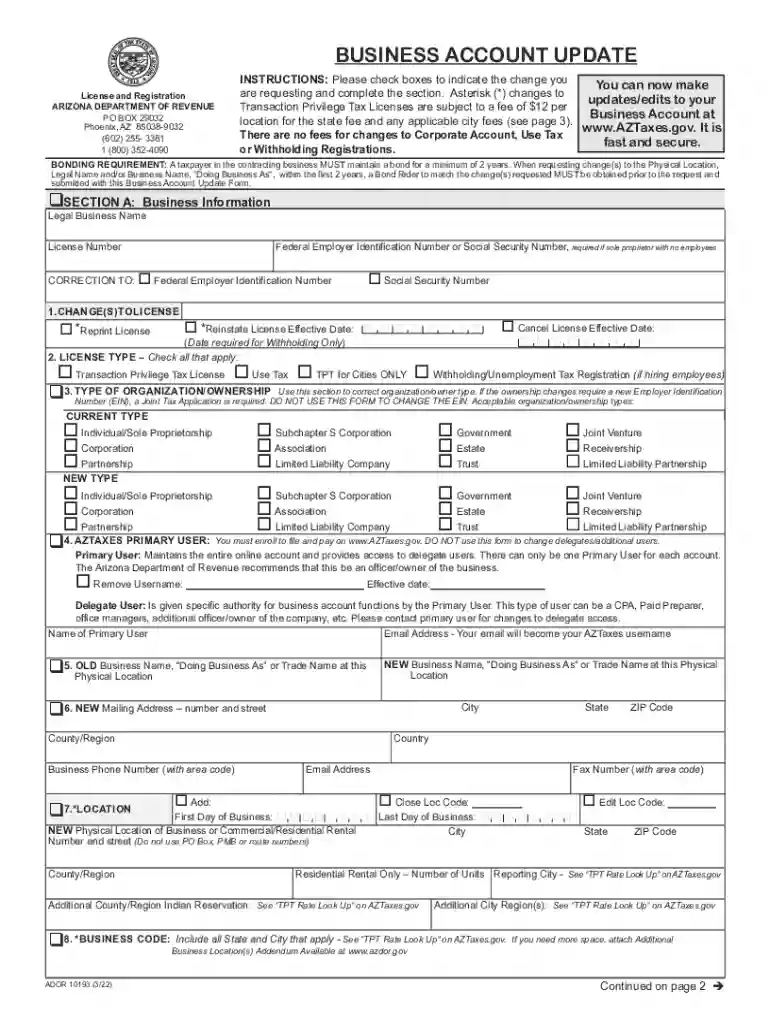
Type text, add images, blackout confidential details, add comments, highlights and more.

Draw your signature, type it, upload its image, or use your mobile device as a signature pad.

Send 10193 form via email, link, or fax. You can also download it, export it or print it out.
License and registration are legal requirements necessary for the legal operation of various entities, ranging from vehicles to businesses. In the context of businesses, obtaining a license often confirms compliance with industry-specific regulations, whereas registration may indicate legal recognition or permission from the state or federal government. Understanding this distinction is crucial for anyone looking to operate within the boundaries of the law. For example, a business operating under the Arizona Department of Revenue would need relevant licenses to perform specific functions legally.
Moreover, navigating the complexities of these requirements can ensure that your venture operates smoothly without the risk of legal repercussions. Every aspect, from fees to updating business information, must be addressed with precision. This ensures compliance with local, state, and federal regulations that may come with procedural obligations or penalties for non-compliance.
Using license and registration forms accurately is critical for compliance. These forms should be filled out with all required information as stipulated by the issuing authority. For instance, businesses may need to update their license status or registration details when ownership or location changes occur. Specific fields might need to be completed depending on the type of update being performed, such as stating business identification numbers or explaining the nature of business changes.
The form might also include sections where you can detail changes to ownership or other legal shifts within the enterprise. Understanding which sections apply to your specific situation is essential. An example scenario is an Arizona-based business updating its registration to reflect a new physical address, where this specific information must be communicated on the form.
Acquiring the necessary license and registration often involves understanding the underlying requirements set by the relevant authorities. Typically, this process starts with identifying the correct form that applies to your needs, such as a business license from a state department. You'll then need to collect necessary information and documentation, which might include proof of identity or business verification documents.
Next, determine the submission method, whether that is electronic, via mail, or in person. Properly understanding the steps involved in obtaining these documents ensures that applications are submitted correctly, minimizing delays or rejections. For example, knowing whether additional supporting documents are needed before submission helps streamline the approval process.
Filling out these forms accurately is a multi-step process that requires attention to detail. A typical sequence might include:
Operating without proper license and registration can result in significant legal issues, including fines and potentially halting business operations. Legal use of these documents ensures that your operations conform to regulatory standards. For example, a contracting business in Arizona might face bonding requirements linked to their registration. Without meeting these legal requirements, they risk penalties or their business being shut down.
A compliant process mitigates risks and upholds standards that protect consumers and businesses alike. Awareness of legal obligations and maintenance of updated documents are key elements in sustaining a viable operation.
Understanding the major elements involved in these forms is critical for successful completion. Typically, these include:
Meticulous attention to these elements can prevent errors and ensure that all regulatory requirements are addressed.
Different states may impose varied requirements for license and registration, influencing how businesses must operate within those jurisdictions. For example, Arizona might have specific procedures for fee calculations or bonding that differ from those in another state.
Familiarizing yourself with state-specific nuances is fundamental for a business to remain in good legal standing. An Arizona business must ensure all state-specific regulatory forms are completed correctly to maintain compliance with state laws and regulations.
Submission methods vary and often depend on the specific requirements of the issuing authority. Some forms can be submitted electronically through official state or federal portals, while others might require mail or in-person submissions.
Understanding these methods and their specific procedures can save time and ensure timely processing and approval.
Failing to comply with license and registration requirements can result in severe consequences. These can include significant fines, business closure, or legal action. Non-compliance can originate from submitting inaccurate information, missing deadlines, or not adhering to state-specific regulations.
For example, a business in Arizona neglecting to update its registration after a significant ownership change might face penalties. Once aware, the business should promptly correct the issue by acquiring and submitting the appropriate updated form to prevent penalties from escalating further.
We've got more versions of the arizona form 10193 form. Select the right arizona form 10193 version from the list and start editing it straight away!
At DocHub, your data security is our priority. We follow HIPAA, SOC2, GDPR, and other standards, so you can work on your documents with confidence.
Required Documentation Social Security Card 2 Proofs of WV residency (See acceptable documents below) A valid foreign passport with English translationRead more
We are here to help you navigate the registration process. Renew Online You will need your VIN and a PIN. Emissions tests may be done at select locations.


