Vomit and Diarrhea Clean-up Plan Template - Skagit County, Washington 2026

Get Form
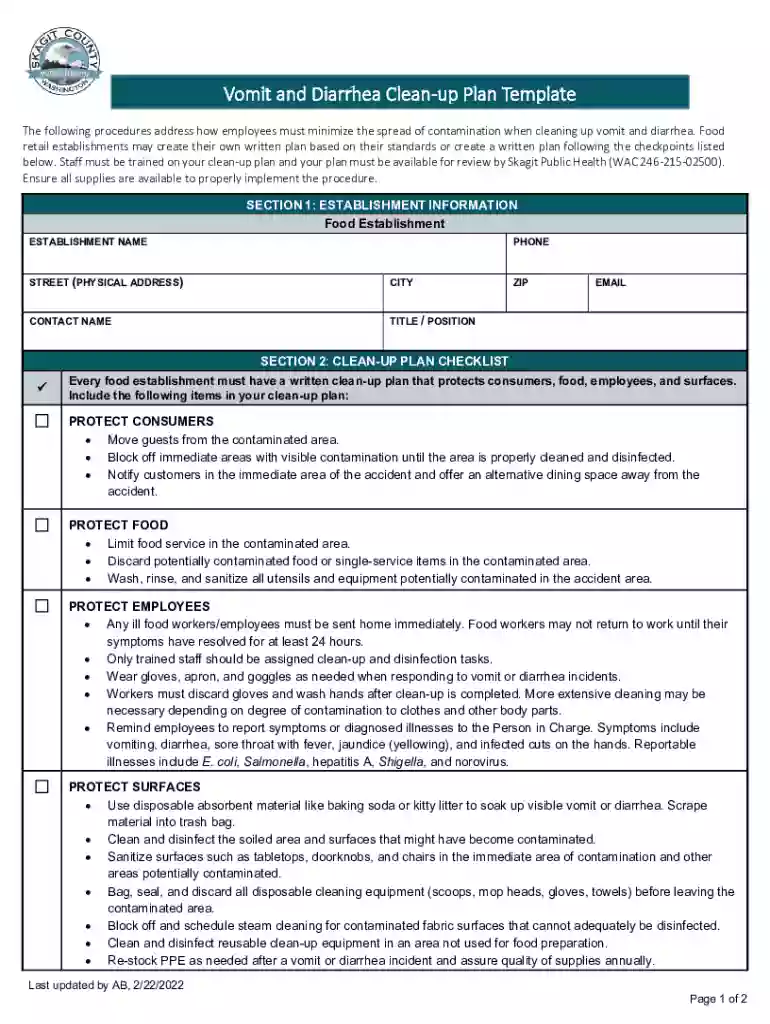
Vomit and Diarrhea Clean-up Plan Template - Skagit County, Washington Preview on Page 1

Here's how it works

01. Edit your form online
Type text, add images, blackout confidential details, add comments, highlights and more.

02. Sign it in a few clicks
Draw your signature, type it, upload its image, or use your mobile device as a signature pad.

03. Share your form with others
Send it via email, link, or fax. You can also download it, export it or print it out.

Definition and Purpose of the Vomit and Diarrhea Clean-up Plan Template

The Vomit and Diarrhea Clean-up Plan Template for Skagit County, Washington, is a structured document designed to assist food retail establishments in effectively managing and mitigating contamination risks associated with vomit and diarrhea incidents. This template serves as a critical component in a food safety management system, ensuring the health and safety of employees, consumers, and the public. By detailing step-by-step procedures for clean-up, the template minimizes the potential for disease transmission and helps maintain compliance with food safety standards.

How to Use the Vomit and Diarrhea Clean-up Plan Template

To utilize the Vomit and Diarrhea Clean-up Plan Template effectively, establishments should follow a sequence of actions:

  1. Download and Review:

    • Obtain the template and thoroughly review each section to understand its requirements and procedures.
  2. Customization:

    • Tailor the template with the specific details of your establishment, such as contact information and location.
  3. Assemble Clean-Up Kits:

    • Ensure that the necessary clean-up kits and supplies, as outlined in the template, are readily available.
  4. Training:

    • Provide comprehensive training to employees, using the template as a guide for proper clean-up procedures and safety measures.
  5. Implementation and Observation:

    • Implement the plan during real incidents and observe its effectiveness, making adjustments as necessary for continuous improvement.

Steps to Complete the Vomit and Diarrhea Clean-up Plan Template

Completing the template involves methodically addressing each component:

  1. Establishment Information:

    • Fill in the name, address, and contact details of your establishment to ensure correct identification.
  2. Consumer and Employee Protection:

    • Complete the checklist detailing preventive measures and procedures to protect consumers and employees during clean-up.
  3. Surface Identification:

    • List all surfaces needing disinfection in various sections of your establishment to eliminate contamination.
  4. Assembly of Clean-Up Kit:

    • Specify all items included in the clean-up kit, ensuring that nothing critical is overlooked.
  5. Employee Training Details:

    • Document training schedules and content, emphasizing personal protective equipment (PPE) and disinfection techniques.
  6. Plan Maintenance:

    • Describe how the plan will be regularly reviewed and updated to reflect any changes in protocols or personnel.

Key Elements of the Clean-Up Plan Template

The clean-up plan template is comprised of crucial elements that collectively ensure effective handling of incidents:

  • Protective Measures:

    • Guidelines for wearing appropriate PPE such as gloves, masks, and goggles.
  • Immediate Action Procedures:

    • Steps to contain the vomit or diarrhea incident quickly to prevent further contamination.
  • Disinfection Protocols:

    • Detailed instructions on cleaning substances and techniques to sanitize affected areas thoroughly.
  • Communication Plan:

    • Strategies for informing relevant staff and managers about the incident and actions taken.

Employee Training Requirements

Comprehensive training is vital to the effective implementation of the clean-up plan:

  • Training Sessions:

    • Conduct regular training sessions to familiarize staff with the clean-up procedures and protocols.
  • Practical Demonstrations:

    • Include hands-on practice in using the clean-up kits and applying disinfection agents.
  • Evaluation and Feedback:

    • Assess the employees’ performance and understanding regularly to ensure consistent application of the plan.
  • Documentation:

    • Maintain records of completed training, including dates and participant details, to track compliance and readiness.

Legal Use and Compliance

Using the Vomit and Diarrhea Clean-up Plan Template aligns with local health regulations and industry standards:

  • Health Department Requirements:

    • Ensure the template complies with Skagit County's health department guidelines for food safety.
  • Documentation and Records:

    • Keep a record of all clean-up incidents, actions taken, and routine plan reviews to provide evidence of compliance.
  • Liability Reduction:

    • Implementing the plan reduces liability in cases of foodborne illness outbreaks by demonstrating proactive safety measures.

State-Specific Rules for Skagit County, Washington

The template should reflect regulations specific to Skagit County:

  • Local Health Codes:

    • Include any additional requirements mandated by county or state health codes beyond the general guidelines.
  • Inspection Readiness:

    • Prepare for potential health inspections by keeping the documentation current and accessible.
  • Regional Best Practices:

    • Tailor the template to incorporate practices popular or required within Washington State to maximize effectiveness and compliance.

Examples of Implementing the Plan

Real-world scenarios demonstrate the utility and impact of the plan:

  • Incident Reporting:

    • Report cases of illness promptly, using the clean-up plan templates as a basis for action and documentation.
  • Plan Review Meetings:

    • Hold bi-annual review meetings with staff to discuss any incidents and improvements made.
  • Community Health Initiatives:

    • Participate in local health initiatives to share experiences and learn from other establishments.

These sections ensure the Vomit and Diarrhea Clean-up Plan Template is detailed, practical, and aligned with relevant guidelines and standards, benefiting all parties involved in maintaining food safety and hygiene.

be ready to get more

Complete this form in 5 minutes or less

Get form

Got questions?

We have answers to the most popular questions from our customers. If you can't find an answer to your question, please contact us.
Contact us
Use soapy water to clean the spill area, including surfaces close to the spill and frequent high touch areas such as faucet handles, doorknobs, counters, and phones Rinse all washed areas thoroughly Dry with disposable paper towels All items must be disposed of after use Wash hands thoroughly with soap and water after
Step 1: Cover. Cover the or diarrhea with paper towels or an absorbent powder (such as kitty. Step 2: Remove. Remove the paper towels or hardened powder with a scoop/scraper and immediately. Step 3: Wash. Prepare a solution of soapy water. Step 4: Disinfect.
Use disposable absorbent material like baking soda or kitty litter to soak up visible or diarrhea. Scrape material into trash bag. Clean and disinfect surfaces such as tabletops, doorknobs, and chairs within a 25-foot radius around the contaminated area.
Contain a 25-30 feet area from the epicenter of the event to keep anyone not involved in clean up out of the area. Put on personal protective equipment. Anyone cleaning up or diarrhea should at a minimum wear single-use gloves and a face mask or other effective covering.

Security and compliance

At DocHub, your data security is our priority. We follow HIPAA, SOC2, GDPR, and other standards, so you can work on your documents with confidence.
Learn more
ccpa2
pci-dss
gdpr-compliance
hipaa
soc-compliance