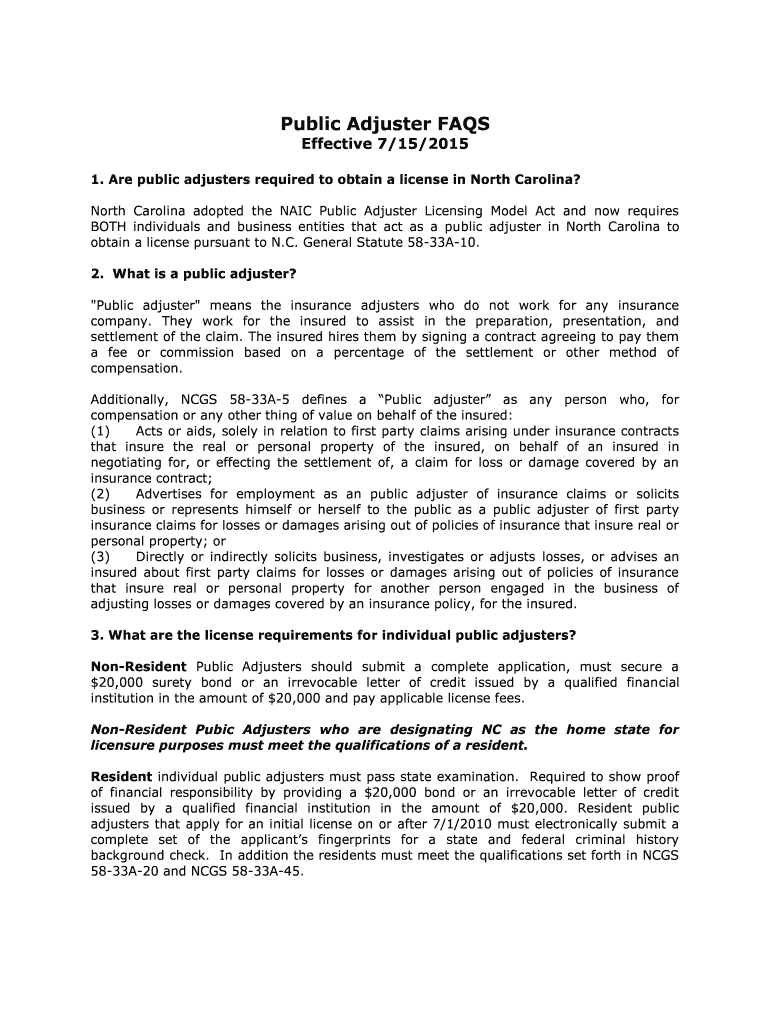







Definition and Meaning of Public Adjuster FAQS
Public Adjuster FAQs encompass a set of frequently asked questions designed to offer clarity and insights into the role, responsibilities, and relevance of public adjusters within the insurance landscape. These FAQs help explain the functions of public adjusters, who are professionals that assist policyholders in negotiating insurance claims for property damage. Public adjusters represent the insured and play a pivotal role in ensuring that policyholders receive the maximum settlement from insurance companies.
Key Components of Public Adjuster FAQS
- Role Clarification: Public adjusters are distinct from insurance company adjusters. They work solely for the policyholder, providing an unbiased assessment of the damage and advocating for a fair settlement.
- Licensing and Regulation: In most U.S. states, public adjusters are required to be licensed. These requirements include passing specific examinations and fulfilling continuing education mandates to maintain licensure.
- Valuation Expertise: Public adjusters are skilled in understanding insurance policies, assessing damage accurately, and determining proper repair costs or replacement value.
Importance of Using Public Adjuster FAQS
Understanding Public Adjuster FAQs is crucial for policyholders who seek to navigate the complex process of filing insurance claims. The guide serves to inform them about the options and potential benefits of engaging a public adjuster.
Benefits of Engaging a Public Adjuster
- Maximized Settlements: Public adjusters ensure claims are comprehensively assessed, often leading to higher payouts than initially offered by insurance companies.
- Time-saving: They manage the claim process, allowing policyholders to focus on recovery rather than paperwork.
- Expert Negotiation: Knowledge of complex policy language and claims handling processes gives public adjusters the leverage needed for effective negotiations.
Steps to Complete the Public Adjuster FAQS
Completing the Public Adjuster FAQS involves understanding and obtaining clear answers to several critical questions that aid in effectively hiring and working with a public adjuster.
Step-by-Step Process
- Evaluate the Need: Assess if the situation requires a public adjuster based on claim complexity and expected settlement challenges.
- Research Potential Adjusters: Look for licensed professionals with a track record of successful claims management.
- Verify Credentials: Check their licensing status and look for any regulatory actions or consumer complaints.
- Discuss Fees Upfront: Understand the cost structure, which is typically a small percentage of the settlement amount.
- Engagement: Once confident, formally engage the services of the chosen public adjuster with a signed agreement.
Important Terms Related to Public Adjuster FAQS
Understanding specific legal and insurance-related terms is essential to grasp the full scope of the public adjuster’s role.
Glossary of Common Terms
- Loss Assessment: The evaluation of damage incurred to determine repair or replacement values.
- Policy Coverage Limits: The maximum amount an insurer will pay under a policy for a covered loss.
- Actual Cash Value (ACV): The replacement cost minus depreciation, reflecting the current value of a damaged item.
- Replacement Cost Value (RCV): The cost to replace damaged property with new property of comparable quality, without deducting for depreciation.
Legal Use and Regulations of Public Adjuster FAQS
Engaging a public adjuster involves legal considerations, particularly around compliance with state-specific regulations.
Legal and Compliance Considerations
- State Licensing: Each state has its own licensing requirements, often involving exams and continued education.
- Contractual Obligations: Ensure any agreement complies with state laws, which may dictate contract terms and cancellation policies.
- Ethical Practices: Public adjusters are bound by ethical standards that prohibit them from engaging in deceptive practices.
State-Specific Rules for Public Adjuster FAQS
Due to variations in insurance regulation, it's essential to understand state-specific rules governing public adjusters' operations.
Examples of State Variations
- Florida: Requires public adjusters to adhere to specific post-disaster procedure rules to protect consumers.
- Texas: Mandates separate licensing examinations focusing on state-specific insurance codes and practices.
- California: Implements strict notification requirements regarding fees and consumer disclosures.
Examples of Using Public Adjuster FAQS
Public Adjuster FAQs provide real-world scenarios and case studies that illustrate their practical utility in optimizing insurance claims.
Practical Scenarios
- Natural Disasters: Using a public adjuster for claims related to hurricanes or earthquakes has proven beneficial in securing comprehensive settlements.
- Commercial Claims: Businesses often utilize public adjusters for complex commercial property claims, ensuring that all losses, including business interruption, are adequately addressed.
Eligibility Criteria for Public Adjuster FAQS
Eligibility to hire a public adjuster may involve certain criteria, primarily related to the type and scope of the insurance claim in question.


Determining Eligibility
- Claim Value: Typically beneficial for large or complicated claims where the expertise can have a significant impact on settlement outcomes.
- Policy Type: Some insurance policies may specifically outline the process for engaging third parties like public adjusters.
- Dispute History: When there’s a history of denied or underpaid claims, a public adjuster can be instrumental in re-assessing the claim's merit.
By incorporating these comprehensive blocks, individuals and businesses can make informed decisions about utilizing public adjuster services to enhance their insurance claim experiences.