




01. Edit your form online
Type text, add images, blackout confidential details, add comments, highlights and more.

Type text, add images, blackout confidential details, add comments, highlights and more.

Draw your signature, type it, upload its image, or use your mobile device as a signature pad.

Send it via email, link, or fax. You can also download it, export it or print it out.
The "Any Required" form serves as a key document that individuals or entities may be required to complete for various purposes such as regulatory compliance, data collection, or verification processes. As the name implies, the requirement can vary, and its application can extend across different sectors including educational institutions, governmental agencies, or legal processes. This form plays a crucial role in ensuring that necessary information is captured accurately and that specific requirements are met according to the guidelines set by the issuing entity.
Utilizing the "Any Required" form effectively involves understanding both the context of its application and the specific details it seeks to capture. Start by reviewing the form instructions, which are usually located on the first page or in an accompanying document. These instructions will outline the information needed, any documentation that must accompany the form, and the submission process. By adhering to these guidelines, the completion process can become more streamlined and efficient, reducing the likelihood of errors or omissions that might lead to processing delays.
Read Instructions Carefully: Begin by thoroughly reading all the instructions provided with the form to ensure understanding of the requirements and any supporting documentation needed.
Gather Required Information: Compile all necessary data such as personal identification, financial records, or other relevant details before starting the form to facilitate a smoother completion process.
Fill Out the Form: Carefully enter the required information into each field, ensuring accuracy and completeness. Use blue or black ink if completing a paper version, unless otherwise specified.
Attach Supporting Documents: Include any additional documents that are explicitly required to accompany the form. These could range from copies of identification to financial statements.
Review and Double-Check: Before submission, thoroughly review the form for any missed sections or errors. Ensure that all signatures and dates are filled out where necessary.
Submit the Form: Follow the specified method of submission, which could be online, by mail, or in person, ensuring that you adhere to any deadlines stated.
The "Any Required" form is used by a diverse range of individuals and entities. Students may encounter it in academic settings for enrollment or financial aid purposes, while businesses might use it for compliance and regulatory reporting. Government agencies may require the form for identification verification or benefit applications. Understanding the context in which this form is used helps respondents tailor their responses to meet the specific requirements effectively.


Adhering to legal guidelines is essential when using the "Any Required" form. Typically, forms have binding legal implications, especially when used for official processes such as tax filings, applications for licenses, or certifications. Ensuring that all provided information is accurate, truthful, and compliant with relevant legal standards is paramount to avoid any potential legal repercussions. Misrepresentation or incompliance can lead to penalties or rejections.
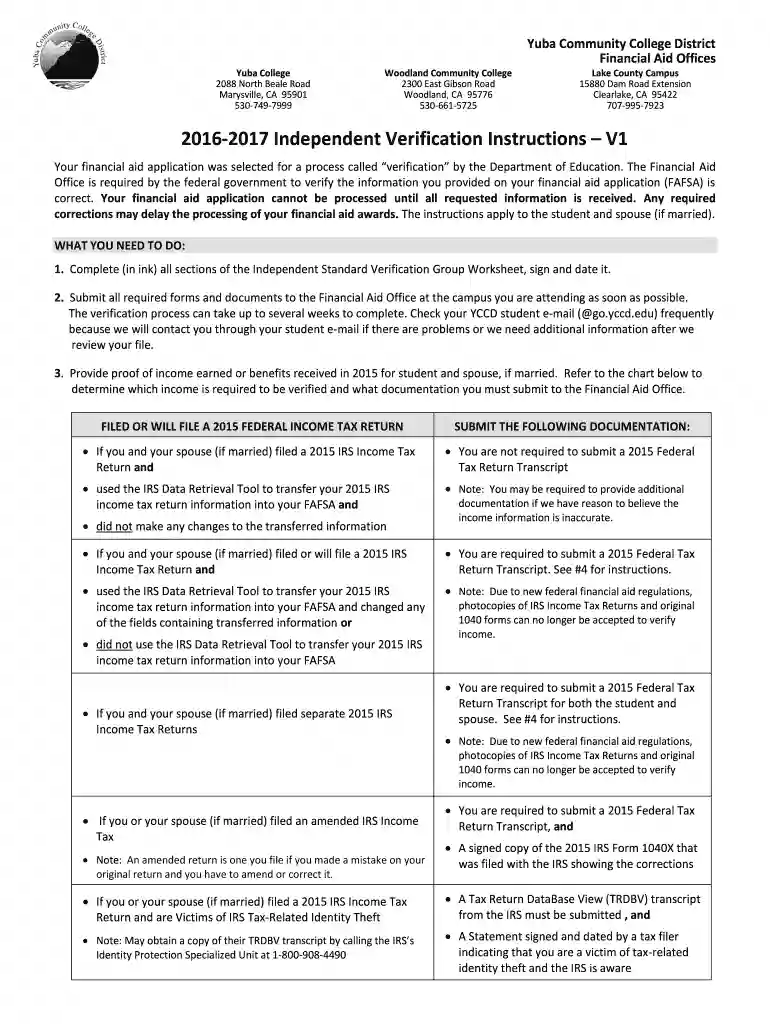
Educational Sector: Students at Yuba Community College District may use the form for financial aid verification, requiring them to submit financial records and fill out information related to their personal and academic status.
Business Compliance: Companies may use the form to report compliance with industry regulations, confirming details about business practices and financial standings.
Government Applications: Individuals seeking government aid or services might use the form to verify eligibility, requiring personal identity verification and income documentation.
Understanding submission methods is crucial for ensuring that the "Any Required" form reaches its intended recipient efficiently.
Online Submission: Often the most convenient method, allowing users to fill in details digitally and upload necessary documents through a secure portal. Generally provides immediate confirmation of receipt.
Mail Submission: Traditional method where complete forms and documents are enclosed in an envelope and sent to the specified address. Requires accounting for mail delivery times and potential delays.
In-Person Submission: Allows for direct delivery of the form to the office or department requiring it. Offers the opportunity for immediate questions or confirmations but may not always be available depending on location or pandemic restrictions.
We've got more versions of the Any required form. Select the right Any required version from the list and start editing it straight away!
At DocHub, your data security is our priority. We follow HIPAA, SOC2, GDPR, and other standards, so you can work on your documents with confidence.


