
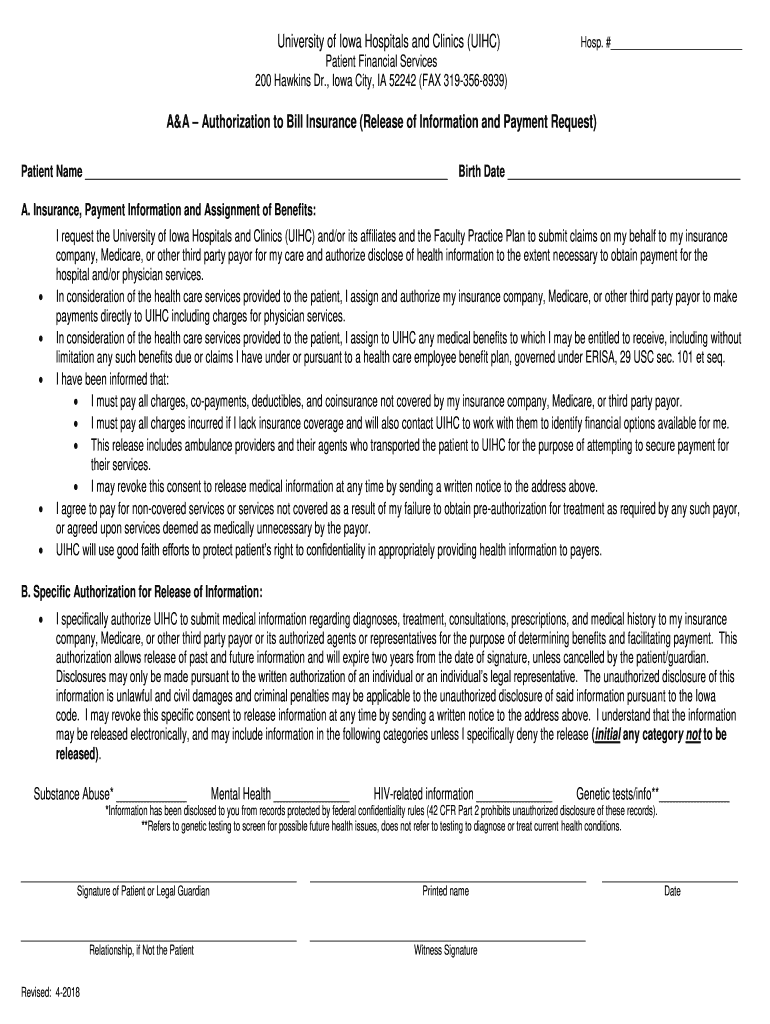







Definition & Meaning
The "Authorization for Release of Information and Payment" form is a legal document that authorizes an organization, like the University of Iowa Hospitals and Clinics (UIHC), to disclose specific health information to insurance providers for billing purposes. This form grants permission to bill the patient's insurance and facilitates the release of necessary medical information required for processing payments. It encompasses both financial and informational authorizations to ensure that communication and transactions between healthcare providers and insurance companies are legally compliant and streamlined.
- Purpose: This form serves a dual function: authorizing release of medical information and enabling billing.
- Validity: Typically, the authorization remains in effect for two years unless revoked earlier by the patient.
- Patient Responsibilities: Patients should be aware of their responsibilities regarding co-payments and non-covered services.
How to Use the Authorization for Release of Information and Payment
Using the "Authorization for Release of Information and Payment" form involves a systematic approach to ensure accuracy and comprehensiveness.
-
Identify Information: Before filling out the form, gather all necessary personal and insurance details. This includes patient identifiers (such as name and date of birth) and insurance policy numbers.
-
Complete the Form: Fill out the form with specific attention to sections mandating authorization for information release and payment. Ensure that patient signatures and dates are correctly inputted.
-
Provide Consent: Review the consent sections to understand what information will be shared and the extent of the authorization regarding billing.
-
Submission: Once the form is completed, submit it as per the provider's instructions. This could be through online submission systems, mail, or in-person delivery, depending on the institution's preference.
-
Maintain Records: Keep a copy of the submitted form for your records to ensure that you have documentation of this authorization for future reference.
Key Elements of the Authorization for Release of Information and Payment
Understanding the key components included in the form can streamline the process and prevent errors.
- Patient Information: Essential personal data, including full name, address, and contact information.
- Insurance Details: Information related to the patient's insurance provider, including policy numbers and billing codes.
- Consent and Authorization: Clauses that explicitly authorize the release of medical information to third parties as necessary for payment processing.
- Termination Date: The specific time frame during which the authorization is valid, often up to two years, unless revoked.
Steps to Complete the Authorization for Release of Information and Payment
Filling out this form accurately is critical to ensure seamless insurance processing and payment handling.
-
Read Instructions Carefully: Start by thoroughly reading the form instructions to ensure complete understanding.
-
Fill Personal Information: Insert personal details, including full name, social security number, and contact details.
-
Input Insurance Information: Clearly list your insurance provider's details, including the policy and group number, if applicable.
-
Authorization Section: Read the terms related to the release of information and payment carefully. You must indicate your understanding and agreement by signing and dating the form.
-
Specify Any Restrictions: If there are particular pieces of information you want to restrict from being shared, indicate this in the provided sections.
-
Finalize and Submit: Once all sections are filled accurately, submit the form in the manner prescribed by your provider, maintaining a copy for personal records.
Important Terms Related to Authorization for Release of Information and Payment
Familiarity with key terms related to this form aids in comprehending its full implications:
- Disclosure: The act of making health information available to insurance entities.
- Protected Health Information (PHI): Any information about health status, healthcare provision, or healthcare payment that can be linked to an individual.
- Revocation: The right of the patient to cancel their authorization at any time before the expiration date.
Legal Use of the Authorization for Release of Information and Payment
The form must adhere to legal standards to protect the rights of both the patient and the provider.
- HIPAA Compliance: Ensuring that the release of information complies with HIPAA regulations to maintain patient confidentiality.
- Legal Implications: Authorization grants legal permission to share information strictly for payment purposes.
- Patient Rights: Patients maintain the right to access their records and revoke authorization if desired.
Who Typically Uses the Authorization for Release of Information and Payment
Different parties utilize this form within medical and insurance settings to facilitate payment transactions.
- Healthcare Providers: Hospitals and clinics use this form to streamline billing processes with insurance companies.
- Patients: Individuals receiving healthcare services complete this form to authorize payment and information exchange.
- Insurance Companies: They access authorized information necessary for processing claims effectively.


Examples of Using the Authorization for Release of Information and Payment
Practical examples demonstrate the form's utility in real-world scenarios:
- Medical Treatment: A hospital needs patient approval to bill insurance for a recent surgery and obtain necessary medical records.
- Claims Processing: An insurance provider requires authorization to audit healthcare services listed within a claim.
In these instances, the form ensures all parties involved have the appropriate permissions to conduct and complete their respective functions.




