




01. Edit your form online
Type text, add images, blackout confidential details, add comments, highlights and more.

Type text, add images, blackout confidential details, add comments, highlights and more.

Draw your signature, type it, upload its image, or use your mobile device as a signature pad.

Send it via email, link, or fax. You can also download it, export it or print it out.
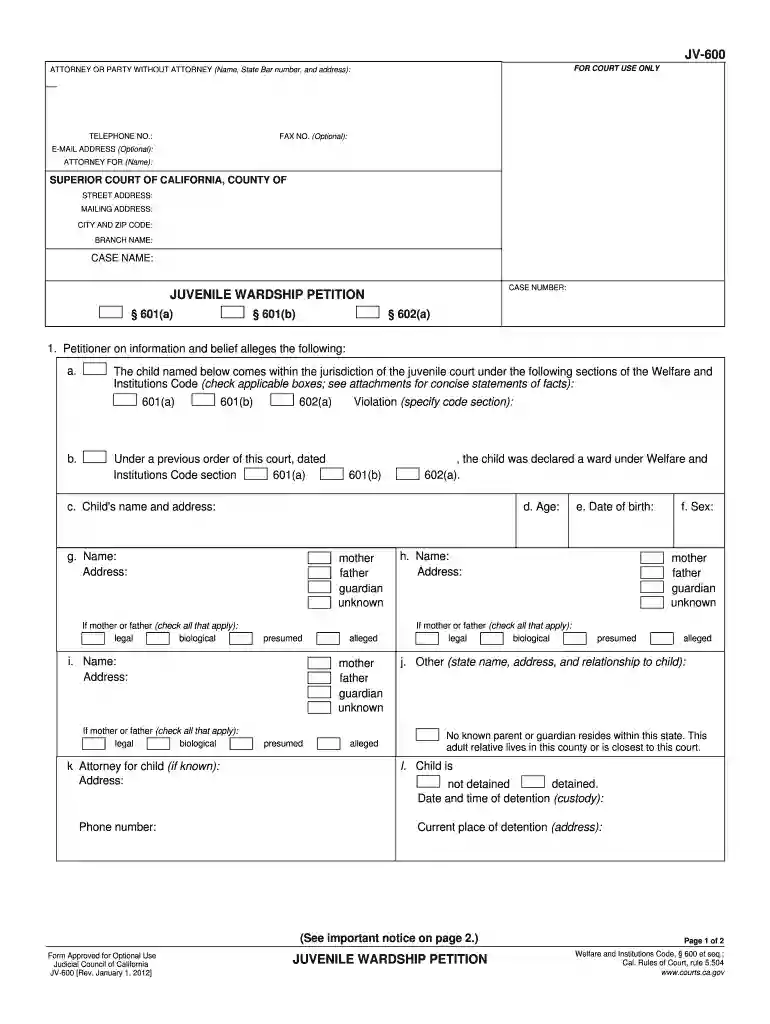
The 602 Wardship 2012 Form is a legal document predominantly used in the juvenile justice system in California. It is instrumental in determining if a minor accused of a delinquent act qualifies for juvenile court oversight. This document is fundamental in establishing whether a youth becomes a ward of the court under Section 602 of the California Welfare and Institutions Code. Such an action usually follows allegations of criminal conduct by a minor, distinguishing it from dependency cases under Section 300, which involve issues of neglect or abuse. The form initiates court proceedings aimed at addressing the youth's needs while protecting community safety.
To effectively use the 602 Wardship 2012 Form, legal parties must complete detailed sections about the minor involved and the alleged delinquent behavior. The petition typically requires information about the minor's identity, residency, parents or guardians, and specific charges. Practitioners should ensure accuracy in describing occurrences of alleged delinquency. The form must be submitted to the juvenile court to initiate legal proceedings. Those filling out this form need to have a thorough understanding of juvenile law processes to ensure it meets all procedural and legal requirements, thus facilitating the court's jurisdiction over the involved minor.
Gather Information: Collect comprehensive details about the minor, including name, date of birth, and residence, as well as parent or guardian information.
Describe Allegations: Clearly document the incidents or behaviors leading to the need for court intervention. Detail the nature of alleged delinquency with specific dates and circumstances.
Legal Representation: Identify the minor's counsel or representative, if available.
Review Legal Codes: Ensure familiarity with California Welfare and Institutions Code, Section 602, and include relevant codes that apply to the case.
Substantiate Claims: Attach evidence or documentation supporting the claims against the minor, such as police reports or witness statements.
Submit to Court: File the completed form with the juvenile court serving the area where the alleged incidents occurred, ensuring all sections are duly filled and notarized.
The legal use of the 602 Wardship 2012 Form is pivotal within the juvenile justice system for starting proceedings concerning alleged juvenile delinquents. This form enables the court to decide whether a minor should be adjudged a ward due to their conduct. Legal advocates, like district attorneys or juvenile defenders, must ensure the form is comprehensive to avoid dismissals due to procedural errors. Proper submission of the form is crucial for cases that require legal examination of a juvenile’s involvement in criminal activities and ensuring they receive appropriate rehabilitative interventions.
Those who typically use the 602 Wardship 2012 Form include probation officers, district attorneys, and legal representatives engaged in juvenile law proceedings. This form serves as a tool for juvenile justice practitioners to secure the court’s intervention in managing a minor’s alleged delinquent behavior. Legal professionals relying on this form are instrumental in guiding the minor through the court system, often collaborating with social workers, counselors, and educational authorities to pursue rehabilitative measures.


Specific to California, the 602 Wardship 2012 Form aligns with state laws governing juvenile justice. It streamlines how juvenile courts obtain jurisdiction over youth charged with offenses recognized under state law. Each county in California may have additional regulations regarding filing deadlines and procedural requirements. Practitioners must keep abreast of amendments to relevant statutes and court rules, which can affect how cases are processed, emphasizing the importance of professional legal guidance.
We've got more versions of the 602 wardship 2012 form form. Select the right 602 wardship 2012 form version from the list and start editing it straight away!
At DocHub, your data security is our priority. We follow HIPAA, SOC2, GDPR, and other standards, so you can work on your documents with confidence.


