



01. Edit your s pass application form online
Type text, add images, blackout confidential details, add comments, highlights and more.

Type text, add images, blackout confidential details, add comments, highlights and more.
Draw your signature, type it, upload its image, or use your mobile device as a signature pad.
Send s pass application form filled sample via email, link, or fax. You can also download it, export it or print it out.
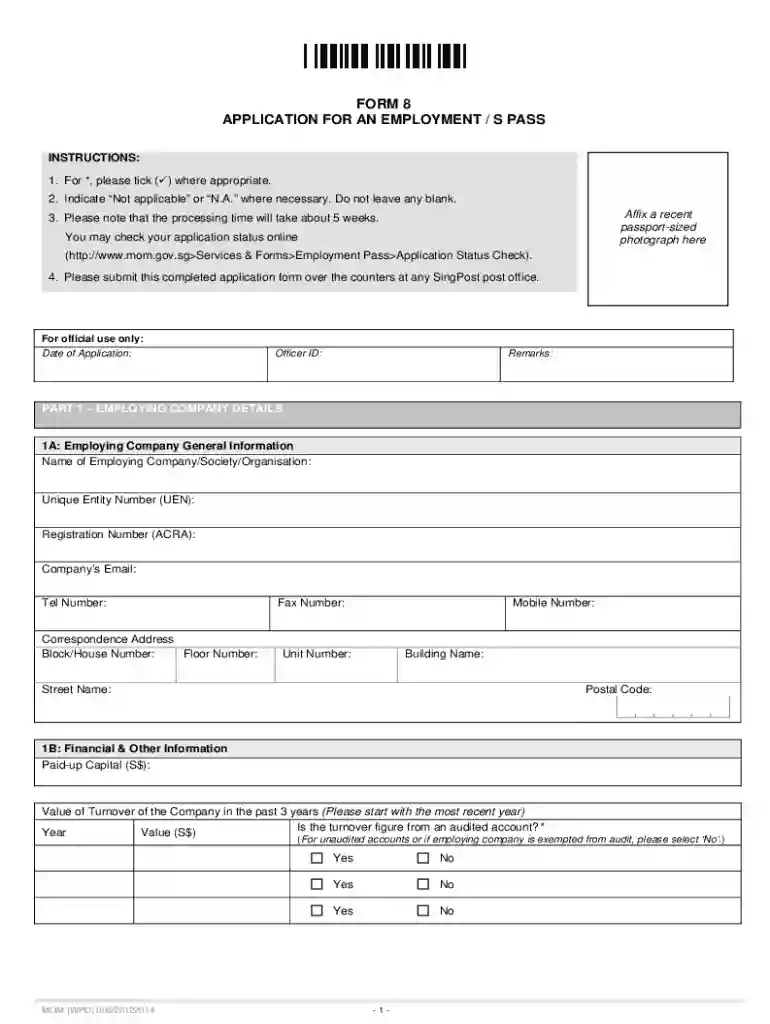
The S Pass Application Form, also known as Form 8, is used for applying for an S Pass in Singapore, which permits mid-skilled foreign workers to work in specific job roles. The form collects essential details such as personal information, educational qualifications, and work experience. It also requires information on the employer and proposed job, adhering to regulations under the Fair Consideration Framework in Singapore. Accurate information is crucial to prevent voidance of the application or legal repercussions.
Using the S Pass Application Form involves filling out specific sections with accurate information. Primarily, the applicant must provide personal and professional details, including their educational qualifications, work history, and proposed job role in Singapore. Employers also need to provide details about their company, including proof of the job advertisement and declarations as per the Fair Consideration Framework. Understanding the instructions and sections on the form helps in completing the form accurately.
Gather Required Information: Collect necessary details such as personal identification, educational certificates, work history, and the employer’s company details.
Fill Out Applicant Information: Enter personal details, including name, passport number, and nationality.
Provide Employment Details: Include the proposed job role, salary, and contract duration.
Employer Information: The employer must list company registration details and the job advertisement under the Fair Consideration Framework.
Review and Submit: Double-check the form for accuracy, ensure all required fields are completed, and submit it as per the guidelines.
To qualify for an S Pass, applicants must meet specific criteria, such as having a recognized diploma or degree, relevant work experience, and meeting the minimum qualifying salary. The employer offering the job must comply with Singaporean regulations, including advertising the job under the Fair Consideration Framework. Eligibility is also assessed based on the applicant’s role and the sector of employment.


Understanding key terms is essential when completing the S Pass Application Form:
Submitting the S Pass application requires several supporting documents:
The S Pass Application Form can be submitted through various channels:
Non-compliance with S Pass application rules, such as providing false information or failing to meet job advertisement requirements, can lead to severe penalties. These include rejection of the application, fines, and potential legal action against the employer. It is crucial to maintain integrity and ensure all guidelines are followed meticulously.
The application process typically requires a few weeks for assessment, depending on the completeness of the submission and the workload at the Ministry of Manpower. The approval time may vary, and applicants are advised to submit their applications well in advance of their expected start date to account for any potential delays in processing.
We've got more versions of the s pass application form form. Select the right s pass application form version from the list and start editing it straight away!
At DocHub, your data security is our priority. We follow HIPAA, SOC2, GDPR, and other standards, so you can work on your documents with confidence.
Jan 1, 2006 List the types of jobs you have had in the past; including volunteer work, self-employment, and military service. List the dates you have worked
INSTRUCTIONS TO ALL HANDGUN LICENSE APPLICANTS. The attached application MUST be typewritten and signed. Only the original application will be accepted.


